-
What is your water source: municipal (city) or private well?
-
Have you checked a recent water quality report or test for lead, PFAS, nitrates, or hardness?
-
Do you need the extra power of reverse osmosis, or is a carbon filter enough for taste and basic contaminant reduction?
-
What is your budget for up-front price and yearly filters? Is $100, $300, or $500 per year realistic for you?
-
How much space is there under your sink? Do you have room for an RO tank, or do you need a slim system?
-
Are you okay installing a dedicated faucet for filtered water, or should the filter connect right to your existing cold-water line?
Once you answer these questions, it becomes much easier to choose the right system instead of feeling lost in specs and marketing claims.
What is an under-sink water filter and how does it work?
Understanding what an under-sink water filter is and how it works is the first step to choosing the right system for your home. Whether you’re looking for a simple filter or a full filtration system, knowing how it works helps you make an informed decision.
Core definition and components
An
under‑sink water filter (often written undersink water filter) is a compact point‑of‑use system installed in the cabinet below your kitchen sink. It treats only the water going to one faucet, usually the kitchen faucet or a small dedicated drinking water tap.
Most systems have a few common parts:
Under the sink, you will see a shutoff valve on the cold‑water line, short pieces of tubing, and one or more filter housings. Inside those housings are the actual filters: a sediment cartridge to catch sand and rust, a carbon block to reduce chlorine, taste, and odor, or a reverse osmosis membrane for very fine filtration. Many systems also add a post‑filter to polish the water before it reaches your glass.
The filtered water then comes out either through your main kitchen faucet (if it is an inline design) or through a small separate faucet on the sink deck. You turn the tap on, and the system uses your home’s water pressure to push water through each stage of the filtration process.
This is different from a whole‑house filter, which treats all water entering your home, and from a fridge or pitcher filter, which usually has only a single small carbon stage.
Filtration technologies (carbon, RO, multi-stage, others)
Most under‑sink systems use one or more of the following technologies, each good at different things:
Activated carbon (block or granular). This is the most common type. Carbon traps many chemicals on its large internal surface. It is very good at reducing chlorine, many pesticides, and chemicals that affect taste and smell. Carbon can also lower some lead and other heavy metals when it is in a dense carbon block with the right design and certification.
Reverse osmosis (RO). RO uses a semi‑permeable membrane with very tiny pores. Under pressure, water passes through, but many dissolved solids stay behind. RO is strong at reducing arsenic, nitrate, many heavy metals, fluoride, and a wide range of other contaminants, along with PFAS in many systems. A full RO undersink water purifier usually includes sediment and carbon pre‑filters, the RO membrane, a storage tank, and a final polishing carbon stage.
Sediment filters. These are simple “screen” filters measured in microns. They catch sand, rust, silt, and other particles that would clog finer filters. They are essential if your water has visible particles or if you use a well.
KDF and specialty media. Some systems add special metal media (often called KDF) or ion‑exchange resins to help reduce certain heavy metals, scale, or sulfur odors.
UV (ultraviolet) disinfection. A few advanced sink filters include a UV light stage to inactivate bacteria and viruses. This is more common for well water or areas with known microbiological risk.
Remineralization or alkaline stages. Because RO removes many minerals, some systems add a last stage that puts small amounts of calcium or magnesium back into the water. This can improve taste and raise pH slightly, which some people prefer for coffee or tea.
Each technology targets a different contaminant group, which is why many undersink systems are multi‑stage.
Dedicated faucet vs existing tap connection
A key choice is whether the filtered water comes from a dedicated faucet or your existing tap.
With a dedicated faucet, the system sends filtered water only to a small, separate tap on your sink. This means:
-
You keep normal flow and hot/cold mix on your main faucet.
-
Only drinking and cooking water goes through the filter, so filters last longer.
-
You may need to drill a small hole in the sink or countertop, which can be an issue for renters or stone counters.
With an inline connection to your existing cold‑water tap, the filter sits between the shutoff valve and the faucet. You simply turn on the cold side and get filtered water. This has different trade‑offs:
-
No extra hole; the setup looks cleaner and more “built‑in.”
-
All cold water for that sink (washing hands, filling pots) passes through the filter, so cartridges may need changing more often.
-
Flow may drop if the filter is very fine or starts to clog.
If you are renting, or you do not want to modify the sink, an inline design or even a countertop water filter that hooks to the faucet might be simpler. Homeowners planning to stay long‑term often prefer a dedicated drinking water faucet.
Who actually needs an under-sink filter?
Not every home needs a complex system, but many can benefit from at least basic under‑sink water filtration. You are a strong candidate if:
-
Your Consumer Confidence Report (for city water) shows issues such as lead, disinfection by‑products, or higher‑than‑average PFAS levels.
-
You live in an older home with lead service lines or plumbing and want an extra layer of protection at the tap.
-
You or a family member is pregnant, an infant, elderly, or has a weak immune system. These groups are more sensitive to contaminants.
-
You use a private well and have problems with sediment, metals, hardness, or nitrates.
-
You rely on bottled water because your tap water taste or smell is unpleasant, or you do not trust the quality.
Even if your tap water meets legal standards, an under‑sink purifier can make it taste better, reduce extra chemicals, and cut your plastic use.
Key benefits of under-sink water filtration
Exploring the key benefits of under-sink water filtration helps you understand why many households choose this system. From improving water taste and odor to reducing contaminants like lead or PFAS, these sink water filters provide convenient, point-of-use access to cleaner, safer drinking water.
Contaminant removal: lead, PFAS, microplastics & more
A main reason people install an undersink water filter is to lower specific contaminants. Good systems, especially those tested and certified, can be very effective. For example, filters certified to NSF/ANSI 53 for lead often reduce it by up to 99% in lab conditions. RO systems tested to NSF/ANSI 58 can also reduce many dissolved salts and metals by similar levels.
So, what contaminants do under sink water filters remove? It depends on the technology and certifications, but well‑chosen systems can reduce:
-
Chlorine and chloramine, which affect taste and odor.
-
Lead and other heavy metals, such as mercury and cadmium (with the right cartridges).
-
PFAS and some pharmaceuticals, usually with RO or advanced carbon and media (look for NSF/ANSI 401 or P473).
-
Nitrates and fluoride, best tackled by reverse osmosis.
-
Many volatile organic compounds (VOCs), pesticides, and industrial chemicals.
-
Microplastics and fine particles, especially with tight carbon blocks or RO membranes.
To match performance claims to real life, check which NSF/ANSI standards the system meets:
-
NSF/ANSI 42 relates to aesthetic improvements such as taste, odor, and chlorine.
-
NSF/ANSI 53 focuses on health‑related contaminants like lead, some pesticides, and certain chemicals.
-
NSF/ANSI 58 is the main standard for RO systems and covers many contaminants plus structural integrity.
-
NSF/ANSI 401 covers “emerging contaminants” like certain pharmaceuticals and chemicals.
-
NSF/ANSI P473 addresses PFAS reduction specifically.
These standards do not cover every possible substance, but they are an important proof that a system does what it claims under controlled tests.
Better taste and on-demand convenience
If you have ever poured tap water that smelled like a swimming pool, you know how much taste matters. Carbon‑based sink filters are very good at removing or reducing chlorine, which often makes the biggest difference in day‑to‑day use. RO systems can also change the taste by lowering the total dissolved solids (TDS), which some people describe as a “cleaner” or “lighter” feel.
Many people who switch from pitcher filters or bottled water report that under‑sink filtered water tastes “like premium bottled water” but comes straight from the tap. Because the filter is hooked into your plumbing, you do not have to wait for gravity to work or keep refilling a small reservoir.
Most cartridges are rated for around 1,000–2,000 gallons per cycle, and many last 6–12 months or longer before needing replacement. That means fewer filter changes than a typical pitcher and no more guessing if the tiny filter is past its prime.
Cost savings and long-term ROI vs bottled water
Many readers ask: How much do under sink water filters cost?
For a full system, typical 2025 prices are:
-
Simple inline carbon under‑sink filter: about $60–$150.
-
Multi‑stage carbon block system: about $150–$350.
-
Reverse osmosis undersink system: about $250–$800, depending on features like tankless design or remineralization.
Yearly filter replacement costs range from about $80–$150 for carbon‑only systems to $120–$440 for RO systems (these need several filters plus an RO membrane every 1–2 years).
When you compare this to bottled water, the math is striking. Many U.S. families spend $600 or more per year on bottled water. An under‑sink system often pays for itself in 1–2 years, then keeps saving money each year after that.
Here is a simple cost snapshot:
| Option |
Typical annual cost (USD) |
| Bottled water habit |
600–1,200 |
| Carbon under‑sink |
80–150 |
| RO under‑sink |
120–440 |
So when people ask, “Are under sink water filters worth it?”, the answer is usually yes if you currently buy bottled water or high‑end pitchers. You trade a one‑time install and steady, predictable filter changes for lower long‑term costs and much better convenience.
Environmental impact: plastic waste and water use
Using an undersink water filter can cut a large amount of plastic waste. If a family stops buying one 16‑oz bottle per person per day, that alone is hundreds of bottles per year kept out of trash and recycling. There is also less fuel used for bottling and transport.
The main trade‑off is with reverse osmosis systems, because they create wastewater. Traditional RO can send one to four gallons of reject water down the drain for each gallon of purified water produced. Newer high‑efficiency RO and permeate pumps can improve this ratio, often closer to 1:1 or 2:1, but there is still some extra water use.
Carbon‑only under‑sink filters do not produce this type of wastewater. If you live in a dry area or care strongly about water use, this is one reason to lean toward a high‑performance carbon system unless your water quality demands RO.
In short, under‑sink sink filters are usually a win for plastic waste, and RO systems add a small water‑use cost in exchange for higher contaminant reduction.
Reverse osmosis vs carbon undersink systems
Understanding the difference between reverse osmosis (RO) and carbon under-sink systems is key to choosing the right filtration for your home. Knowing how each works helps you decide which undersink water filter best fits your needs, whether you prioritize thorough purification or simple, efficient filtration.
RO vs carbon filter performance (what each removes)
Many people are stuck on the question: reverse osmosis vs carbon – which is better? The real answer is that each is better for different jobs.
Here is a quick comparison of what each type of sink water filter can handle best:
| Feature / contaminant group |
Reverse osmosis systems |
Carbon‑based / non‑RO systems |
| Lead and heavy metals |
Very strong (with proper pre‑filters) |
Strong if certified to NSF/ANSI 53 |
| PFAS and many pharmaceuticals |
Very strong (NSF/ANSI 58/401 systems) |
Good with advanced media and NSF 401/P473 |
| Nitrates, arsenic, fluoride |
Strong – best choice |
Weak to moderate; often not enough alone |
| Chlorine, taste, and odor |
Strong (RO + carbon stages) |
Strong (primary strength) |
| Total dissolved solids (TDS) |
Strong – large reduction |
Little effect |
| Flow rate and speed |
Slower, especially with storage tanks |
Faster; closer to normal tap flow |
| Wastewater |
Yes (1:1–4:1 ratios) |
No wastewater from filter itself |
| Mineral content of final water |
Lower; may need remineralization |
Keeps most natural minerals |
Because RO lowers minerals as well as contaminants, some people feel the taste is too “flat” unless a remineralization stage is added. Others like the very low TDS water for coffee and tea.
Recommended Solutions
Find the Right Under Sink Water System for Your Home
Based on different water quality needs, space limitations, and maintenance preferences, these solutions help you choose the most suitable system faster.
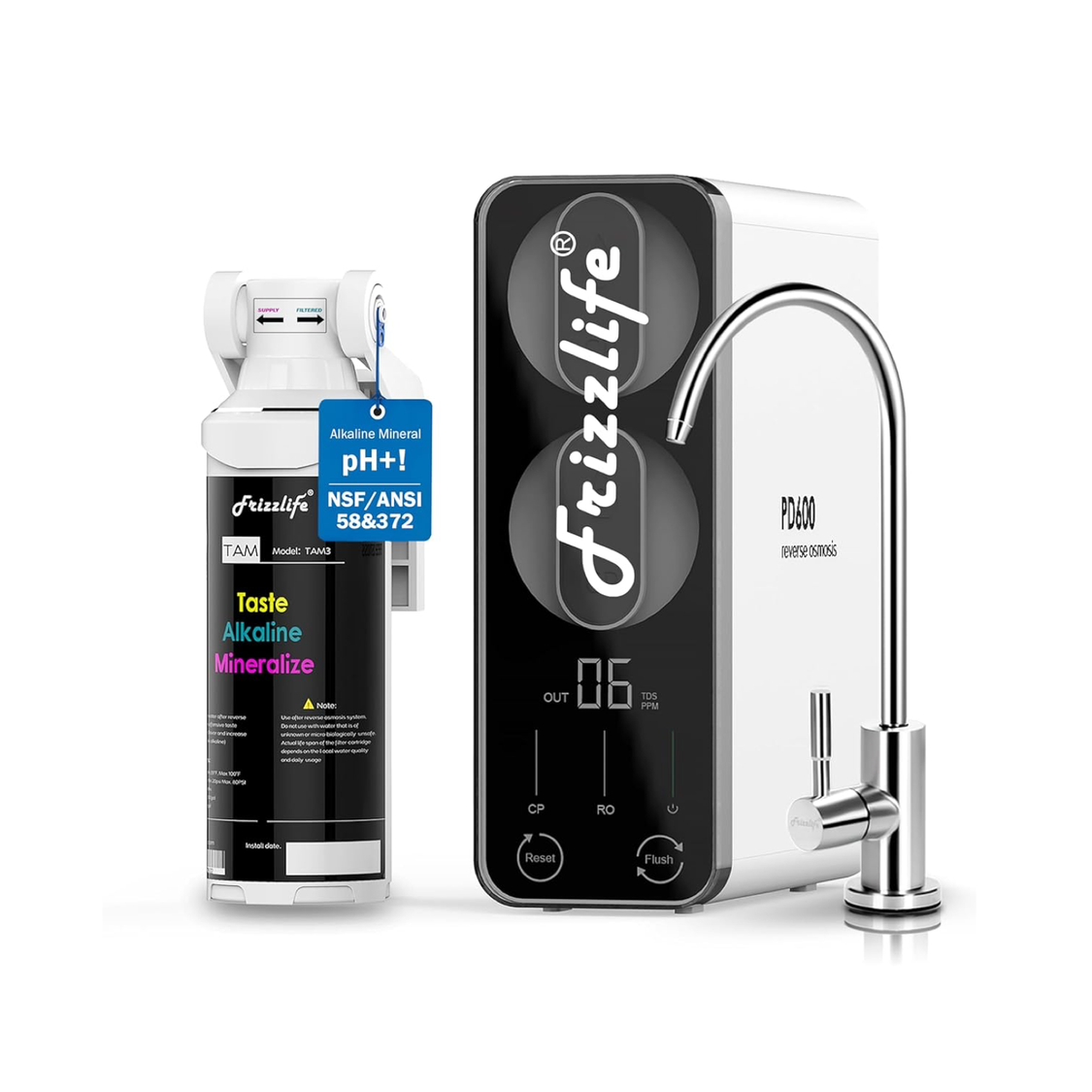
Advanced RO System (PD Series)
Ideal for users who want high-performance reverse osmosis filtration with modern efficiency and stable water quality.
View PD600TAM3 →

Compact Under Sink Filter
A space-saving option for households focused on improving taste, chlorine reduction, and everyday water quality.
View SK99 →
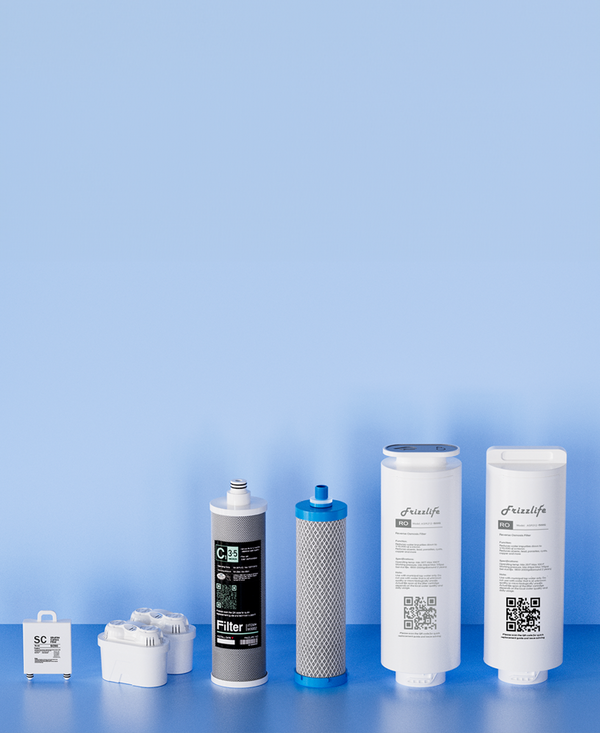
Replacement & Maintenance
Keep your system performing at its best with easy-to-replace filters designed for long-term water quality stability.
View Replacement Filters →
Tip: The best system depends on whether your priority is deep purification, compact design, or long-term maintenance simplicity.
Pros and cons: RO systems
RO under‑sink systems have clear strengths: they cover the widest range of contaminants and are especially useful if your water tests show high TDS, nitrates, or specific dissolved metals. They often carry NSF/ANSI 58 plus 53 and 42 certifications, giving strong proof for many reduction claims.
But they also have downsides, which matter in daily life:
-
Slower flow. Even with a storage tank, reverse osmosis is slower than direct‑flow carbon. You may notice this when filling big pots.
-
Wastewater. As noted, RO sends some water down the drain as part of the osmosis process.
-
Space needs. Traditional RO systems with a tank take more space under the sink, which can be a problem in small kitchens.
-
More complex maintenance. There are more filters and stages to keep track of, and membranes need replacing every one to two years.
-
Mineral removal. If you like the natural minerals in your tap, you may not want them reduced.
These are the main disadvantages of an under sink water filter when that filter is RO‑based: slower flow, more parts, and extra water use. But for many homes with serious water issues, those trade‑offs are acceptable because the health protection is stronger.
Pros and cons: carbon-based/non‑RO systems
Carbon‑based under‑sink systems keep things simple. They are usually smaller, have fewer parts, and offer higher flow rates. They target taste, smell, and many chemicals without wasting water.
Their main pros are:
-
Higher flow and more “normal” faucet feel.
-
Easy install, often just a few connections.
-
Lower purchase price and cheaper yearly filters.
-
No RO wastewater and no storage tank to fit.
-
They keep healthy minerals in the water.
The cons are tied to what they cannot do as well. They are weaker at lowering dissolved solids like nitrate and arsenic. Some high‑end carbon systems with special media can tackle PFAS and some pharmaceuticals, but not at the level of a strong RO system. For very poor‑quality water, carbon alone may not meet your needs.
Case examples: choosing between RO and non‑RO
Think of three quick scenarios.
In a city apartment where water tests fine on paper but has a strong chlorine smell and odd aftertaste, a 3‑stage carbon block undersink filter is often enough. It will reduce chlorine, many by‑products, and improve taste without extra wastewater or complex plumbing.
In a rural home on a well where tests show high nitrates and some arsenic, a reverse osmosis system with sediment pre‑filter is the safer choice. Carbon alone would not be enough to reliably lower these contaminants.
If a family wants to lower PFAS but is also worried about water waste, a high‑performance multi‑stage carbon system certified for PFAS reduction is a good middle choice. It does not match RO on every dissolved substance, but it still cuts many chemicals and avoids RO wastewater.
If you are weighing countertop vs under sink reverse osmosis, think about how permanent you want the setup to be. Countertop RO takes no cabinet space and is easy to move but uses counter area and has a lower daily capacity. Under‑sink RO gives direct access at the faucet and more storage in the tank but needs a fixed install.

RO vs Tankless Reverse Osmosis: Which One Should You Choose?
When comparing under sink water filtration systems, the biggest decision is often between a traditional RO system with a tank and a tankless reverse osmosis system.
Both use reverse osmosis technology, but they are designed for very different household needs.
Key differences at a glance
Traditional RO system (with tank):
- Stores filtered water in a tank for immediate use
- Slight delay when tank is empty
- Larger footprint under the sink
- Slightly lower upfront cost
Tankless RO system:
- Filters water on demand (no storage tank)
- Compact and space-saving design
- Faster and more consistent flow rate
- Higher efficiency in modern models
Space, flow, and maintenance comparison
| Factor |
RO with Tank |
Tankless RO |
| Space required |
Larger (tank + filters) |
Compact |
| Water flow |
Moderate (depends on tank refill) |
Strong, continuous |
| Maintenance |
More components |
Fewer components |
| Water freshness |
Stored water |
Fresh on demand |
Who should choose what?
Choose a traditional RO system with a tank if:
- You want a lower upfront cost
- You don’t mind slower refill cycles
- You have enough cabinet space
Choose a tankless RO system if:
- You want a compact under sink setup
- You prefer faster water delivery
- You want a modern, low-maintenance system
👉 If you want to compare the best systems in detail, check our guide or explore tankless RO systems below.
How to choose the right under-sink water filter
Choosing the right under-sink water filter starts with understanding your water and household needs. From testing city or well water for contaminants to evaluating certifications, flow capacity, and maintenance requirements, each step helps you match a filter system to your specific situation.
Start with testing your water (city vs well)
The best way to choose a filter is to know what is in your water. Guessing based only on taste can mislead you.
If you use city water in the United States, start by reading your yearly Consumer Confidence Report (CCR). Your water supplier must provide this, and you can also find it through the EPA’s online search tool. The report lists detected contaminants, their levels, and the legal limits.
If you are on a private well, you are responsible for testing your own water. Basic home test kits can screen for things like hardness, pH, nitrates, and sometimes lead, but for health‑critical questions it is safer to send a sample to a certified laboratory. Key things to test include:
-
Lead, especially if your home has older pipes.
-
Nitrates and nitrites, common in farming areas.
-
Arsenic, depending on your region.
-
Hardness and iron, which affect scaling and staining.
-
Microbiological tests for bacteria, if there are signs of contamination.
For both city and well water, you may also want to test for PFAS if you live near industrial sites, airports, or military bases where firefighting foam was used.
Once you have at least a basic picture, you can match filter type to the actual issues instead of buying a system that might be too weak or more complex than you need.
Understanding certifications and test data
Because product claims can be confusing, third‑party testing is very helpful. That is where NSF/ANSI certifications come in. You do not need to know every detail, just the basics:
-
NSF/ANSI 42 – filters that improve taste, odor, and chlorine.
-
NSF/ANSI 53 – filters that reduce health‑related contaminants like lead and some chemicals.
-
NSF/ANSI 58 – covers reverse osmosis systems.
-
NSF/ANSI 401 – addresses a list of “emerging” contaminants like some pharmaceuticals.
-
NSF/ANSI P473 – focuses on PFAS reduction.
When you read a product’s performance data sheet, look for specific claims like “lead reduction to below 10 ppb” or “chlorine reduction for 2,000 gallons,” not just vague words such as “purifier” or “advanced filtration.” You can also verify many products directly in the NSF database to be sure the certification is real.
Sizing, capacity, and maintenance planning
People often ask, “How long do undersink water filters last?” The answer depends on the type and how much water you use, but there are common ranges:
-
Sediment and carbon cartridges: usually 6–12 months or about 1,000–2,000 gallons.
-
RO membranes: usually 12–24 months, sometimes longer if pre‑filtration is good and water quality is not extremely hard.
To size a system, think about how many gallons per day your household uses just for drinking and cooking. Four people might easily use 3–5 gallons per day. At that rate, a 1,500‑gallon carbon cartridge lasts around 10–16 months in theory, but many makers still recommend changing every 12 months to keep performance stable.
Plan your annual maintenance budget by counting how many cartridges you will change and their price. For example, a three‑stage carbon system might need two filters every 12 months and one every 24 months, while an RO system might need three pre‑filters every 12 months and a membrane every 24 months. Add those up to see whether the system fits your money plan long‑term.
What is the best undersink water filter for my home?
There is no single “best” filter for everyone, but you can reach a clear answer for your home by walking through a simple framework:
If your main concern is taste and chlorine and your tests show no major health contaminants, a multi‑stage carbon block is often the best value. It offers a balance of low price, strong taste improvement, and easy care.
If your main concern is health contaminants like lead, PFAS, arsenic, or nitrates, and your budget allows, a reverse osmosis system or a carbon + specialty media system with the right certifications is usually best.
If your budget is tight, start with a simpler carbon under‑sink system and improve from there later if needed. Any certified filter is better than no filter when you are dealing with chlorine taste or general chemical reduction.
If space is limited or you do not want to drill or cut pipes, a countertop water filter or a slim inline under‑sink system that connects to the existing faucet can give you a big upgrade while staying simple and reversible.
Think of this as a path from your main concern (taste vs health) and your constraints (budget, space, rental status) to a filter type that fits your life.
What is the difference between under-sink and countertop filters?
Both under‑sink and countertop water filter systems improve water at a single tap, but they differ in layout and how you use them.
An under‑sink filter hides in the cabinet and connects either to a dedicated faucet or your main cold tap. It does not take counter space and can offer stronger multi‑stage filtration, including RO. But it usually needs more involved installation and is less portable.
A
countertop water filter sits on the counter and connects to the faucet with a small hose or uses gravity (like a big dispenser). These filters are easy to install and remove, making them great for renters or people who move often. They may not treat as broad a range of contaminants as a full under‑sink RO system, but many are quite capable for chlorine, taste, and some metals.
So, are countertop water filters effective? For many city‑water situations, yes. They can work very well for taste, chlorine, and some basic contaminants, as long as you follow the filter change schedule and pick a model suited to your water.
How does a countertop water filter work? Most work like smaller under‑sink systems: water passes through one or more stages (often sediment and carbon) by faucet pressure or gravity. Each stage removes certain particles or chemicals before the water flows out of a spout or tap.
What are the benefits of using a countertop water filter? They are easy to install, do not require drilling or permanent changes, can move with you, and give you filtered water even if you have no access to the space under the sink. They are a good choice if your landlord does not allow plumbing changes or if your budget is limited.
Installation, maintenance, and troubleshooting
Proper installation, maintenance, and troubleshooting are key to getting the most out of your under-sink water filter. Knowing how to install under sink water filtration systems ensures consistent water quality and extends the life of your filter. This section guides you through simple, practical steps to keep your system running smoothly.
DIY installation vs hiring a plumber
Many people are curious about how to install an under sink water filtration system and whether they can handle it on their own. For most modern kits, if you are comfortable turning off water, using a drill, and tightening fittings, you can install it yourself in one to three hours.
A typical DIY process for a dedicated‑faucet system looks like this: shut off the cold‑water valve, install a tee or adapter fitting, connect the filter’s inlet hose, mount the filter housings on the cabinet wall, drill a small hole in the sink (if needed) for the new faucet, connect the outlet tube, then turn the water back on and check for leaks. RO systems add a few steps for the storage tank and drain saddle.
You should hire a plumber if:
-
Your plumbing is very old or corroded.
-
You have stone or solid‑surface counters where drilling is tricky.
-
You are not comfortable cutting pipes or dealing with leaks.
The extra cost can still be worth it when you spread it over years of use.
How to change undersink water filter cartridges
People often ask, “How often should I change my under-sink filter?”
Most systems recommend changing carbon filters every 6–12 months and RO membranes every 12–24 months, but you should follow your specific system’s guide and adjust based on water quality and taste. Some newer systems include app alerts or built‑in timers to remind you.
The basic change process is usually the same:
-
Turn off the cold‑water shutoff valve feeding the filter.
-
Open the filtered water faucet to relieve pressure.
-
Unscrew the filter housings or twist off the quick‑change cartridges.
-
Remove the old filters, insert the new ones, and reattach the housings.
-
Turn the water back on and check for leaks.
-
Flush the system for a few minutes (or as directed) before drinking the water.
Once you have done this once, it often takes only 15–30 minutes for future changes. A simple note on the calendar or a label on the filter with the replacement date can help you remember.
Common issues: low pressure, leaks, bad taste
Even good sink filters can have small issues. Three of the most common are:
Low flow or low pressure. This often means a clogged filter, especially if it has been in place for more than six months, or if your water has lots of sediment. It can also be caused by kinked tubing or a clogged faucet aerator.
Leaks. Drips usually come from loose fittings, worn O‑rings, or plastic tubing that was not cut straight and clean. Turning off the water, re‑seating the tubing, and making sure O‑rings are clean and lubricated often solves it.
Bad taste returning. This may mean the filters are past their rated life or the system was not flushed enough after a change. In rare cases, biofilm can grow in housings if water sits for long periods. That is why proper sanitizing and regular use are important.
Having a clear manual handy and checking connections after any install or filter change keeps small problems from turning into big messes.
Extending system life and protecting water quality
You can keep your under sink water purifier working well for years with a few simple habits:
-
Use a sediment pre‑filter if your water has visible particles, so finer filters and RO membranes last longer.
-
Follow a sanitizing routine every year or two, especially for RO tanks and housings. This usually involves a mild disinfectant, a soak, and a thorough rinse.
-
If you will be away for more than a couple of weeks, flush the system well when you return, and consider changing filters if water was stagnant a long time.
-
Do not exceed the rated pressure or temperature for the system. Very hot water or high pressure can damage components.
With basic care, a good under‑sink system can last 5–10 years or more, with only filter and membrane changes needed.
Can renters install an undersink water filter without damage?
Yes, many renters do this. The key is to choose a system that doesn’t take permanent changes. Some under‑sink filters can connect to existing lines with quick‑connect fittings and use a no‑drill faucet that fits into an existing sprayer or soap‑dispenser hole.
If drilling or cutting is needed, it is wise to ask your landlord first. Another safe path is to use a countertop filter or an inline system that attaches directly to the faucet and can be removed in minutes when you move out.
Real-world test results, user sentiment & market trends
Real‑world data and market trends bring clarity beyond lab specs — showing how under‑sink water filters actually perform, how real users feel about them, and how demand is changing globally.
Lab and expert tests: what 2025 reviews show
Independent lab tests and expert reviews in 2025 show a few clear patterns across many undersink water filter systems:
-
Systems with real NSF/ANSI certifications for specific contaminants tend to meet or beat their claimed reduction levels in lab tests.
-
Many non‑certified filters can still improve taste and chlorine but often perform less consistently on health‑related contaminants like lead.
-
Reverse osmosis systems almost always beat non‑RO systems for nitrate, fluoride, arsenic, and overall TDS reduction.
-
High‑quality carbon block systems can match RO for chlorine and often for lead at the tap, making them a strong choice where dissolved solids are not a main concern.
In one large comparison of nearly twenty under‑sink filters, top RO units reduced a broad list of tested contaminants by over 95–99%, while the best non‑RO carbon systems often showed 90–99% reduction for chlorine and lead but weaker performance on nitrate and some other dissolved ions.
User reviews: Reddit, forums, and social media insights
When you look at comments on forums and social media, you see a few common themes from real users. Many people say they no longer buy bottled water after installing an undersink water filter, and they like the peace of mind it brings, especially when news stories highlight PFAS or lead.
Users of RO systems often praise the clear taste and the feeling of having “soft” or “pure” water, but some complain about lower flow and the idea of sending some water down the drain. Many say they would still choose RO again because of the broad contaminant coverage.
People using simple carbon undersink filters often talk about how easy they are to live with: fast flow, quick installs, and rare problems. The most common regret is not checking for certifications first, as some low‑end filters had little proof of performance beyond taste improvement.
Market size and growth drivers to 2034
Industry reports place the global under‑sink water filter market at around $6.7 billion in 2024, with a projected growth of roughly 5.1% per year through 2034. Several forces drive this:
-
Growing awareness of PFAS and other emerging contaminants.
-
More households using private wells or living in areas with stressed water systems.
-
Increased focus on reducing plastic waste and bottled water use.
-
A general rise in health and wellness spending.
As more people look for easy access to cleaner water from their sink systems, both RO and carbon technologies continue to improve, with better flow, smarter monitoring, and more compact designs.
Are undersink water filters worth it in 2025?
Putting cost, health, and the environment together, are under sink water filters worth it?
For most homes that now depend on bottled water, yes. You save money within a year or two, lower plastic waste, and get the convenience of clean water at the tap. For homes with known contaminants like lead, arsenic, or nitrates, the value is even higher because the health payoff can be significant.
The main cases where an under‑sink filter may not be worth it are:
-
When your water is already very low in contaminants, tastes fine, and you are not paying much for bottled water.
-
When you cannot keep up with filter changes, which can turn a filter into a bacteria trap.
If you can commit to simple maintenance and pick a system matched to your test results and budget, an undersink water filter is one of the most cost‑effective home upgrades you can make.
Health, safety, and regulations (PFAS, lead & more)
Understanding the health implications of water contaminants and the regulations that govern them is essential when choosing an under‑sink water filter. This section covers key concerns such as PFAS, lead, and other potential hazards, and what current guidelines from organizations mean for your household water quality.
Emerging contaminants: PFAS, microplastics, pharmaceuticals
PFAS (per‑ and polyfluoroalkyl substances) are often called “forever chemicals” because they break down very slowly. They are used in many products and can enter water from industrial discharges, landfills, and firefighting foams. According to the
EPA, PFAS can accumulate in the human body and may pose health risks, which is why they are a major focus of new U.S. regulations.
Microplastics are tiny plastic particles from broken‑down waste, clothing fibers, and packaging. They have been found in many water sources. Research is still ongoing, but there is concern about how they might affect the body over time.
Pharmaceuticals and personal care products can also appear in tap water in very small amounts, often from wastewater that is not fully treated for these substances.
RO systems and advanced carbon filters with proper certifications can reduce many of these contaminants. For PFAS, look for filters tested under NSF/ANSI P473 or 401. For microplastics, filters with fine pore sizes and dense carbon blocks, or RO, are more likely to capture them.
Lead, chlorine, and other regulated contaminants
Lead in drinking water usually comes from pipes and fixtures, not from the water source itself. There is no known safe level of lead, especially for children, so many families choose a filter as an extra layer of safety even when the local system meets the federal action level.
Chlorine and chloramine are disinfectants used to kill microbes in public water systems. They are important for safety at the system level but can create taste, odor, and sometimes disinfection by‑products.
An under‑sink system with NSF/ANSI 53 certification for lead and 42 for chlorine can significantly lower both, helping water meet or beat public health goals at the point where you drink it.
Why certification and proper installation matter for safety
If a filter is installed incorrectly, or filters are not changed on time, the system can develop leaks or even allow bacteria growth inside housings. That is why proper installation, regular flushing, and following the schedule matter as much as picking the right brand.
Using a filter without independent certification means you are taking the maker’s word without proof. For taste‑and‑odor fixes this may be okay, but for serious contaminants it is safer to choose products listed on sites like NSF and confirmed against official test reports.
Do undersink water filters remove all harmful contaminants?
No system removes every possible contaminant. This is a key point many forget. Even very strong RO systems are limited by how they are designed and what they were tested for.
A good approach is to think in layers:
-
Use source control first (for example, replacing lead service lines when possible).
-
Then match a filter technology to the specific issues in your water report.
-
In some cases, add complementary treatment, such as a whole‑house sediment filter, a softener for hardness, or a UV unit for microbiological risks.
A well‑chosen under‑sink system can handle most of what many homes face, but it should be part of an informed plan, not your only safety measure if your source water is very polluted.
Quick reference for undersink water filters
Whether you’re a renter or a homeowner, having a quick reference for undersink water filters helps you understand installation options, maintenance needs, and key terms at a glance.
Cleaning, sanitizing, and storing your system
From time to time, especially during long use, it is useful to sanitize your under‑sink system. This usually means removing the filters, adding a small amount of approved sanitizing solution to the housings, letting it sit, and then flushing with clean water before installing new cartridges.
If you plan to move or store the system, remove all filters and membranes, drain as much water as you can, let parts dry, and pack them carefully. Install new filters at your new place. This reduces the chance of mold or bacteria growth in stored wet parts.
Key terms glossary and further reading
Here are a few quick terms you will see often:
-
TDS (Total Dissolved Solids): A measure of all minerals and salts dissolved in water.
-
GPM (Gallons Per Minute): A way to describe flow rate or how fast water comes out.
-
RO (Reverse Osmosis): A filtration process using a membrane to remove very small particles and dissolved substances.
-
PFAS: A large group of human‑made chemicals used in many products, some of which can harm health.
-
NSF/ANSI: Standards that show a product was tested to reduce specific contaminants.
-
Micron rating: The size of particles a filter can trap; smaller numbers mean finer filtration.
-
Point‑of‑use (POU): A system that treats water right where you use it, like at a sink, instead of for the whole house.
FAQs
1. How much do under sink water filters cost?
The cost of an under-sink water filter can vary widely depending on the type, brand, and features. Basic carbon block systems often start around $80–$150 for a single unit, while multi-stage systems or reverse osmosis setups can range from $200 to $600 or more. Keep in mind, though, that the initial price isn’t the only cost—replacement filters and routine maintenance also add up over time. Carbon filters may need changing every 6–12 months, while RO membranes last 1–2 years. Budgeting for these ongoing costs is crucial. Some higher-end systems come with long-lasting filters or extra certifications, which can make the upfront price higher but save time and effort in the long run. Overall, even mid-range under-sink filters offer excellent water quality improvements without breaking the bank, making them a practical choice for most households.
2. What contaminants do under sink water filters remove?
Under-sink water filters are designed to target a wide range of contaminants, but the exact removal depends on the system type and media used. Standard carbon block filters excel at improving taste and odor, removing chlorine, and reducing volatile organic compounds (VOCs). Systems with NSF/ANSI 53 certification can reduce health-related contaminants such as lead, mercury, and certain pesticides. Reverse osmosis (RO) systems go even further, eliminating dissolved solids, nitrates, and some PFAS compounds. Some specialty filters include additional media to target pharmaceuticals, arsenic, or iron. While no single system removes everything, choosing a filter that matches your water’s test results ensures effective protection. Essentially, an under-sink system provides a reliable, point-of-use solution to make your drinking and cooking water cleaner, safer, and more pleasant to consume.
3. Are under sink water filters worth it?
Yes, under-sink water filters are generally worth the investment, especially if you care about health, taste, and convenience. Unlike pitchers or countertop units, these systems treat water right at the source and provide continuous filtered water for drinking and cooking. If your tap water contains chlorine, sediment, or trace contaminants like lead or PFAS, a properly certified system can significantly improve water quality. Even if your water is relatively clean, the improved taste and odor alone make it worthwhile for many households. They also reduce reliance on bottled water, which is better for both your budget and the environment. While the upfront cost and maintenance may seem like a consideration, the long-term benefits—safer, better-tasting water and peace of mind—often outweigh these expenses.
4. What are the disadvantages of an under sink water filter?
Under-sink water filters are very effective, but they’re not without drawbacks. First, installation can be tricky if you don’t have experience with plumbing, especially for RO systems that require a drain line and possibly a dedicated faucet. Maintenance is another factor: filters need to be replaced regularly, or performance drops, and this adds ongoing cost. Space under the sink can be limited, making some systems bulky or awkward to fit. Additionally, RO systems can waste some water during the filtration process, which may concern eco-conscious users. Finally, the initial investment can be higher than simpler countertop units or pitchers. Despite these challenges, careful selection and proper maintenance usually make under-sink filters a practical and worthwhile solution for clean, safe drinking water.
5. Are countertop water filters effective?
Countertop water filters can be quite effective, especially for households where under-sink installation isn’t practical. They attach directly to your faucet or sit on your counter, making setup simple and usually drill-free. Most countertop units use carbon block or multi-stage filtration, removing chlorine, sediment, and common taste or odor issues. Some advanced models can also target lead, PFAS, and other emerging contaminants. While they may not offer the same high-level filtration as a full reverse osmosis system, for many households they strike a good balance of convenience, cost, and water quality improvement. The key is choosing a certified unit that matches your water’s needs. For renters or anyone looking for a reversible, low-maintenance option, countertop filters provide an accessible, effective way to upgrade tap water without major plumbing work.
6. How does a countertop water filter work?
Countertop water filters typically operate using one or more filtration stages. The most common is a carbon block filter, which absorbs chlorine, bad tastes, odors, and certain chemicals. Some systems add additional media to target lead, VOCs, or other specific contaminants. Water either flows directly from your faucet through the filter or is poured into a reservoir that gravity feeds through the media. Some models include sediment pre-filters to catch particles before water reaches the main filter, improving longevity and performance. While countertop systems usually don’t remove every dissolved mineral like reverse osmosis units, they are effective for most common water quality issues. Essentially, they provide a convenient, easy-to-install point-of-use filtration method, delivering cleaner, better-tasting water right where you need it.
7. What are the benefits of using a countertop water filter?
Countertop water filters offer several practical benefits. First, they’re easy to install, often requiring no drilling or permanent plumbing changes, which makes them ideal for renters or small kitchens. They provide immediate access to filtered water for drinking, cooking, and coffee or tea preparation. Maintenance is typically straightforward, with easy cartridge swaps and minimal technical knowledge required. They also improve taste, odor, and clarity by reducing chlorine, sediment, and some chemical contaminants. Some advanced models go further, targeting lead, PFAS, and other emerging contaminants. Additionally, countertop filters can save money and reduce environmental impact by cutting down on bottled water usage. Overall, they offer a flexible, user-friendly way to enjoy cleaner, safer water without major renovations or investment.
References