

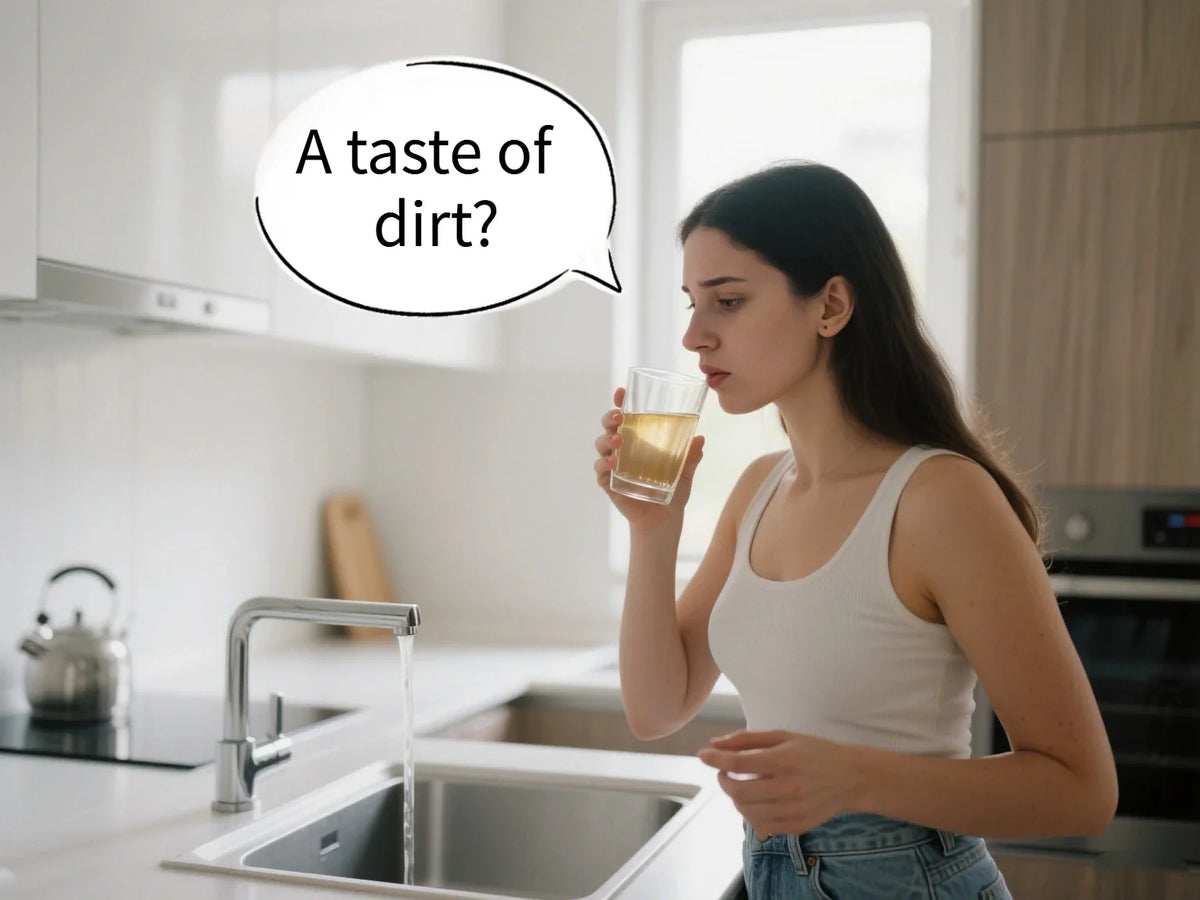
Have you ever drink a glass of water and discover it has a taste of dirt, like potting soil, or even smells like dirt? This kind of dirt water experience is surprisingly common, and drinking water can sometimes have a dirt-like taste even when it’s technically safe. Many people experience tap water that tastes like dirt, especially during warmer months or after heavy rainfall. The main cause is usually a natural compound called geosmin, which is created by soil bacteria and algae. While this earthy taste is usually unpleasant rather than harmful, it can sometimes signal other problems with your water source or plumbing.
In this guide, we’ll explain why your water tastes like dirt, whether it’s safe to drink, how to diagnose the problem, and the most effective ways to fix and prevent it.
Why Does My Water Taste Like Dirt?
The earthy or dirt-like taste in tasting water is caused by several different factors, with geosmin being the most common. This compound made up of soil and soil and plant bacteria is always easy to detect because the human palate can detect geosmin at incredibly low levels. Let’s break it down.
Geosmin — The Primary Culprit
- Geosmin is a compound made by soil bacteria and algae.
- It has a strong “earthy” or “muddy” flavor — perfect for describing what does dirt taste like, with many comparing it to the smell of potting soil after rain.
- Humans can detect geosmin at incredibly low levels — as little as 5 parts per trillion.
- It becomes most noticeable in summer or after rain, when bacteria and algae activity is high.
- Water supplies that come from lakes, reservoirs, or rivers are more likely to be affected.
Algae Blooms and Their Impact
- In warm weather, algae can bloom in surface water like lakes or reservoirs.
- When algae die, they release geosmin into the water.
- Municipal treatment usually removes most of it, but sometimes the earthy taste slips through.
- Case example: In Pennsylvania, a major algae bloom caused dirty-tasting water complaints across multiple towns, proving that even clean water supplies sometimes have a dirt-like taste.

Other Possible Causes
Not all earthy water is due to geosmin. Other reasons include:
- Bacterial growth in faucet aerators. A buildup of slimy organic matter can affect taste.
- Sediment buildup or corrosion in aging pipes. Old metal pipes may give off a musty or dirty taste that makes your water unappealing.
- Tannins from decaying vegetation in well water. These naturally occurring plant compounds can add a brownish color and earthy flavor.
- Industrial or agricultural runoff (less common, but possible). Contaminated sources can introduce a dirt-like or musty taste.
Is Dirt-Tasting Water Safe To Drink?
In most cases, yes — geosmin and algae blooms are not harmful at normal levels. The issue is mainly taste and smell—your water may be perfectly safe, but unpleasant. But if your water always has this flavor, or if it comes with strange colors, cloudiness, or strong odors, you should get your water tested to rule out other dangers.
Is It Harmful to Drink Dirt-Tasting Water?
Many homeowners worry when they pour a glass of tap water and discover it tastes like dirt or has a faint earthy flavor. While this off-putting taste or aroma can be an unpleasant taste, it doesn’t always mean your water is unsafe or that water quality poses a threat. Understanding the cause of that dirt-like taste is the first step in knowing whether it’s a harmless nuisance or a sign of a bigger problem.
Health Impact of Geosmin and Algae
The most common culprit behind earthy-tasting tap water is geosmin, a natural compound produced by soil bacteria and algae. According to both the World Health Organization (WHO) and the U.S. Environmental Protection Agency (EPA), geosmin is not toxic at the trace levels typically found in municipal water supplies, so most municipal water is safe to drink even if it tastes earthy. Its impact is limited to taste and smell, meaning that while your drinking water may be unappealing, it’s usually safe to consume.
Seasonal changes often influence geosmin levels. Heavy rainfall or summer heat can trigger algae blooms in lakes and reservoirs, making this taste more noticeable. For many households, the problem is temporary and does not pose a health risk.
Red Flags That Suggest a Safety Hazard
While most cases of water that tastes like dirt are harmless, there are certain warning signs that should prompt immediate action:
- Persistent dirt-like taste or grainy texture that doesn’t fade after flushing taps or unscrew it from the faucet to clean the aerator.
- Cloudy, rusty, or oily appearance in the water, which may indicate pipe corrosion or sediment.
- Unusual odors such as sulfur (rotten eggs), metal, chlorine, or chemical smells.
- Long-term dirt-like taste in well water that hasn’t been properly tested or maintained.
If you notice any of these issues, it’s important to get your water tested by a certified laboratory or contact your local water supplier for guidance.
Sensitive Populations to Consider
Even if geosmin itself is harmless, certain groups should take extra precautions:
- Infants and young children are more sensitive to contaminants and sudden changes in water quality.
- Elderly individuals and those with weakened immune systems may be more vulnerable to bacterial or chemical exposure.
- Homes with older plumbing systems may experience added risks such as lead or copper leaching into the water, which can create both health hazards and taste changes.
For these groups, a filtered water dispenser to clean and improve the taste of your tap water is recommended. You can even get a filtered water dispenser quote or quote for a water cooler to ensure safe hydration.

Can Dirt-Tasting Water Make You Sick?
By itself, geosmin is not associated with illness. However, if your water has persistent off-flavors and no obvious seasonal explanation, it could signal bacterial contamination, pipe corrosion, or well water pollution. The safest approach is to test your water regularly, especially if you rely on a private well or live in an older home.
For most households, dirt-tasting tap water can usually be fixed by cleaning aerators, flushing pipes, or installing an activated carbon filter. But if your water’s taste or smell changes suddenly, it’s always best to investigate — your taste buds are often the first line of defense against hidden water quality problems.
How to Diagnose the Cause of Earthy-Tasting Water
If your tap water tastes like dirt, pinpointing the cause is the first step toward fixing it. Earthy or dirty-tasting water often comes from natural compounds like geosmin, but it can also signal plumbing issues, bacterial growth, or contamination in your water source. Here’s a practical guide to identifying what’s behind that off-putting taste.
Step-by-Step DIY Troubleshooting
Start with these simple check for dirt water before investing in professional testing or filtration systems:
Test Multiple Faucets
- If only one faucet is spewing dirty-tasting water, it’s an isolated tap issue, likely limited to that fixture or its aerator.
- If every faucet in your house tastes the same, the cause may be your main water supply, municipal source, or private well.
Inspect the Faucet Aerators
- Unscrew the small tip at the end of your faucet.
- Look for sediment, biofilm, or mineral deposits that can trap bacteria and affect taste.
- Clean thoroughly with soap or vinegar, rinse, and reattach.
Compare Smell vs. Taste
- Geosmin typically gives water an earthy flavor without a strong odor.
- A musty or moldy smell may indicate biofilm inside pipes.
- Rotten egg or metallic odors could point to sulfur bacteria, corroded pipes, or chemical contamination.
Flush Your Plumbing
- Run cold water for 1–2 minutes, especially if taps haven’t been used recently.
- Stale water sitting in pipes can develop unpleasant tastes, even if the main supply is clean.

Home Water Testing Options
If troubleshooting doesn’t solve the issue, consider home water tests to discover the root cause of that earthy or dirty taste:
Note: Geosmin is so potent that the human palate can detect it at 5 parts per trillion, even when water looks clear. If you suspect that your water quality is compromised, it’s vital to get your water professionally tested.
When to Involve Professionals
Call a plumber or water treatment expert if:
- The issue affects every faucet in your house.
- Your well water has a dirt problem and needs improving. In this case, it’s best to inspect your well and clean up your dirt problem with water treatment services.
- The problem lasts more than a few days, even after flushing and cleaning.
- You experience digestive issues or other symptoms after drinking tap water.
- Your local water supplier may also have seasonal notices if algae blooms or infrastructure changes are affecting taste.
How to Identify Geosmin in Water
While geosmin can’t be confirmed without a specialized lab test, the best clue is its timing. The taste often spikes:
- After heavy rainfall, especially if your water comes from surface sources like lakes or reservoirs.
- During hot summer months when algae blooms are common.
- In communities near rivers or agricultural land, where runoff affects water flavor.
By following this checklist, you’ll know whether the issue is a simple faucet cleaning job or a sign that your water quality needs testing. A little detective work can save you time, money, and do your taste buds a favor by ensuring clean, refreshing drinking water.
Fixing Water That Tastes Like Dirt
If your tap water tastes earthy or dirty, you don’t have to settle for it. The right solution depends on identifying the root cause. Here’s a practical guide to restoring clean, fresh-tasting water at home.
Quick Localized Fixes
Some dirt-like tastes are caused by simple household plumbing issues:
- Clean faucet aerators: Unscrew the aerator tip, scrub off sediment or slime, rinse thoroughly, and reattach.
- Flush stagnant water: Let the tap run for 1–2 minutes if it hasn’t been used for hours or days.
- Clean showerheads: Mineral deposits or biofilm buildup can also affect taste and water flow.
Whole-House or Persistent Issues
If every tap in your home has dirty-tasting water or other bad tastes, the problem is likely bigger:
- Contact your utility provider: Municipal systems often issue seasonal notices when algae blooms affect taste.
- For well water users: Schedule professional well maintenance. A shock chlorination treatment can kill bacteria and clear organic buildup.
Water Filtration Solutions
Water filtration is one of the best ways to remove unpleasant tastes and safeguard water quality. Choose based on your water source and budget:
Activated carbon filters – Highly effective at removing geosmin, algae byproducts, and organic compounds that cause earthy flavors.
Reverse osmosis (RO) systems – Provide advanced filtration, removing minerals, chemicals, and most contaminants, though installation costs are higher.

Whole-house vs. point-of-use filters:
- Whole-house filters treat all water entering your home.
- Point-of-use filters install under sinks or on faucets for drinking and cooking water.
Quick Reference: Common Causes, Solutions, and Costs
| Cause | Solution | Approx. Cost Range |
| Geosmin / algae bloom | Activated carbon filter | $120–$300 |
| Sediment buildup / aging pipes | Plumbing inspection or pipe repair | Varies |
| Faucet biofilm buildup | Clean aerator or showerhead | <$20 |
| Well water contamination | Shock chlorination + filter | $150–$500 |
By combining maintenance, filtration, and professional testing when needed, you can permanently eliminate foul-tasting water, improve the overall quality of your drinking supply, and get your water tested or find alternatives to tap water if necessary.
Preventing Dirt Taste in Tap Water
If your tap water tastes like dirt or has an earthy water taste, prevention is often easier than constant troubleshooting. By upgrading plumbing, staying alert to seasonal changes, and using advanced filtration, you can focus on improving your drinking water and enjoy consistently clean water.
Household Plumbing Practices
- Replace outdated plumbing: Old galvanized or corroded pipes often leach sediment and rust, making tap water taste dirty. Switching to PEX or copper piping ensures a safer water supply.
- Clean faucet aerators and showerheads: Soak them in vinegar every few months to remove mineral deposits and biofilm buildup that affect water taste.
- Seal and maintain storage tanks: Unsealed water tanks can allow debris, insects, or bacteria to contaminate your water, leading to dirty taste in water.
Seasonal & Environmental Awareness
- Watch for algae blooms: Summer months often bring algae growth in reservoirs, which is a common reason for earthy tap water taste.
- Monitor water utility updates: Municipal suppliers typically issue alerts when algae blooms or other water quality changes are expected.
Long-Term Water System Upgrades
- Install multi-stage filtration: Using both activated carbon and reverse osmosis filters is one of the most effective ways to remove dirt taste from tap water.
- Explore alternative water sources: For rural homes, rainwater harvesting systems with professional filtration can supplement or replace well water.
Can Filters Permanently Stop Dirt Taste?
High-quality filters can significantly reduce or eliminate earthy water taste, but seasonal algae blooms may return. To maintain clean-tasting water, replace filters on schedule and maintain your plumbing system.

Case Studies, Communities & Social Insights
- Communities in Pennsylvania experienced “earthy” water during algae blooms, prompting municipal testing and public health announcements.
- Online discussions, including Reddit, show many users get earthy-tasting water after heavy rain or near reservoirs. Most find that a filter or faucet cleaning solves the issue.
- Plumbing videos often demonstrate step-by-step faucet cleaning, showing how sediment and bacteria can settle at aerators.
Data, Research & Authority References
When investigating why tap water tastes like dirt, scientific data and regulatory guidance provide valuable context. Understanding how compounds like geosmin in drinking water impact taste—without posing health risks—can help homeowners make informed decisions about water safety.
Key Statistics
- Humans can detect geosmin at 5 parts per trillion.
- Dirt-like taste is most common in surface-water areas.
Regulatory Guidance
- WHO and EPA both say geosmin and algae taste compounds are not toxic in normal drinking water.
- That said, changes in taste are a signal to test your water.
Key Takeaways and Next Steps
- If your tap water tastes like dirt, geosmin is usually to blame.
- Run a quick faucet test: check multiple taps, clean aerators.
- If taste persists across the whole house, get your water tested.
- Use an activated carbon filter if the cause is geosmin.
- Contact your public water company or utility provider if the issue is larger than your home.
Conclusion
Water that tastes like dirt is usually the result of geosmin from algae or soil bacteria. Though unpleasant, it’s rarely a threat to your health. Still, dirty-tasting water can sometimes mean plumbing or contamination issues, so don’t ignore it. By understanding the root of the problem, you can quickly troubleshoot, test, and filter your water, meaning dirty-tasting water can usually be solved. Even if the cause is not always easy to pinpoint, it can usually be fixed by unscrewing aerators or adding filters.
FAQs
1. Is it safe to drink tap water that tastes like dirt?
Yes, usually. If the cause is geosmin in drinking water, it’s safe but unpleasant. Geosmin is a naturally occurring compound from soil bacteria and algae, and while it makes your water taste earthy or dirty, it isn’t harmful at typical levels. However, if this taste is persistent or is accompanied by color changes, cloudiness, or strange odors, it’s a sign you should test your tap water for other contaminants. You can use a home test kit or contact your local utility to ensure it meets safe drinking water standards.
2. How do I get rid of dirt taste in water?
Start simple: clean your faucet aerators and showerheads, as sediment and biofilm often collect there. Flush your plumbing pipes if water has been stagnant, especially after a vacation or plumbing work. For a longer-term fix, install a water filtration system—an activated carbon filter is highly effective at removing earthy taste in water, while a reverse osmosis (RO) system can tackle multiple impurities. If you live in an area with frequent algae blooms or older pipes, replacing corroded sections and regular filter changes will keep your tap water tasting fresh.
3. Why does water taste earthy to me?
That “dirt-like” taste is most often due to geosmin, which becomes more noticeable after heavy rain or during summer algae blooms. Even at incredibly low concentrations, humans are extremely sensitive to this compound. While geosmin itself is safe, it signals that your water source—especially if it’s surface water like lakes or reservoirs—is rich in organic matter. For peace of mind, have your water tested occasionally, particularly if you rely on well water or notice other taste and odor changes.
4. Does water have its own taste?
Pure H₂O is technically tasteless and odorless, but what you’re actually tasting in tap water is a mix of minerals, treatment chemicals, and trace organic compounds. Calcium and magnesium can make water taste “hard,” while sodium or chloride adds a slight saltiness. Even safe disinfectants like chlorine can subtly affect tap water taste. If your water tastes unpleasant or earthy, it’s often a harmless natural occurrence, but filtration systems can help restore a clean, refreshing flavor.
5. What does earthy taste like?
An earthy taste is similar to the smell of damp soil, wet leaves, or potting mix after rain. That distinctive flavor comes from geosmin, a compound produced by actinobacteria and algae. Even though it’s not dangerous, many people find it off-putting. Understanding earthy taste in water can help you decide on the right solutions, like a carbon water filter or better plumbing maintenance, to enjoy better-tasting drinking water every day.