


If you are wondering how long it takes to fill a reverse osmosis tank, a standard residential RO storage tank commonly takes about 2–4 hours to fill from empty under normal operating conditions. That range is a practical estimate—not a universal performance standard. The actual reverse osmosis tank fill time depends on tank capacity, membrane production, incoming water pressure, water temperature, filter condition, tank air pressure, and whether the tank is completely or only partially empty.
A first fill after installation may also feel unusually long because the tank begins with no stored water and the system may require startup flushing. Once the tank contains water, partial refills after normal use are usually less noticeable.
Understanding how the pressure tank stores and delivers water makes it easier to tell whether a multi-hour fill is normal or whether an RO storage tank filling slowly needs attention.
What Is a Reverse Osmosis Tank?
A reverse osmosis tank is a pressurized storage vessel that holds filtered water produced by an RO membrane. It is commonly installed under a sink as part of a tank-based residential reverse osmosis system.
The tank is necessary because a conventional RO membrane produces filtered water gradually. It generally cannot provide the same immediate faucet flow as a household water line. Instead, the membrane produces water in the background and sends it into the storage tank. The tank then uses compressed air pressure to push the stored water toward the RO faucet when you open it.
This means an RO tank is not simply an empty container. It is part of the system’s pressure and delivery mechanism.
How Long Does It Take to Fill a Reverse Osmosis Tank?
For many standard residential systems, the answer is approximately 2–4 hours from empty. A tank may fill faster under favorable conditions or take considerably longer when:
- Incoming water pressure is low.
- Feed water is cold.
- The membrane has a lower production capacity.
- Sediment or carbon prefilters are restricted.
- The RO membrane is fouled or aging.
- The tank is larger than the one assumed by the general estimate.
- Water is being used while the tank is trying to fill.
- Tank pre-charge pressure is outside the model’s specified range.
The commonly quoted 2–4 hour range often applies to residential pressure tanks with a nominal capacity of roughly 2.8–4 gallons. It should not be interpreted as a guarantee for every tank or RO system.
If your system manual gives an expected production rate or startup procedure, follow those model-specific instructions instead of relying only on a general timing estimate.
First Fill, Full Refill, and Partial Refill: Why the Starting Point Matters
When asking how long an RO tank takes to fill, first define what “fill” means.
First fill after installation: The tank starts completely empty, and the filters and tubing may also need to become saturated or flushed. This is normally the longest and most noticeable fill cycle.
Full refill after draining the tank: The tank again starts with little or no stored water. The timing may resemble the initial fill, although the filters and system are already conditioned.
Partial refill after normal use: If you use only a glass or pitcher of water, the system replaces that amount rather than refilling the entire usable tank volume. The refill may begin immediately, but you may not notice it because water remains available.
Refilling while water is being used: If someone repeatedly draws water during the refill cycle, the tank may not appear to become full. The membrane is producing water, but household demand is removing it at the same time.
During commissioning, follow the model’s startup instructions. If the manual requires one or more fill-and-drain flushing cycles, the total wait before routine use will be longer than a single tank-fill cycle. Cold feed water, low pressure, a larger tank, or a lower-capacity membrane can also extend the first fill. If the tank remains nearly empty after many uninterrupted hours, check the valves, feed pressure, tubing, and filters as described in the troubleshooting section.
For a meaningful test, allow the system to operate without using RO water for several hours. This creates a clearer picture of its actual refill performance.
Nominal Tank Size vs. Usable Water Volume
A tank labeled with a particular gallon capacity does not necessarily deliver that entire volume at the faucet.
Part of the vessel contains compressed air, and the water side must retain enough pressure to move water through the tubing and faucet. As the faucet runs, tank pressure declines. Delivery may become weak before every possible drop leaves the vessel.
The amount you can dispense is therefore the tank’s usable or drawdown volume, which is normally lower than its nominal internal volume. Usable volume can vary with:
- Empty-tank air pre-charge
- Incoming water pressure
- Automatic shutoff behavior
- Faucet and tubing resistance
- The pressure at which the tank is considered full
This distinction matters when estimating fill time. Dividing nominal tank size by membrane output may overstate how much water actually needs to be produced, but using the membrane’s ideal rated output can understate the time required. A realistic estimate needs both usable volume and actual production under current conditions.
How to Tell When a Reverse Osmosis Tank Is Full
An RO pressure tank is considered full when pressure inside the tank rises enough that the system’s automatic shutoff mechanism stops production. It is not usually determined by water reaching a visible physical fill line.
Common signs include:
- The system has stopped sending water to the drain after completing its production cycle.
- You no longer hear normal filling or drain-flow sounds.
- The tank feels heavier than it did when empty.
- Opening the RO faucet produces a strong initial flow.
- The system begins producing water again after enough stored water is used.
Sound alone is not a perfect diagnostic tool. Some systems are quiet, and continuous drain flow may indicate an automatic shutoff, pressure, or installation problem. If you are unsure, compare system behavior with the operating description in the model manual.
How Does a Reverse Osmosis Tank Work?
A tank-based RO system combines slow membrane production with pressurized storage. Feed water moves through prefilters before reaching the RO membrane. The membrane separates a filtered-water stream from the concentrate stream. Filtered water travels toward the storage tank, while concentrate flows to the drain according to the system’s design.
As stored water accumulates, it compresses the air on the opposite side of the tank’s flexible separator. The resulting pressure later pushes water to the dedicated faucet.
The Air Side, Water Side, and Internal Bladder or Diaphragm

Most residential RO pressure tanks contain two functional areas:
- The water side, which receives filtered water from the RO system.
- The air side, which contains a pre-charged volume of air.
A bladder or diaphragm separates the two sides so the stored water does not simply mix with the air charge.
When the tank is empty, the air charge occupies more internal space. As RO water enters, it pushes against the flexible separator and compresses the air. When the faucet opens, the compressed air expands and pushes water back out.
The empty-tank air charge is important. If it is too high for the tank and system, less water may enter before back pressure causes production to stop. If it is too low, the tank may store water but deliver it with weak or inconsistent flow. Exact pre-charge settings vary, so a single pressure value should not be applied to every RO tank.
How the RO Membrane Produces Water for Storage
The membrane does not fill the tank at household plumbing speed. Reverse osmosis depends on pressure across a semipermeable membrane. Only part of the feed water becomes filtered product water; the rest carries separated material toward the drain.
A membrane’s gallons-per-day rating can help compare production capacity, but the rating is typically associated with specified test conditions. Real output can be lower when feed pressure or temperature differs from those conditions.
For tank filling, the useful number is not merely the label rating. It is the amount of filtered water the membrane can actually produce per hour in the home’s current operating environment.
Why Filling Slows as Pressure Builds Inside the Tank
An empty tank creates relatively little back pressure against incoming filtered water. The tank may therefore fill more quickly during the early part of the cycle.
As water enters, the air side becomes more compressed and tank pressure rises. That pressure works against the membrane’s production pressure. The effective pressure difference decreases, so water enters the tank more slowly as it approaches full.
This normal slowdown explains why timing the first part of a refill and multiplying it may produce an inaccurate result. An RO tank does not necessarily fill at one constant rate from empty to full.
A slowing production rate near the end of the cycle is not, by itself, evidence that the tank or membrane has failed. A concern is more likely when production is weak from the beginning, the tank gains almost no water, or the system never reaches shutoff.
How Feed Water Pressure Affects RO Tank Filling Time
Incoming water pressure directly affects how effectively water moves through the RO membrane. With stronger pressure within the model’s permitted operating range, the membrane generally produces filtered water faster. With insufficient pressure, production drops and the tank takes longer to fill.
Low feed pressure may be associated with:
- A low-pressure municipal supply
- A private well system with fluctuating pressure
- Pressure drops during high household demand
- A partially closed supply valve
- Restricted plumbing or tubing
- Clogged prefilters
- An installation condition that limits flow
Some systems may require a pressure-support solution in low-pressure settings, but compatibility and operating limits are model-specific. Measure the feed pressure and compare it with the system manual before adding or changing equipment.
How Membrane Capacity, Water Temperature, and Filter Condition Change Production
Three additional factors can substantially change reverse osmosis pressure tank fill time.
Membrane capacity: A membrane designed to produce more filtered water per day may replenish storage faster than a lower-capacity membrane under comparable conditions. Capacity must still be matched to the rest of the system.
Water temperature: Colder water moves through an RO membrane more slowly. A system may take longer to fill during colder seasons even when nothing is mechanically wrong.
Filter condition: Sediment and carbon prefilters protect the membrane and prepare feed water. When they become restricted, less pressure and flow reach the membrane. Production may gradually slow. A fouled membrane can also reduce output, but it should not be blamed before valves, pressure, prefilters, and tubing have been checked.
Water quality and usage determine how quickly filter performance changes. Use the maintenance schedule and diagnostic procedures for your specific model rather than assuming a universal replacement interval.
Why a Pressure Tank Delivers Faster Faucet Flow Than the Membrane Alone
The membrane produces water gradually, while the faucet is expected to provide water on demand. The storage tank bridges that gap.
When you open the faucet, compressed air in the tank pushes out water that has accumulated over the previous hours. The resulting faucet flow can be much stronger than direct membrane production.
As the tank empties, air pressure falls and faucet flow normally becomes slower. If flow starts strong and gradually declines during a long draw, the tank may simply be approaching empty. If flow is weak even when the tank should be full, investigate tank pressure, tubing, the faucet, and downstream restrictions separately from membrane production.
How Automatic Shutoff Works When Tank Pressure Rises
A tank-based RO system normally includes an automatic shutoff mechanism. As tank pressure increases, the mechanism senses the pressure relationship in the system. Once the tank reaches the design shutoff condition, feed flow to the membrane stops or is interrupted according to the system’s design.
After you use stored water, tank pressure drops. The system responds by restarting production and replenishing the tank.
If the tank appears full but water continues flowing to the drain indefinitely, possible causes include inadequate tank pressure, low feed pressure, a leak, incorrect tubing, or an automatic shutoff component that is not operating properly. Use the system’s troubleshooting instructions before replacing a component.
How to Estimate RO Tank Fill Time and Storage Needs
Tank sizing should account for more than the number printed on the tank. The goal is to have enough usable stored water for peak demand while also having sufficient membrane production to refill that storage in a reasonable period.
A larger tank can provide a bigger reserve, but it does not make the membrane produce water faster. If production capacity stays the same, a larger empty tank generally takes longer to fill.
The Key Inputs: Usable Tank Volume, Household Demand, and Membrane Production Rate
Use these three inputs for practical planning:
- Usable tank volume: The estimated amount of water that can actually be delivered, not merely nominal vessel capacity.
- Peak household demand: The amount of RO water likely to be used during a concentrated period, such as meal preparation or filling multiple bottles.
- Effective membrane production: The actual filtered-water output under current pressure, temperature, and filter conditions.
Daily household use matters, but peak demand is often more important for tank sizing. A system may produce enough water over 24 hours yet still run out during a short, high-use period if the tank reserve is too small.
A Practical Formula for Estimating Reverse Osmosis Tank Fill Time
A simple planning formula is:
Estimated fill time in hours = usable water volume needed ÷ effective production rate in gallons per hour
If you only have a gallons-per-day figure, the basic conversion is:
Rated gallons per hour = rated gallons per day ÷ 24
However, rated output and effective household output are not always the same. Pressure, temperature, filter restriction, rising tank pressure, and water use during filling can make the real fill time longer.
For example, if a tank needs 2 gallons of usable water and the effective production rate is 0.75 gallon per hour:
2 ÷ 0.75 = approximately 2.7 hours
That is a planning estimate, not a guaranteed completion time. Because production can slow as tank pressure increases, direct observation over a full refill cycle is usually more accurate than a calculation based only on rated membrane capacity.
RO Tank Fill-Time Decision Table
|
Starting condition or symptom |
Likely timing or behavior |
Main influencing factors |
Recommended action
|
|---|---|---|---|
|
New system with a completely empty tank |
Commonly about 2–4 hours, but model and conditions matter |
Startup flushing, feed pressure, temperature, membrane capacity |
Follow the startup procedure and avoid drawing water during the test fill |
|
Tank fully drained after heavy use |
Often similar to an empty-tank fill |
Usable tank volume, actual membrane output, incoming pressure |
Allow several uninterrupted hours for recovery |
|
Tank partly used |
Usually shorter than a full refill |
Amount used and current production rate |
No action is usually needed if water supply recovers normally |
|
Tank fills quickly at first, then slows |
Often normal |
Rising back pressure inside the tank |
Allow the system to reach its automatic shutoff point |
|
Fill takes longer during cold weather |
May be normal seasonal variation |
Lower feed-water temperature |
Compare performance over time and confirm other conditions are unchanged |
|
Fill time has gradually increased over months |
Possible maintenance issue |
Restricted prefilters, membrane condition, changing feed pressure |
Review maintenance history and inspect filters and pressure |
|
Tank gains little water after several hours |
Not typical if conditions previously supported normal filling |
Closed valve, low pressure, kinked tubing, severe restriction, pre-charge issue |
Check the basic installation and pressure conditions |
|
Tank fills, but faucet flow is weak |
May be a delivery issue rather than a fill-time problem |
Tank air charge, tubing, faucet restriction |
Diagnose faucet flow and tank pressure separately |
|
Water continues to drain and the system never shuts off |
Requires investigation |
Leak, low pressure, tank pressure, shutoff component |
Follow model-specific troubleshooting or contact support |
These timing descriptions are approximate. They are not pass/fail standards for every RO system.
When a Larger Tank Helps—and When It Only Takes Longer to Fill
A larger tank can be useful when household demand regularly exceeds the usable reserve of the current tank. It may reduce the chance of running out of stored water during cooking, entertaining, or other concentrated use.
However, installing a larger tank does not increase membrane production. If the membrane and operating conditions remain unchanged:
- More water can be stored.
- More water must be produced after the tank is drained.
- A full refill may take longer.
- Recovery after heavy use may still be unsatisfactory.
If the problem is slow production rather than insufficient storage, a larger tank may only postpone the shortage. It will not correct low feed pressure, clogged filters, cold-water performance, or an undersized production stage.
Matching Stored Water and Refill Capacity to Peak Household Use
A well-matched system should provide enough stored water for normal peak use and restore that reserve before the next high-demand period.
Consider these questions:
- How much RO water is used during the busiest hour?
- Does the current tank provide that much usable water?
- How long does the system take to replace the amount used?
- Does household demand frequently resume before recovery is complete?
- Is the limitation storage capacity, production capacity, or both?
For moderate use, a conventional pressure-tank design may provide a practical balance of gradual production and strong faucet delivery. Readers comparing configurations can review Frizzlife’s selection of under-sink reverse osmosis systems, while confirming individual product specifications before choosing a model.
Choosing Between Tank-Based and Tankless Reverse Osmosis Systems
Tank-based and tankless systems solve the delivery problem differently.
A tank-based system produces water gradually and stores it under pressure. Its advantages include having a reserve available at the faucet. Its limitations include the physical space required by the tank and the recovery period after the reserve is depleted.
A tankless system is designed around direct production rather than a conventional storage tank. Because designs and output differ by model, “tankless” should not automatically be interpreted as unlimited or instantaneous water under every condition. Feed pressure, water temperature, filter condition, and system capacity still matter.
Households that want to avoid waiting for a storage tank to recover can compare appropriately sized tankless reverse osmosis systems. The right choice depends on available space, expected demand, incoming water conditions, and model-specific performance—not tank fill time alone.
Explore Frizzlife RO Solutions
Whether you're considering an upgrade to a tankless reverse osmosis system or maintaining your existing water filter, explore these Frizzlife options for your household.
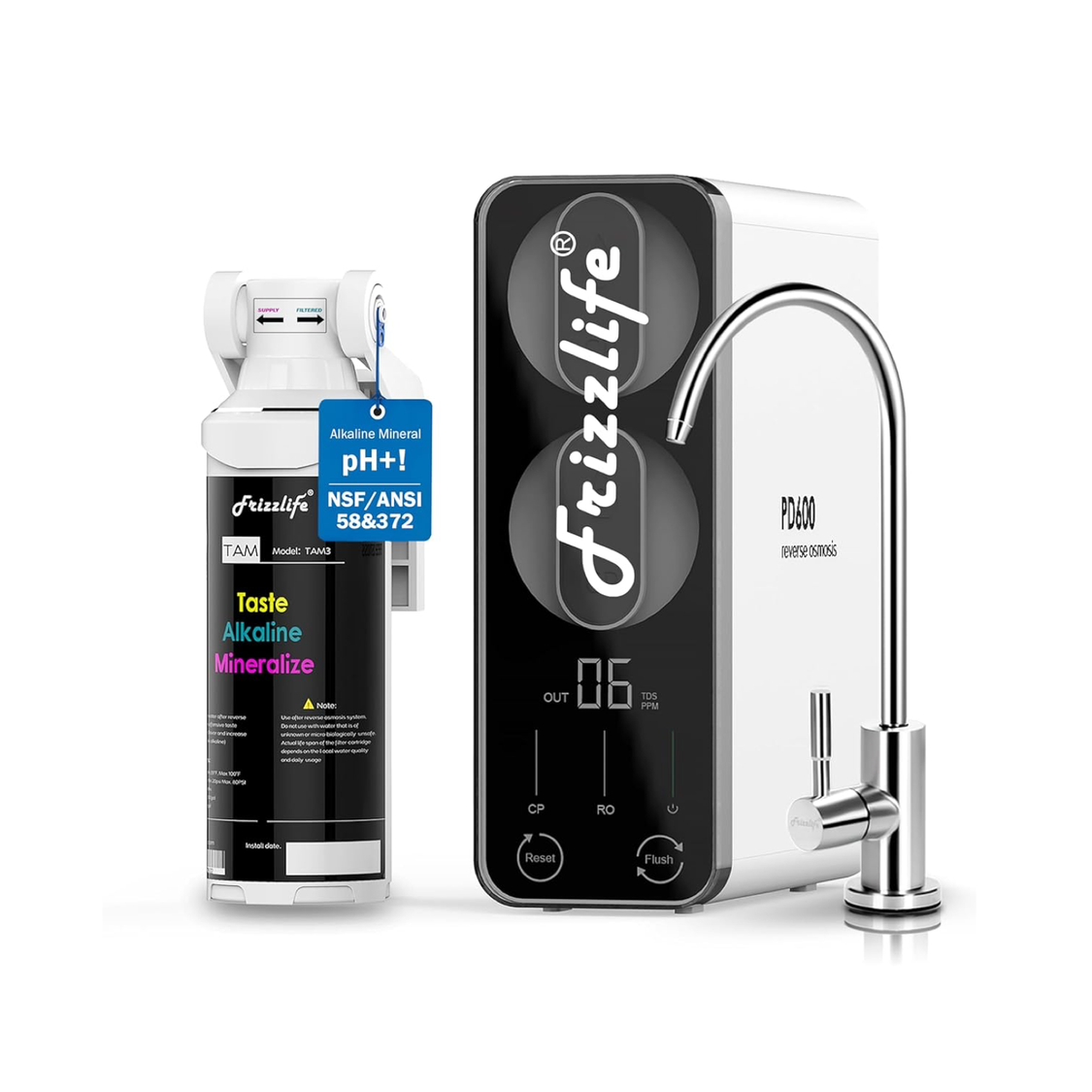
Frizzlife PD600-TAM3
A tankless reverse osmosis system with alkaline remineralization. An alternative to conventional storage-tank RO systems for everyday drinking water needs.
View PD600-TAM3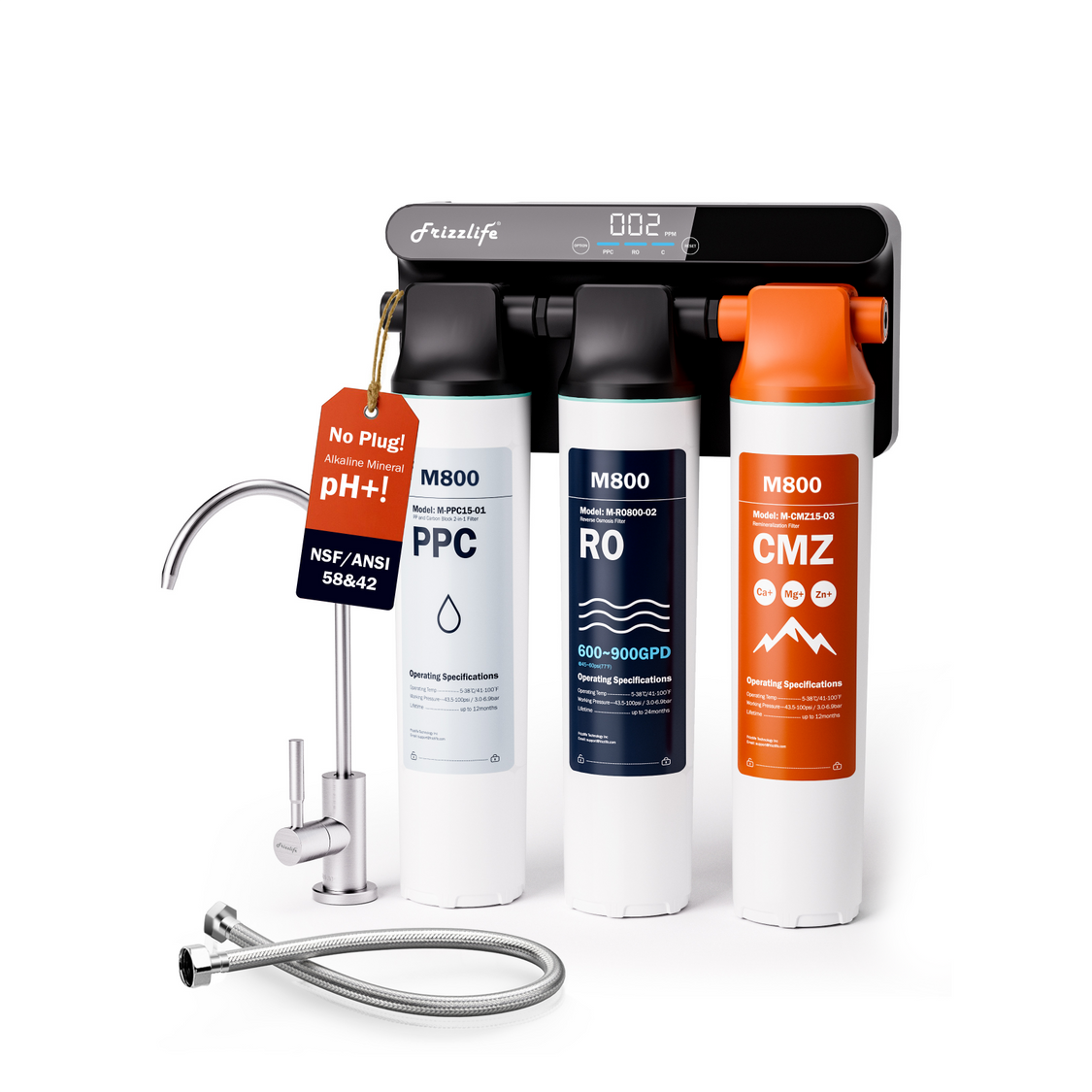
Frizzlife M800
A non-electric tankless reverse osmosis system designed to produce filtered water without a conventional storage tank. Check installation and water pressure requirements before choosing.
View M800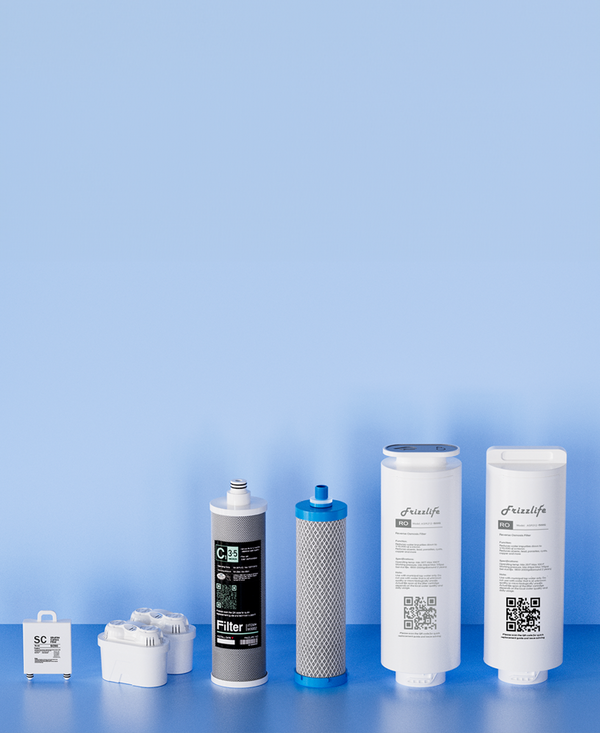
Frizzlife Replacement Filters
Slow RO production can sometimes be linked to restricted filters. Find compatible replacement cartridges for your Frizzlife system and follow the recommended maintenance instructions.
Find Replacement FiltersMaintenance & Troubleshooting for Your Reverse Osmosis Tank
When an RO storage tank is filling slowly, start with simple causes before assuming that the membrane or tank has failed. A complete diagnosis should separate three different complaints:
- The system produces filtered water too slowly.
- The tank does not store enough usable water.
- The tank stores water, but faucet delivery is weak.
These symptoms can overlap, but they do not always have the same cause.

When a 2–4 Hour Fill Is Normal and When Slow Filling Needs Attention
A 2–4 hour fill from empty can be normal for a standard residential pressure tank. It is especially reasonable when the system reaches shutoff, stores an expected amount of usable water, and provides normal faucet flow afterward.
Investigate further when:
- The tank previously filled faster under similar conditions.
- It remains nearly empty after many uninterrupted hours.
- Faucet output is only a trickle even after a full waiting period.
- The system never stops sending water to the drain.
- Fill time becomes progressively longer.
- The tank seems heavy but delivers very little water.
- The system cycles or behaves differently after recent service or installation.
There is no universal hour at which every RO tank should be declared faulty. Compare current behavior with the model manual and the system’s earlier performance under similar water conditions.
Check That the Feed-Water and Tank Valves Are Fully Open
Confirm that the system’s feed-water valve and storage-tank valve are in the operating position specified by the manual. A partly closed valve can restrict flow enough to make production or delivery seem abnormally slow.
If the system was recently serviced, also confirm that every valve reopened during startup. Avoid forcing a valve that does not move normally.
After correcting a valve position, allow an uninterrupted refill cycle before evaluating the result.
Check Incoming Water Pressure Against the System Manual
Use an appropriate pressure gauge or have the supply pressure checked. Compare the reading with the operating range stated for the specific RO model.
Pressure can vary during the day, particularly when multiple fixtures or appliances are using water. A single measurement during a low-demand period may not reveal pressure drops that occur when the tank is trying to refill.
If pressure is below the model’s requirements, resolve the supply condition or use only a pressure-support solution approved for the system. Do not assume one universal pressure threshold applies to all RO equipment.
Inspect Prefilters for Restricted Flow
Sediment and carbon prefilters can become restricted as they collect material from the feed water. This restriction reduces the pressure available at the membrane and lengthens tank fill time.
Review:
- The system’s maintenance history
- Changes in feed-water appearance or sediment load
- Any recent reduction in household supply pressure
- Whether fill time deteriorated gradually rather than suddenly
Replace filters according to the specific product instructions and actual water conditions. Do not rely on a generic replacement interval if the manual provides different guidance.
Evaluate the RO Membrane Without Assuming It Has Failed
A membrane can lose production capacity because of fouling, scaling, age, or unfavorable operating conditions. However, slow filling alone does not prove membrane failure.
Before focusing on the membrane:
- Verify that valves are fully open.
- Confirm adequate feed pressure.
- Check prefilters for restriction.
- Look for kinked tubing or leaks.
- Consider whether colder water explains a seasonal change.
- Confirm that water is not being drawn during the test.
If those checks are satisfactory and production remains substantially below the model’s expected performance, follow the manufacturer’s membrane evaluation or replacement procedure.
Check Empty-Tank Pre-Charge Using Model-Specific Instructions
Tank air pressure should be checked only under the conditions specified by the manufacturer—typically when the water side is fully drained and the tank is isolated or depressurized as directed.
Measuring pre-charge while water remains in the tank can produce a misleading reading. Adding air without first confirming the proper procedure can also reduce usable capacity or create other performance problems.
An incorrect pre-charge may cause:
- Weak faucet flow
- Reduced usable water volume
- A tank that appears to stop filling too early
- Unusual refill or shutoff behavior
Use the pressure value specified for the exact tank and system. If the tank will not hold its air charge or water appears at the air valve, contact qualified support because the internal separator may be compromised.
Look for Leaks, Kinked Tubing, and Drain-Flow Problems
Inspect accessible tubing and connections for:
- Sharp bends or flattened sections
- Loose fittings
- Moisture around connections
- Incorrect tubing routes after maintenance
- Continuous drain flow after the tank should be full
A small filtered-water leak can continually draw down the tank and prevent the system from finishing its fill cycle. A tubing restriction can reduce either production or faucet delivery, depending on where it occurs.
Do not indiscriminately restrict the drain line in an attempt to make the tank fill faster. Drain flow is part of normal RO operation, and modifications may affect membrane performance. Follow the system’s installation diagram.
Consider the Automatic Shutoff Valve When the Tank Never Finishes Filling
The automatic shutoff mechanism depends on proper pressure relationships. If feed pressure is inadequate, the tank cannot build appropriate pressure, there is a downstream leak, or the shutoff component is malfunctioning, the system may continue producing and draining water.
Before replacing the shutoff component, verify:
- Feed pressure is within the model’s operating range.
- The tank valve is open.
- The tank can accept and deliver water.
- Tubing follows the installation diagram.
- There are no faucet or fitting leaks.
- The tank pre-charge has been checked correctly.
- Water use is not preventing pressure from rising.
If the system still never reaches shutoff, use model-specific technical support rather than substituting parts based only on fill time.
Diagnose Low Faucet Flow Separately From Long Tank Fill Time
Low faucet flow can occur even when the tank filled normally. To distinguish delivery problems from production problems, observe what happens after several uninterrupted hours:
- Strong initial flow that gradually weakens: The tank is likely delivering stored water and approaching empty.
- Weak flow immediately from a heavy tank: Investigate tank air pressure, tubing, faucet restriction, or a downstream filter.
- Weak flow from a light tank: The tank may not be receiving enough water.
- Brief strong flow followed quickly by a trickle: Usable tank volume may be low, or the tank pre-charge may need evaluation.
This separation prevents a common troubleshooting mistake: replacing the membrane when the real problem is on the delivery side.
What to Do When Fill Time Gradually Becomes Longer
A gradual increase in fill time usually points to a changing operating condition rather than a sudden installation error.
Work through these steps:
- Compare current performance with earlier fill times under a similar season and household demand.
- Review prefilter maintenance and local sediment conditions.
- Measure feed pressure while the system is producing water.
- Check for new tubing restrictions or small leaks.
- Evaluate membrane production according to the manual.
- Check tank pre-charge only after correctly emptying the tank.
- Confirm that the system eventually reaches automatic shutoff.
Record the amount of water dispensed after a full waiting period and the time needed to recover. A simple performance log can reveal whether the issue is stable, seasonal, or steadily worsening.
When to Contact Support or Consider a Different RO System
Contact support when the tank remains empty, the system will not shut off, the tank will not hold its air charge, water appears at the air valve, or troubleshooting requires opening components not intended for routine user service.
A different system configuration may be worth considering when the existing unit works correctly but repeatedly cannot meet household demand. In that situation, the issue may be system sizing rather than a failed part.
Readers evaluating a replacement or differently sized setup can compare Frizzlife’s reverse osmosis filter systems, then confirm the storage configuration, production capacity, and pressure requirements on the individual product page.
The central expectation remains straightforward: a standard reverse osmosis tank often takes about 2–4 hours to fill from empty, but actual fill time is controlled by the system and operating conditions. A slower final stage can be normal as tank pressure rises. Consistently excessive fill times, declining performance, weak delivery, or failure to shut off call for systematic checks of pressure, filters, tubing, tank pre-charge, and control components.
References