Water line connection
The system connects below the sink, so filtered water is available from a faucet without a countertop unit.



Frizzlife 500 GPD Tankloses Umkehrosmose-Wassersystem mit Alkali und Remineralisierung, PX500-A
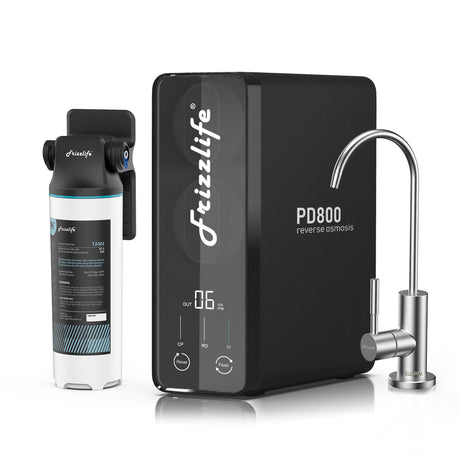
Frizzlife 800 GPD Tankloses Umkehrosmose-Wassersystem, PD800-TAM4

Frizzlife Umkehrosmose-Wasserfiltersystem - 600 GPD schneller Durchfluss unter dem Waschbecken RO-Wasserfilter, tanklos, reduziert TDS, 8 Stufen, 1,5:1 rein zum Abfluss, kompakt, PX600

Frizzlife RO Umkehrosmose-Wasserfiltrationssystem - 1200 GPD schnelle Strömung unter Waschbecken RO Wasserfilter, tanklos, reduziert TDS, kompakt, PD1200

Frizzlife UDS99 Under Sink Water Filter System, 8-Stufen-Direktanschluss Wasserfiltration, 0,5 Mikron reduzieren 99,99% Blei, Chlor, Schwermetalle, schlechten Geschmack, NSF-zertifizierte Elemente, Edelstahl

FRIZZLIFE MV99 Wohnmobil-Wasserfilter-NSF 42&53 zertifiziert

Wasserfiltersystem mit Frizzlife-Filter (NSF/ANSI 53 & 42), 0,5 μm. Direkt unter der Spüle installiert. Reduziert Chlor, schlechten Geruch, Geschmack und schwarze Partikel. Für sauberes und gesundes Trinkwasser.

Frizzlife DW10 Untertisch-Wasserfiltersystem, NSF/ANSI 53&42-zertifizierte Elemente, direkt angeschlossener 2-Stufen-Wasserfilter

Frizzlife DW10 Untertisch-Wasserfiltersystem, NSF/ANSI 53&42-zertifizierte Elemente, direkt angeschlossener 2-Stufen-Wasserfilter

Frizzlife M800 Non-Electric Tankless RO System, 900 GPD Alkaline Remineralization
Under sink water filters are built for shoppers who want cleaner, better-tasting water directly from the kitchen sink without taking up counter space. Frizzlife offers compact direct-connect filters, multi-stage systems, and RO-based options for different household needs. Use this collection to compare installation style, filtration goal, filter life, flow rate, and long-term maintenance before choosing a setup for drinking, cooking, coffee, and everyday kitchen use.
An under sink water filter is installed below the sink and connected to the cold-water line or a dedicated filtered-water faucet. Depending on the model, it may focus on chlorine taste and odor, sediment, lead reduction, or broader contaminant reduction through reverse osmosis. The best choice depends on your source water, cabinet space, installation preference, and whether you want a simple filter or a more advanced RO system.
The system connects below the sink, so filtered water is available from a faucet without a countertop unit.
Different layers may target sediment, chlorine taste and odor, fine particles, and other tested reduction claims.
Some under-sink systems use reverse osmosis membranes for broader dissolved-solids and contaminant reduction.
Cartridges are changed on a schedule, helping the system maintain stable filtration performance.
The filter stays inside the cabinet and keeps the kitchen surface clean.
Filtered water is available whenever you use the faucet, with no pitcher refilling.
Choose simple direct-connect filtration or RO-based systems based on your water quality goals.
Higher-capacity systems can support drinking, cooking, coffee, tea, and meal prep.
Taste, odor, lead, sediment, TDS, and specific contaminants may require different technologies.
Measure the under-sink area and leave room for filter changes.
Some systems use your existing faucet, while RO systems may include a dedicated faucet.
Longer filter life can reduce maintenance, but replacement cost and usage volume still matter.
| Use Case | Direct-Connect Under-Sink Filter | Under-Sink RO System | Faucet Filter |
|---|---|---|---|
| Best for | Taste, odor, and everyday filtration | Broader drinking-water reduction goals | Quick, low-commitment filtration |
| Installation | Connects under sink to cold water line | Requires more setup and may include drain/faucet connection | Mounts directly on faucet |
| Space needed | Cabinet space only | More cabinet space | No cabinet space |
| Filtration focus | Model-dependent carbon or multi-stage filtration | RO membrane plus pre/post filtration | Basic tap-water taste improvement |
| Better choice | You want clean access without a tank | You want stronger filtration performance | You rent or need a fast setup |
A good option when you want better-tasting water without installing a full RO setup.
Useful for households that want RO filtration without a bulky storage tank.
Check both capacity and replacement cost. A cheaper unit can cost more if filters need frequent replacement.
Hard water, high TDS, or specific contaminants may change which model makes sense.
Use these related collections to continue product selection after reviewing this guide.
Many direct-connect models are designed for simple DIY installation, while RO systems may require more setup. Always follow the product manual and check faucet and plumbing compatibility.
Many carbon-based under-sink filters are designed for chlorine taste and odor reduction. Check the specific model listing for tested claims.
It is usually more convenient for daily use because filtered water comes directly from the faucet and does not require refilling a pitcher.
Choose RO when you want broader reduction goals such as TDS or dissolved contaminants. Choose a regular under-sink filter when taste, odor, and simple kitchen filtration are the main priorities.
Replacement timing depends on the model, water quality, and usage volume. Follow the product-specific filter life recommendation.
Many under-sink filters are compact, but RO systems need more room. Measure the cabinet before purchasing.
Some renters can use simple direct-connect systems, but permanent plumbing changes may require landlord approval.
Yes, they are often used for drinking, coffee, tea, rinsing produce, and cooking when installed and maintained properly.