Does reverse osmosis remove minerals?
To understand how to add minerals to reverse osmosis water, it helps to understand what RO took out in the first place.
RO removes a wide range of dissolved ions, including contaminants like heavy metals and other unwanted solids.
It also reduces natural minerals such as calcium and magnesium, which are often responsible for fuller taste and mouthfeel.
Mineral rejection rates you can expect
Many RO membranes remove 92–99% of dissolved minerals. That’s why someone with high-TDS feed water can still end up with very low-TDS permeate. In many cases, calcium is reduced by about 97% and magnesium by about 96%.
So if your tap water starts at, say, 300–500 ppm TDS, it’s not unusual for RO water to come out in the single digits.
Why RO water can skew slightly acidic
People often ask, “Is RO water acidic?” The honest answer is: it can be, but it varies.
RO water has low alkalinity, which means its pH is less stable and can shift when exposed to air.
It may absorb carbon dioxide, which can slightly lower pH over time.
This is why RO water can sometimes measure around pH ~5.8–7.2 depending on conditions. The change is due to low buffering, not the system adding acid.
Recovery ratio and performance realities (why output changes over time)
RO systems naturally produce both purified water and wastewater, and performance can vary depending on water pressure, temperature, and membrane condition.
If water quality suddenly changes, it may not always be related to remineralization—RO membrane performance can also affect taste and TDS levels over time.
How to Fix Flat-Tasting RO Water (Remineralization Basics)
There are a few common ways to remineralize RO water. Each method differs mainly in convenience and control level.
| Method |
Typical TDS increase |
Typical pH result |
Control level |
Best fit |
| Inline remineralization cartridge (often calcite) |
+20–40 ppm |
~7.2–8.0 |
Medium |
Daily drinking, “set-and-forget” |
| “Alkaline” post-RO stage |
Varies |
Often ~7.2–8.0 (sometimes higher claims) |
Low–Medium |
People focused on pH feel/taste |
| Mineral drops (liquid) |
Often +10–20 ppm (depends on dose) |
Small change (varies) |
High |
Coffee/espresso, exact recipes |
| Blending RO with tap/mineral water |
Varies, often ~80–150 ppm target |
Varies |
Medium |
Custom profiles, if source is safe |
In most households, inline remineralization is the simplest long-term solution, while mineral drops are preferred for precision use cases.
Inline remineralization filter (calcite cartridge): “set-and-forget”
If you want the easiest answer to how to remineralize RO water, an inline remineralization cartridge is usually it.
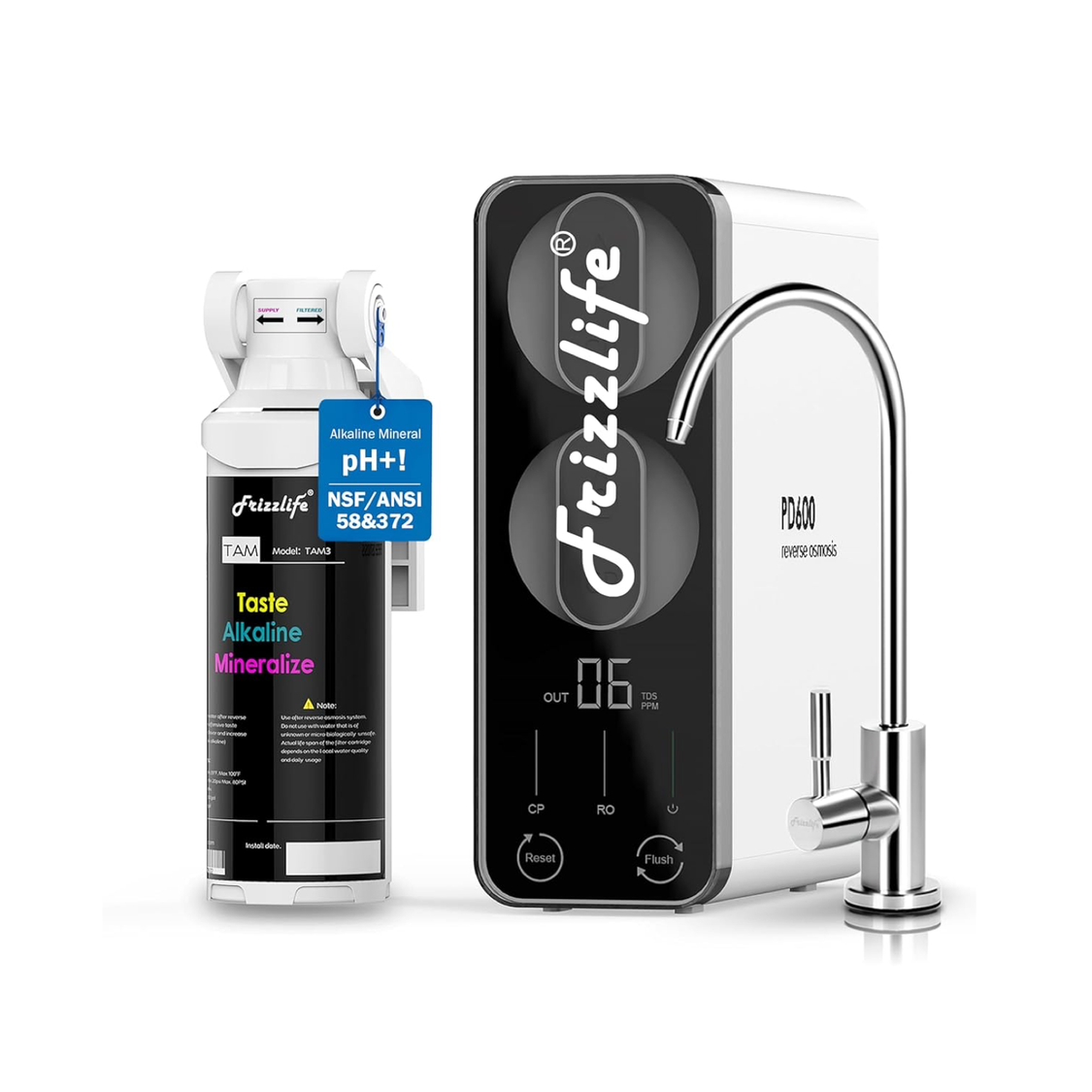
This reverse osmosis remineralized RO stage is a post-RO filter filled with mineral media like calcite or magnesium blends. These minerals such as magnesium and calcium dissolve in small volumes of water, letting you add essential minerals easily back into every glass of water.
When low-mineral RO water flows through the media, it dissolves a small amount and picks up mineral content—these are the minerals to add to reverse osmosis water for taste, pH balance, and essential mineral content. Many homes see a bump of about +20–40 ppm TDS, with pH moving toward ~7.2–8.0.
For most people, this is the sweet spot: you keep the clean taste of RO, but you remove the “empty” feeling.
Typical lifespan is often 6–12 months, but it depends on how much water you use and how aggressively the cartridge is designed to dissolve. If your household drinks a lot of water, your timeline may be shorter. If you only use it for cooking and a few glasses a day, it may last longer.
RECOMMENDED SYSTEMS
RO Systems & Replacement Solutions
Choose a high-performance reverse osmosis system or find compatible replacement filters to keep your water tasting clean and balanced with proper remineralization support.
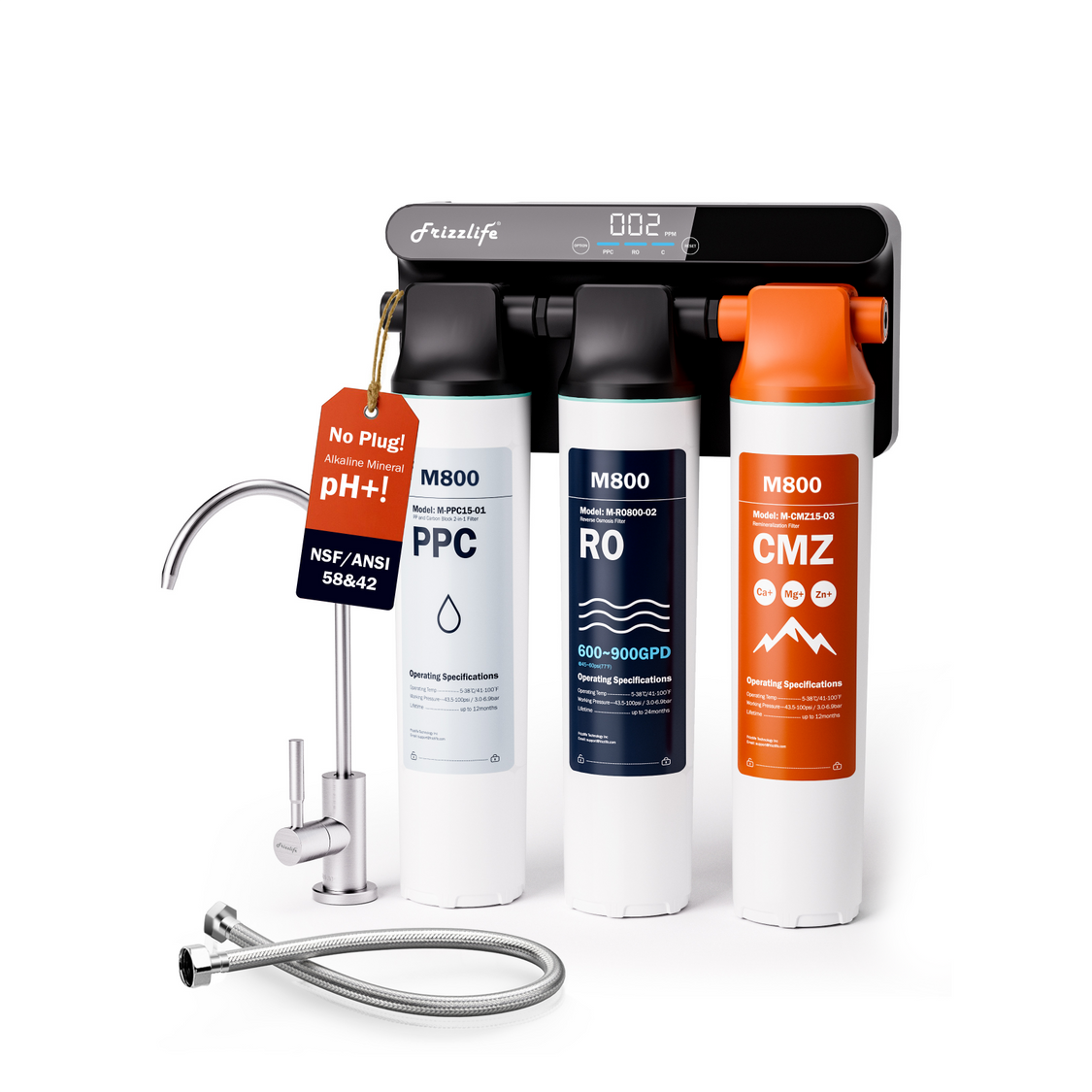
M800 RO System
High-capacity reverse osmosis system designed for consistent daily drinking water with improved taste and mineral balance options.
Explore RO Systems →
Replacement Filters
Keep your RO system performing at its best with certified replacement filters for consistent water quality and taste.
Find Replacement Filters →
Proper filtration and timely filter replacement are key to maintaining stable TDS levels and consistent taste in RO water systems.
Alkaline filter stage: more pH focus (but still about minerals)
Some systems add a stage marketed around “
alkaline water.” In practice, these stages often overlap with remineralization because raising pH usually comes from adding mineral media that increases buffering.
A helpful way to think about it: pH is a single number measured at one moment. What you often want is buffering—water that stays stable and doesn’t swing as easily. Remineralization often improves that buffering.
So yes, these stages can raise pH, but the final pH depends on contact time, water chemistry, and how depleted the media is. If you see big pH claims, treat them as “possible under some conditions,” not guaranteed in every kitchen.
Liquid mineral drops: the precision option
Trace mineral drops are the precision option if you want control. They let you add minerals to water in small volumes, ensuring minerals you need like calcium and magnesium are restored back into the water without affecting the reverse osmosis water’s purity.
This is a popular approach in coffee circles because it lets you add minerals in a measured way. You can make water that tastes great without adding too much hardness that can form scale inside kettles and espresso machines.
Drops also help if you don’t want a permanent hardware change. You can remineralize a pitcher, a bottle, or even a single glass of water.
The tradeoff is daily effort. If you already have a busy morning, will you really measure drops every time? Some people love the routine. Others get tired of it in a week. A practical middle ground is batch mixing: add drops to a dedicated bottle once per day (or once every few days), then pour from that.
Blending: mixing RO with tap or mineral water
Blending is exactly what it sounds like: mix RO water with a harder water source to reach a target TDS, often ~80–150 ppm for a more mineral-forward taste.
Blending can work well, but it has one big catch: it can reintroduce contaminants depending on what you blend in. If your tap water has known issues (like high nitrate, certain metals, or other concerns), blending may undo some of the reason you installed RO in the first place.
If you still want to blend, do it with testing and with a source you trust.
A simple blending math shortcut is:
Final TDS = (fraction A × TDS A) + (fraction B × TDS B)
So if your RO water is 5 ppm and your tap is 200 ppm, and you mix 75% RO with 25% tap:
Final TDS ≈ (0.75×5) + (0.25×200) = 3.75 + 50 = about 54 ppm.
That is right in the daily-drinking sweet spot—again, if the blended source is safe.
Benefits, tradeoffs, and safety considerations
Based on
CDC and WHO guidelines, consuming water with naturally occurring minerals can support daily mineral intake without compromising safety. Benefits of adding minerals include better flavor, smoother mouthfeel, and improved pH stability. Minerals like calcium and magnesium, added through water remineralization, turn otherwise “pure water” into a more satisfying drink. Adding minerals to RO water is simple with alkaline water pitchers, trace mineral drops, or inline cartridges. The following sections break down the key benefits, potential tradeoffs, and safety considerations of remineralization, highlighting how small changes in mineral content can influence flavor, mouthfeel, and pH stability.
Taste and mouthfeel: why minerals matter
Minerals change flavor in a way most people can notice right away. The first time I installed a remineralization stage in my own kitchen, I expected a subtle change. It wasn’t subtle. The water stopped tasting “blank” and started tasting more like what you get from a good chilled bottle of mineral water—still light, just less hollow.
That’s the main benefit of remineralizing reverse osmosis water: better taste and a better mouthfeel. Even a small mineral content can make water taste “crisper,” while ultra-low mineral water can taste thin or oddly sharp.
pH vs alkalinity: what actually changes
A lot of people chase pH because it’s easy to measure, but pH alone can be misleading. Alkalinity is what helps water resist pH swings. RO water is often low in alkalinity, so it can shift after it sits in a glass or pitcher.
Remineralization tends to increase alkalinity (buffering) and usually nudges pH upward as a result. That’s why people often report that their water feels “smoother” or less harsh after they add minerals back.
Is remineralized RO water healthier than plain RO?
It’s important to keep this grounded.
RO is strong for contaminant reduction. That’s the main health-related benefit: lower exposure to some unwanted substances in water. Remineralization is mainly about taste and balance.
The minerals you add back at 20–40 ppm TDS are small amounts. They are not a replacement for minerals from food. If you want calcium or magnesium for health, diet is still the main source for most people.
Still, there is a practical quality-of-life point: when water tastes better, people often drink more of it. And that matters.
What happens if you don’t remineralize RO water?
For most people, the biggest “problem” is simply preference. If you don’t remineralize, you may keep getting very low-mineral water that tastes flat. Some people get used to it. Others never do.
There are also a few practical effects worth knowing:
-
Very low mineral water can be more likely to show pH drift because it has low buffering.
-
Low mineral water can be less satisfying with meals, so people may drink less.
-
For coffee and tea, very low mineral water can sometimes taste dull or sour because extraction changes when the water has almost no hardness or alkalinity.
So it’s not that you’re “doing something wrong” by skipping remineralization. It’s that you may not be getting the most pleasant water your RO system can provide.
How to Choose a Remineralization Method
The best method depends mainly on how much convenience or control you want in daily use.
Installation, testing, and maintenance
Proper installation, testing, and maintenance ensure a remineralization stage performs as intended. The following sections cover where to position the cartridge, how to verify results with simple measurements, and practical routines for upkeep and troubleshooting, helping you maintain consistent taste, mineral balance, and water quality.
Where the remineralization stage goes
The remineralization stage is installed after the RO membrane, and sometimes after the storage tank for fresher taste at dispensing.
Ensure correct flow direction and proper installation, as incorrect setup or bypassing the stage can reduce its effectiveness.
How to test results: TDS, pH, and mineral balance
Testing turns this from guesswork into a simple routine.
A TDS meter is the easiest starting point. First test your baseline RO water. In many homes it’s 2–5 ppm. Then test after remineralization. If you installed a cartridge, you might see an uplift like +20–40 ppm.
pH is also useful, but treat it as “one signal,” not the whole story. Because RO water has low buffering, pH can shift after the water sits out. If you want consistent readings, test at the same time after dispensing, and keep your meter calibrated.
If you want to go deeper, mineral test kits or lab testing can measure calcium and magnesium. Most households won’t need that level of detail, but coffee hobbyists sometimes do because small changes can affect flavor and machine scaling.
Maintenance is simple: most remineralization cartridges last around 6–12 months depending on usage.
If taste becomes flat again or TDS drops noticeably, it usually indicates the cartridge media is exhausted and needs replacement.
Real-world use cases of reverse osmosis remineralization
Real-world experiences show how remineralization can transform reverse osmosis water from flat to enjoyable. The following case studies highlight typical home scenarios, coffee brewing considerations, and differences between city and well water, illustrating practical ways minerals enhance taste, mouthfeel, and overall water satisfaction.
Case study: “flat RO” to “refreshing” with an inline remin stage
A common home story goes like this: someone installs an RO system and loves the idea of purified water. For the first few days, the taste seems fine—then it starts to feel oddly lifeless. They try chilling it, adding lemon, even switching cups. Nothing sticks.
After adding a post-RO mineral stage, the same water often tastes “normal” again. In numbers, it may go from around 3 ppm TDS to 30–50 ppm, and pH may move closer to neutral. But the bigger change is sensory: the water has more body.
That’s why reverse osmosis remineralization is so popular. It doesn’t fight the RO process. It finishes it.
Case study: coffee and espresso with mineral drops
Coffee people can be intense about water because water is most of the cup. If you brew with water that has almost no minerals, extraction can shift and flavor can feel thin, sour, or just “missing something.”
Many coffee and espresso users start with RO water because it’s consistent and clean, then they add measured minerals back with drops to hit something like ~40–80 ppm TDS. The goal is flavor without heavy scaling.
A practical workflow is to mix a batch: fill a clean bottle, add a measured dose, shake, and use that bottle for brewing. It’s faster than dosing every single cup, and it keeps results repeatable.
Household scenarios: city water vs. well water
If you’re on city water, RO water filter plus remineralization is often enough for taste and peace of mind. Your prefilters and membrane handle the main filtration process, and the remin stage gives you better flavor.
If you’re on well water, you may need pretreatment before RO, depending on your well. For example, high sediment, iron, or hardness can foul an RO membrane faster. Some homes use sediment control or softening upstream so the RO stage lasts longer. Remineralization still stays at the end, because you want minerals added back only after the reverse osmosis process.
The 5-step “do this next” plan
-
Test your baseline RO water with a TDS meter and, if possible, pH.
-
Pick a target, such as TDS 40–100 ppm and pH 7.2–8.0 for daily drinking.
-
Choose your method: cartridge for low effort, drops for precision, blending only if your source water is safe.
-
Install the remin stage post-RO (or dose your water), then retest.
-
Set a reminder for maintenance, and recheck numbers monthly so results stay consistent.
Core message recap
Reverse osmosis is excellent at removing many unwanted dissolved solids, but it also strips out minerals that make water taste “normal.” Reverse osmosis remineralization adds small amounts of minerals back after the RO membrane, often bringing water into a pleasant range like 40–100 ppm TDS with pH closer to neutral. When done with controlled media and simple testing, you can keep the safety strengths of RO and still enjoy water that tastes crisp and balanced.
FAQs
1. How do you add minerals back into reverse osmosis water?
Adding minerals back into RO water is actually simpler than it sounds. The easiest approach is to use a post-RO remineralization filter, often an inline cartridge filled with calcite or a calcium-magnesium blend. The water passes through this stage and picks up a small, controlled amount of minerals—enough to improve taste and slightly raise pH without turning it into hard water. If you want more precise control, especially for coffee or espresso, you can use liquid mineral drops, which let you measure exactly how much calcium and magnesium you add. Another option is blending your RO water with safe tap or mineral water to reach a target TDS, though you have to be careful that the source water is free of contaminants. Essentially, RO is the cleaning step, and remineralization is like the “seasoning” step to make the water taste complete.
2. Is reverse osmosis water good for your teeth?
RO water is very clean, which is great for reducing exposure to contaminants, but people sometimes worry it’s “too pure” or even slightly acidic. Because RO water has very low buffering capacity, it can absorb carbon dioxide from the air and sometimes reach a pH around 5.8–6.5, which is mildly acidic. That said, it’s not like soda—drinking RO water occasionally won’t damage your enamel. Remineralized RO water, with a more neutral pH and a small amount of calcium and magnesium, can be gentler on teeth and less likely to contribute to enamel stress over time. Of course, your brushing habits, fluoride exposure, and diet matter much more than small pH differences. If you have sensitive teeth or erosion issues, adding minerals back for a more stable, neutral water is a reasonable step, and your dentist can give personalized advice.
3. Should I remineralize reverse osmosis water?
It really comes down to taste and personal preference. If your RO water tastes fine to you and you drink plenty of it, there’s no strict need to remineralize. But many people find low-mineral water tastes flat or “empty,” and adding a small amount of calcium and magnesium can make it feel smoother and more refreshing. Remineralization also helps stabilize the water’s pH, so it doesn’t swing as easily when exposed to air. In short, if your water is perfectly drinkable for you, you can leave it as-is, but if you hesitate to drink it or want a better flavor and mouthfeel, remineralization is usually the quickest, easiest improvement you can make.
4. What is the best mineral supplement to add to RO water?
The “best” supplement really depends on your goal. For everyday drinking with minimal effort, a post-RO remineralization cartridge is usually ideal—it gives a consistent, mild mineral boost without you having to think about it. If you want precise control over the exact mineral content, such as for brewing coffee or espresso, liquid mineral drops are the way to go, letting you dose calcium and magnesium accurately. Most people notice the biggest improvement in taste from adding calcium and magnesium, which are the classic “mineral water” ions that give water a fuller, smoother mouthfeel. Whatever you choose, stick with food-grade products made for water and avoid guessing with random powders, salt, or baking soda, which can throw off taste or add too much sodium.
5. What happens if you don't remineralize RO water?
If you skip remineralization, the main consequence is really just about taste. RO water will be very low in minerals—often under 5 ppm TDS—so it can taste flat, thin, or even slightly sharp. Some people get used to it and don’t mind, but others find it less satisfying to drink, and they might end up drinking less water overall. Low-mineral water also has very little buffering, so the pH can drift more easily, and for things like coffee or tea, extraction might feel dull or sour without enough hardness. So it’s not dangerous to skip remineralization, but you may miss out on the fuller taste, smoother mouthfeel, and more stable water chemistry that a small mineral boost can provide.
References