


Choosing between a UV water filter vs reverse osmosis starts with one question: What is actually wrong with your water?
A reverse osmosis (RO) system uses a membrane to reduce dissolved salts, metals, minerals, and many other contaminants. A UV water purifier uses ultraviolet light to inactivate microorganisms, but it does not remove dissolved solids, chemicals, or sediment.
That means neither technology is universally better:
-
Choose UV when the water is already clear and chemically suitable, but a verified microbial risk requires disinfection.
-
Choose RO when dissolved contaminants, elevated total dissolved solids (TDS), salinity, or an unpleasant mineral or metallic taste are the main concerns.
-
Consider RO and UV together when testing confirms both dissolved contaminants and microbiological risks.
-
Use pretreatment first when sediment, cloudiness, hardness, or other feedwater conditions could interfere with either system.
The correct choice should be based on a water-quality report or laboratory test—not TDS alone, appearance alone, or a one-size-fits-all recommendation.
UV Water Filter vs Reverse Osmosis: The Core Difference
The fundamental difference between RO and UV filtration is their treatment method.
RO is a separation process. Water pressure pushes feedwater through a semipermeable membrane. The membrane allows treated water to pass while rejecting many dissolved substances and particles.
UV is a disinfection process. Water passes through a chamber where it receives ultraviolet light at a germicidal wavelength. An adequate UV dose damages microbial DNA or RNA so organisms can no longer reproduce.
In simple terms, RO physically separates many contaminants from water. UV exposes microorganisms to light but leaves the water’s dissolved composition largely unchanged.
What Is the Difference Between UV Purification and Reverse Osmosis?
The difference between RO and UV filtration becomes clearer when the treatment goals are separated:
-
RO reduces dissolved contaminants. Depending on the system design and verified performance, these may include dissolved salts, lead, arsenic, fluoride, and other inorganic or organic contaminants.
-
UV inactivates microorganisms. Properly designed UV treatment can address bacteria, protozoa, and viruses, although performance depends on UV dose, reactor validation, flow, and water clarity.
-
RO changes TDS and taste. Removing dissolved minerals can make salty, mineral-heavy, or metallic-tasting water more pleasant.
-
UV does not change TDS or taste significantly. It generally preserves the water’s existing minerals because it is not a dissolved-solids removal process.
-
RO produces reject water. The amount varies considerably by model, operating pressure, temperature, and feedwater quality.
-
UV does not create an RO-style reject stream. Water passes through the UV chamber without being separated into product and reject water.
Both technologies require proper installation and maintenance. Neither should be treated as an automatic guarantee of safe water under every condition.
UV Water Filter vs Reverse Osmosis Comparison Table
|
Decision factor |
Reverse osmosis system |
UV water purifier
|
|---|---|---|
|
Primary function |
Membrane filtration and dissolved-contaminant reduction |
Microbial disinfection |
|
Reduces TDS |
Yes |
No |
|
Addresses dissolved salts |
Yes, subject to membrane performance |
No |
|
Addresses metals such as lead or arsenic |
Can reduce them when the system is designed and verified for those contaminants |
No |
|
Addresses bacteria and protozoa |
A properly functioning, validated membrane can provide a physical barrier |
Inactivates them when the required UV dose is delivered |
|
Addresses viruses |
Performance is system-specific and should be verified |
Can inactivate viruses, but effectiveness is dose- and validation-dependent |
|
Removes sediment |
Usually relies on separate prefilters |
No; prefiltration is normally required |
|
Requires clear water |
Pretreatment may still be necessary to protect the membrane |
Yes; particles and cloudiness can reduce UV effectiveness |
|
Changes minerals and taste |
Usually lowers mineral content and may change taste |
Generally leaves dissolved minerals and taste unchanged |
|
Produces reject water |
Yes |
No RO-style reject stream |
|
Main maintenance |
Prefilters, postfilters, membrane, sanitation, and system checks |
Lamp, sleeve cleaning, monitoring, and prefilter maintenance |
|
Best general fit |
Elevated TDS, dissolved contaminants, salinity, or undesirable mineral taste |
Clear, otherwise suitable water with a verified microbial concern |
What RO Removes That UV Does Not
The most important advantage of RO in a reverse osmosis vs UV water purifier comparison is its ability to reduce dissolved substances.
Depending on the membrane, system configuration, feedwater, and certified or tested contaminant claims, RO can reduce:
-
Dissolved salts and overall TDS
-
Lead and arsenic
-
Fluoride
-
Certain pesticides and other chemicals
-
Calcium, magnesium, and other dissolved minerals
-
Many microorganisms through physical separation
RO performance is not identical across all systems. Buyers should confirm that a specific unit has documented reduction claims appropriate to the contaminants found in their water.
RO also should not be assumed to remove every possible chemical on its own. Some systems use carbon stages to address contaminants that are not effectively managed by the membrane alone. Treatment should always be matched to the actual water analysis.
What UV Disinfection Does—and What It Cannot Remove
UV is useful when the primary problem is microbial rather than chemical. It can inactivate microorganisms without adding disinfectant chemicals or removing naturally occurring minerals.
However, UV does not remove:
-
TDS
-
Salt
-
Lead, arsenic, or other dissolved metals
-
Hardness minerals
-
Pesticides or most other dissolved chemicals
-
Sediment and visible particles
-
Inactivated microorganisms or other physical material
Calling UV a “filter” can therefore be misleading. The UV chamber disinfects water, but it does not strain out contaminants. Most installations need sediment filtration before the UV chamber, and additional treatment may be necessary for chemical contamination.
Is UV or RO Better for Drinking Water at Home?
RO is generally the better fit when testing identifies dissolved contaminants or when the water has elevated TDS, salinity, or an undesirable mineral taste. UV is generally the better fit when water is clear and chemically acceptable but requires an additional barrier against microorganisms.
For many North American homes on a regulated municipal supply, neither decision should be made from TDS alone. Start with the utility’s annual water-quality report and consider household-specific issues such as older plumbing, recurring advisories, or taste concerns.
Private-well users usually need more comprehensive testing because well quality can change with season, flooding, nearby land use, and local geology.
When a UV Water Purifier Is the Better Choice
UV makes the most sense when disinfection—not dissolved-contaminant removal—is the defined treatment goal.
Choose UV When Testing Confirms a Microbial Risk in Otherwise Suitable Water
A TDS reading below 300 parts per million is sometimes used as a practical starting point when comparing UV vs reverse osmosis. If the water is clear, tastes acceptable, and testing shows no problematic dissolved contaminants, UV may be appropriate when the remaining concern is microbiological.
However, 300 ppm is not a safety standard or a universal dividing line. Low-TDS water can still contain a harmful contaminant, while higher-TDS water is not automatically unsafe. TDS reports the combined concentration of dissolved substances but does not identify what those substances are.
Before choosing UV, confirm that:
-
The water is chemically suitable for drinking.
-
Turbidity and sediment are adequately controlled.
-
The UV unit is properly sized for the required flow.
-
The system provides the necessary validated UV dose.
-
The lamp and protective sleeve can be maintained as directed.
-
The household understands that UV provides no residual disinfection after water leaves the chamber.
Although “water sterilization” is a common search term, disinfection is more accurate. UV performance is expressed as microorganism inactivation under specified conditions; it should not be described as making every water source completely sterile.
Examples include a private well with acceptable chemical results but recurring microbiological findings, or an otherwise suitable supply for which a qualified treatment plan calls for an additional microbial barrier. Clear appearance alone is not evidence that UV is needed or that the water is safe. During a boil-water advisory, follow local authority instructions even if a UV system is installed.
Why UV Requires Clear, Pre-Filtered Water
UV light must reach microorganisms to inactivate them. Sediment, cloudiness, color, and deposits on the lamp sleeve can absorb or scatter light and shield microorganisms from the required dose.
That is why UV systems commonly depend on pretreatment. The appropriate stages vary with the water source but may include sediment filtration or treatment for substances that cause fouling.
Water may look clear while still having conditions that reduce UV transmission. Proper design should consider measured turbidity, UV transmittance where applicable, flow rate, and the UV manufacturer’s feedwater requirements.
Does UV Remove TDS, Heavy Metals, Chemicals, or Sediment?
No. UV does not reduce TDS, heavy metals, dissolved chemicals, hardness, or sediment. It changes the ability of targeted microorganisms to reproduce without removing the water’s dissolved constituents.
If a water test finds lead, arsenic, excessive fluoride, salinity, or another dissolved contaminant, installing UV alone leaves that issue unresolved. A suitable filtration or separation process must be selected for the identified contaminant.
When UV-Only Treatment Can Leave the Main Water Problem Unresolved
Choosing UV alone can create false confidence if the actual problem is chemical or physical.
For example:
-
Salty water remains salty.
-
Lead or arsenic remains present unless another treatment stage reduces it.
-
Hardness minerals still cause scale.
-
Sediment continues to affect appearance and plumbing.
-
Unpleasant mineral or metallic tastes generally remain.
-
Cloudiness can interfere with the UV dose itself.
UV should therefore be selected only after confirming that disinfection is the treatment task it needs to perform.
When a Reverse Osmosis Water Purifier Is the Better Choice

RO is usually the more appropriate point-of-use technology when water contains undesirable dissolved substances. It provides broader contaminant reduction than UV, although it also requires more plumbing, operating pressure, maintenance, and water management.
Choose RO When Testing Finds Dissolved Contaminants, Salinity, or Elevated TDS
A TDS result above 300 ppm may be a reason to investigate RO, particularly when water tastes salty, mineral-heavy, or otherwise unpleasant. RO may also be appropriate for some private wells or borewells—drilled groundwater wells—where testing identifies dissolved salts, metals, fluoride, or other membrane-reducible contaminants.
Use the following as practical prompts rather than automatic buying rules:
-
TDS is elevated: Identify which dissolved substances are creating the reading.
-
Water tastes salty: Test for chloride, sodium, and other relevant constituents.
-
Water tastes metallic: Test for iron, copper, manganese, lead, and other possible causes.
-
The home uses a private well: Obtain a laboratory analysis instead of relying on taste or a handheld TDS meter.
-
The water is hard: Determine whether an RO drinking-water system or a whole-house softening strategy is needed—or whether both have separate roles.
RO is most compelling when a test identifies contaminants the selected membrane system is documented to reduce. A high TDS number alone does not reveal whether the dissolved material presents a health concern.
Why RO Works Better When You Need to Remove Chemicals vs Pathogens
When dissolved chemicals are the main concern, RO is generally more useful than UV because UV does not separate those chemicals from water.
A properly selected RO system can reduce a broad range of dissolved contaminants, while its carbon and prefiltration stages may address additional taste, odor, or membrane-protection needs. Exact performance remains contaminant- and model-specific.
The chemicals-versus-pathogens distinction should not be oversimplified, however:
-
RO can provide a physical barrier to many microorganisms when the membrane and seals are intact.
-
UV can be highly effective for microbial inactivation when the water is clear and the required dose is delivered.
-
UV does not reduce dissolved chemical contamination.
-
RO does not provide the same active disinfection process as UV, and poor downstream hygiene can still compromise treated water.
If the source contains both chemical and microbiological hazards, combined or multi-barrier treatment may be appropriate.
Why the 300 ppm TDS Guideline Is a Starting Point, Not a Safety Standard
TDS measures the total concentration of dissolved material. It does not show whether the water contains harmless minerals, excessive salts, or a specific contaminant at a concerning level.
A TDS meter also cannot detect many important hazards individually. For example, two water samples can have similar TDS readings while having very different contaminant profiles.
Use TDS to:
-
Notice changes in source-water composition
-
Compare feedwater and RO-treated water
-
Investigate salinity or mineral-related taste
-
Help assess membrane operation alongside other checks
Do not use TDS to declare water safe, diagnose a specific contaminant, or decide that RO is always necessary above one universal number.
Can Reverse Osmosis Address Microorganisms Without UV?
A properly designed and maintained RO membrane can provide a strong physical barrier to bacteria, protozoa, and many viruses. World Health Organization guidance recognizes that approved devices can remove almost all pathogens, but performance should be confirmed through appropriate certification or validated manufacturer data.
Several conditions matter:
-
The membrane and seals must remain intact.
-
The system must be installed correctly.
-
Filters and storage components must be changed or sanitized as directed.
-
Treated-water tubing, tanks, and faucets must be protected from downstream contamination.
-
The unit’s specific microbiological claims must be verified.
For municipal water that is already disinfected, UV after RO may add little practical value. For an untreated or microbiologically variable source, a qualified water-treatment professional may recommend UV or another disinfection barrier based on testing and system design.
Why RO Is Not the Same as Whole-House Water Softening
An under-sink RO system can reduce hardness minerals in the drinking water it treats, but it is not the same as softening all the water entering a home.
A whole-house softener is designed primarily to manage hardness throughout plumbing, fixtures, and appliances. A point-of-use RO system treats a smaller volume for drinking and cooking.
Very hard feedwater can also contribute to membrane scaling. Depending on the water analysis, pretreatment may be necessary to protect the RO system. Homeowners should not expect a kitchen RO unit to resolve scale in showers, water heaters, or household plumbing.
Which Water Problems Are Better Suited to UV and Which to RO?
The most reliable way to compare an RO vs UV water filter is to match each technology to a specific water problem.
Municipal Water With Low TDS and a Microbial Concern
If municipal water is clear, chemically acceptable, and relatively low in TDS, RO may be unnecessary when the only verified concern is microbial. UV can provide targeted disinfection without reducing minerals or producing reject water.
First confirm whether treatment is actually needed. Municipal systems already use regulated treatment and monitoring, and an occasional advisory should be handled according to local public-health instructions.
Well or Borewell Water With Dissolved Minerals, Metals, or Variable Quality
Private-well water deserves broader testing. Depending on geology and surrounding land use, it may contain hardness minerals, iron, manganese, arsenic, nitrate, salinity, microorganisms, or other contaminants.
RO may be suitable for specific dissolved contaminants, but well water can also require sediment filtration, softening, iron treatment, or disinfection. Neither RO nor UV should be selected as the sole solution until the contaminant profile is known.
Cloudy Water, Sediment, or High Turbidity
Cloudy water requires investigation and pretreatment.
Sediment can:
-
Shield microorganisms from UV light
-
Coat a UV sleeve
-
Clog RO prefilters
-
Reduce RO production
-
Accelerate fouling and maintenance
-
Indicate a source or plumbing problem that needs correction
Do not send visibly dirty water directly into either treatment technology and assume the final stage will compensate for inadequate pretreatment.
Salty, Metallic, or Otherwise Unpleasant-Tasting Water
RO may improve taste when dissolved salts or minerals are responsible. UV is unlikely to help because it does not change the concentration of those substances.
Taste is not a precise diagnostic tool. Metallic taste can come from different sources, including plumbing or naturally occurring minerals. Test the water before selecting a system, especially if lead or another health-related contaminant is suspected.
Mixed or Seasonally Changing Water Sources
Homes that alternate between municipal water and a private well—or experience seasonal changes in well quality—may need a multi-barrier approach.
Testing should be repeated when:
-
The source changes
-
Flooding or major storms affect the area
-
Taste, odor, or appearance changes
-
Plumbing work is completed
-
A well is repaired or disinfected
-
There is a recurring microbiological result
A treatment system designed around the best-quality season may underperform when source conditions deteriorate.
What Can Happen If You Choose the Wrong Treatment Technology?
Choosing UV when dissolved contaminants are the main problem leaves those contaminants in the water. Choosing RO by default when only targeted disinfection is needed may add unnecessary wastewater, maintenance, and installation complexity.
Other mismatches include:
-
Installing UV without adequate sediment filtration
-
Using RO on scale-forming water without needed pretreatment
-
Assuming low TDS means no harmful contaminants are present
-
Assuming high TDS automatically means the water is unsafe
-
Adding UV after RO without addressing contamination in a poorly maintained storage tank
-
Selecting treatment before identifying the source of an unusual taste or odor
The goal is not to buy the technology with the most treatment stages. It is to use the fewest appropriate stages that reliably address the verified problems.
Can UV and Reverse Osmosis Be Used Together?
Yes. RO and UV can be used together when the source presents both dissolved-contaminant and microbial risks. Combining them is not automatically necessary, however.
When an RO and UV Combination May Be Appropriate
A combined system may be justified when:
-
A private well contains both microorganisms and dissolved contaminants.
-
Water quality changes substantially by season.
-
Testing identifies chemical concerns while the source lacks reliable disinfection.
-
A storage tank or distribution setup creates a documented post-treatment microbial concern.
-
A qualified treatment plan calls for multiple barriers.
The treatment order and pretreatment requirements depend on the water analysis and system design. UV is often positioned after filtration so the water entering its chamber is sufficiently clear, but installation should follow the specific equipment instructions.
When Adding UV After RO May Be Unnecessary
UV after RO may be unnecessary when the incoming municipal water is already disinfected, the RO system is properly maintained, and there is no verified downstream microbial problem.
Adding more stages can mean:
-
More components to install
-
Additional electricity use
-
More maintenance tasks
-
More opportunities for neglect
-
Higher ownership complexity without addressing a demonstrated need
An extra treatment stage is valuable only when it controls a relevant risk.
Why Pretreatment May Be Needed Before Either Technology
RO membranes and UV chambers both depend on suitable feedwater.
Pretreatment may be required to manage:
-
Sediment
-
Turbidity
-
Hardness and scale
-
Iron or manganese
-
Compounds that foul equipment
-
Chlorine or other conditions restricted by the selected membrane
Requirements are system-specific. Review the manufacturer’s feedwater limits and use test results to determine whether additional stages are needed.
How Water Testing Prevents Over-Treatment and Under-Treatment
A useful water assessment may include:
-
The source: municipal, private well, shared well, or mixed
-
The utility’s water-quality report, if applicable
-
TDS
-
Turbidity or visible sediment
-
Hardness
-
pH
-
Microbiological results
-
Metals or chemicals relevant to local conditions
-
Changes in taste, odor, or color
A handheld TDS reading is helpful but incomplete. Laboratory testing and local water-quality information provide the contaminant-specific evidence needed to choose RO, UV, both, or another technology.
RO vs UV Ownership, Installation, and Maintenance
Treatment performance depends on ownership practices as much as the initial purchase.
Wastewater: RO Reject Water vs UV’s No-Reject-Water Operation
RO separates water into a treated stream and a reject stream. The reject-water volume varies by system efficiency, feed pressure, temperature, membrane condition, and feedwater quality, so one universal ratio should not be applied to every unit.
UV does not separate contaminants and therefore does not create the same type of reject stream. This makes UV more water-efficient when disinfection is the only treatment needed.
Minerals and Taste: Why RO Changes Water More Than UV
RO lowers dissolved mineral content and can noticeably change taste. Some people prefer the cleaner or lighter taste, especially when feedwater is salty or mineral-heavy. Others find very low-TDS water comparatively flat.
UV leaves dissolved minerals in place, so it generally does not correct mineral-related taste. Mineral removal by RO should be viewed primarily as a treatment and taste consideration; health implications depend on overall diet and other factors.
Filter and Membrane Changes vs UV Lamp Maintenance

RO maintenance can include:
-
Replacing sediment and carbon filters
-
Replacing the membrane when required
-
Sanitizing storage and treated-water components
-
Inspecting tubing, fittings, and drain connections
-
Monitoring production and treated-water quality
UV maintenance can include:
-
Replacing the lamp as directed
-
Cleaning or replacing the protective sleeve
-
Replacing upstream sediment filters
-
Checking alarms or intensity indicators
-
Confirming that flow conditions remain within the system’s design
A UV lamp can still produce visible light after its effective germicidal output has declined. Follow the manufacturer’s maintenance schedule rather than judging performance by appearance.
Water Pressure, Electricity, and Under-Sink Installation Requirements
RO requires adequate feed pressure to move water through the membrane. Some systems use a pump, while others rely on household water pressure. Installation may also require a feed connection, treated-water faucet, drain connection, and space for filters or a storage tank.
UV requires electricity for the lamp and adequate space for the chamber and prefilters. The chamber should be installed so the lamp and sleeve remain accessible for maintenance.
Before selecting an under-sink water filtration system, check available cabinet space, electrical access, feedwater conditions, faucet configuration, and the system’s installation requirements.
If taste changes unexpectedly:
-
Check whether filters are overdue for replacement.
-
Confirm that new filters were flushed as directed.
-
Inspect for stagnant water or long periods of non-use.
-
Compare feed and treated-water TDS as a general operational check.
-
Arrange contaminant-specific testing if the change persists.
Explore Frizzlife RO Options
If your water test indicates that reverse osmosis is the appropriate treatment method, compare these Frizzlife options and choose a system that fits your installation and maintenance needs.
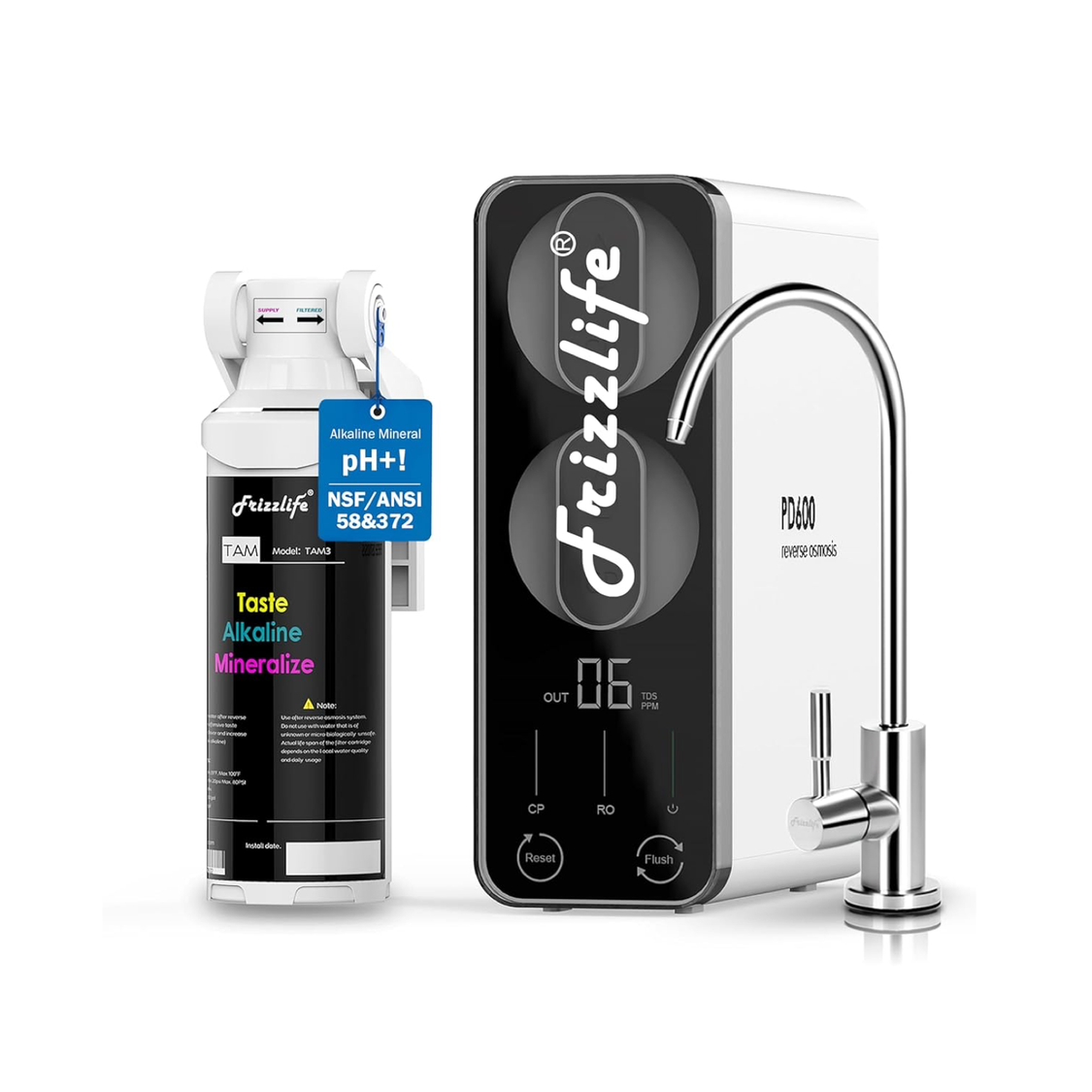
Tankless RO System
Frizzlife PD600-TAM3
A 600 GPD tankless reverse osmosis system with alkaline remineralization for an under-sink drinking-water setup.
View PD600-TAM3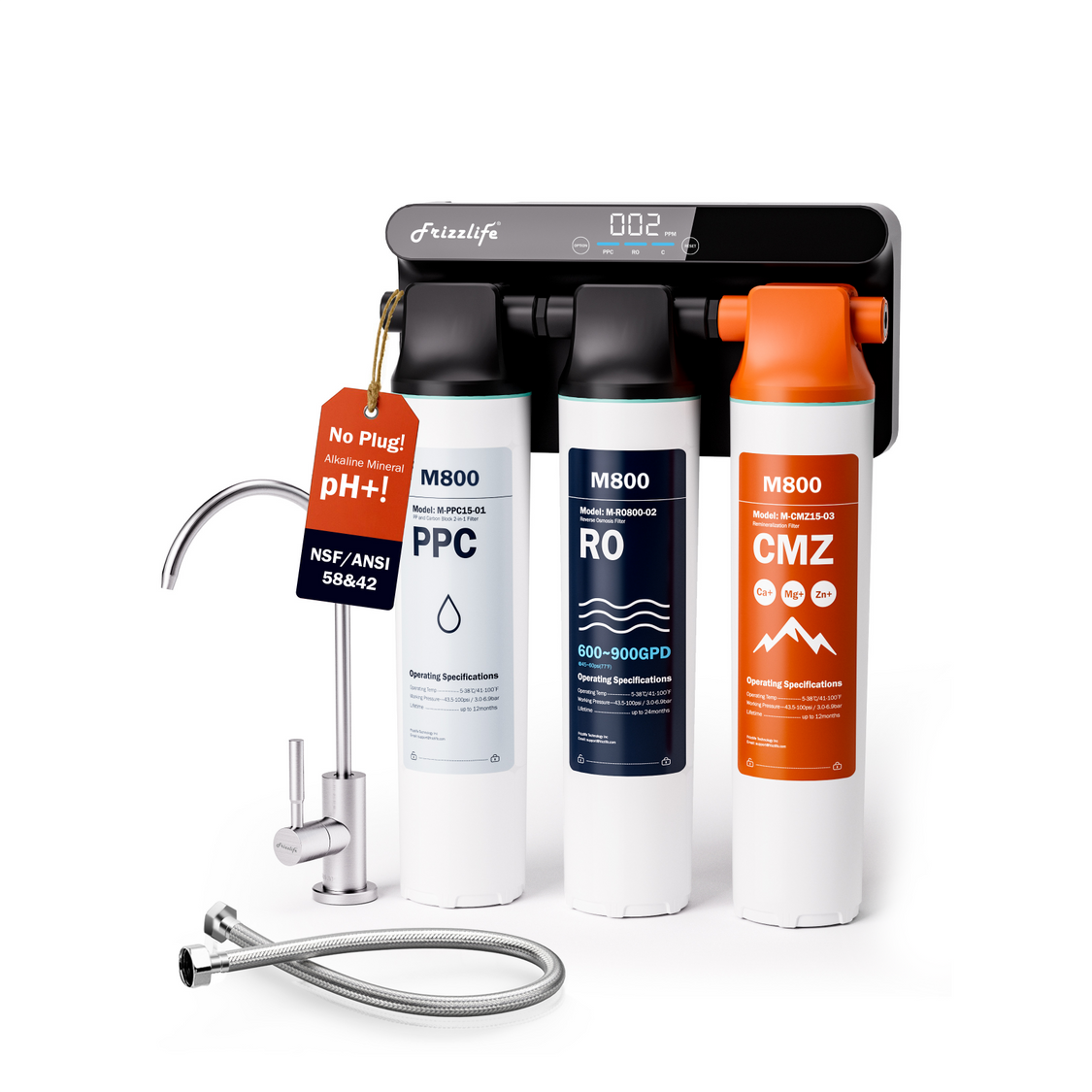
Non-Electric Tankless RO
Frizzlife M800
A non-electric tankless reverse osmosis system with 900 GPD rated flow and alkaline remineralization.
View M800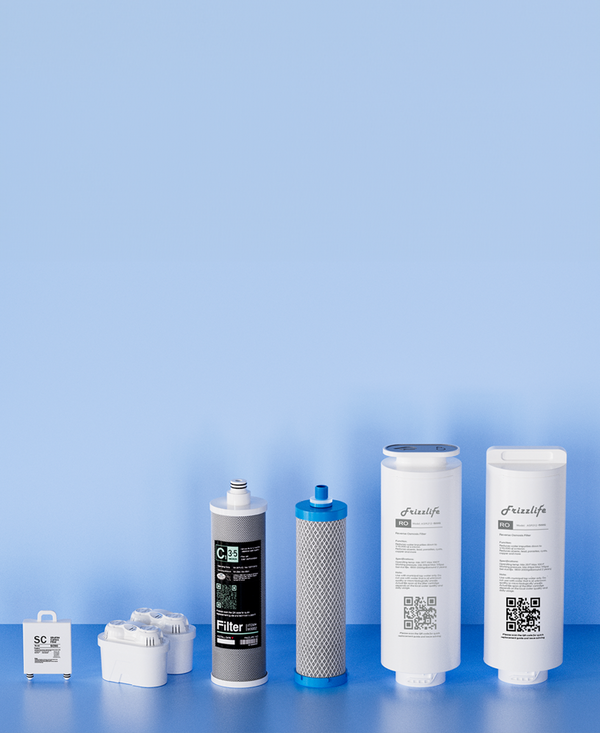
Maintenance
Replacement Filters
Find compatible replacement cartridges for Frizzlife RO and under-sink filtration systems when routine filter maintenance is due.
Find Replacement FiltersHow to Choose the Right Drinking Water System for Your Home
The final decision in a UV water purifier vs RO comparison should follow a simple order: test, identify the problem, select the appropriate technology, and verify that the installation conditions support it.
Check Your Water-Quality Report, TDS, Turbidity, and Source Before Buying
For municipal water, review the utility’s current water-quality report and consider whether household plumbing could add a separate concern.
For private wells, use an accredited laboratory and follow local testing guidance. Test again when source conditions change.
Record:
-
Water source
-
TDS
-
Hardness
-
Turbidity or sediment
-
Relevant metals and chemicals
-
Microbiological results
-
Taste or odor concerns
-
Available water pressure and installation space
Consider Combined Treatment When Both Chemical and Microbial Risks Are Verified
RO and UV can complement each other when the source has mixed risks. Pretreatment may also be necessary to control sediment, scale, or fouling.
A multi-stage system should be based on the contaminant profile—not the assumption that more stages always produce safer water.
Final Verdict: There Is No Universal Winner in Reverse Osmosis vs UV Water Purification
RO and UV perform different jobs.
Choose UV when testing confirms a microbial concern in otherwise clear and chemically suitable water. Choose RO when dissolved contaminants, elevated TDS, salinity, or objectionable mineral taste are the main problems. Use RO and UV together only when both treatment needs are present.
Most importantly, do not treat 300 ppm TDS as a universal safety line. Test the water, identify the contaminants, and select a system with documented performance for those conditions.
References
https://www.epa.gov/system/files/documents/2022-05/uv-toolkit-815-B-21-007_0.pdf
https://iris.who.int/server/api/core/bitstreams/5166139c-8145-451f-b429-094a63f65bce/content