


Have you ever taken a sip of water and been surprised by a distinctly sweet flavor? You are not alone. In many homes and regions, people notice that their water tastes sweet, a sensation that can be both puzzling and a little concerning. Is it something in the pipes? Is the water quality safe? Or is it just you? Understanding what causes this unexpected taste, whether it signals a problem, and how to respond is important for anyone who wants to ensure their drinking water is safe and pleasant.
This comprehensive guide will explore the common reasons why water may taste sweet. We'll look at the science of taste, the role of minerals and plumbing, and the potential health factors involved. By the end, you'll have a clear understanding of what that sweet taste means and a practical plan for what to do next.
Quick Reference: Common Causes of Sweet-Tasting Water
Sometimes you just need a quick answer. This table summarizes the most common reasons your water tastes sweet, whether it's a concern, and what action you should consider.
| Cause | Benign or Concerning? | Action Needed |
| High calcium/magnesium (hard water) | Usually benign | Optional (consider a water softener or water filtration system) |
| Raised water pH/alkalinity | Benign | None, typically safe |
| Lead or metal leaching from old pipes | Concerning, serious health risk | Test your water immediately |
| Plastic pipe (PEX/PVC) leaching | Sometimes concerning | Flush pipes; consider testing if taste persists |
| Personal taste perception/health factors | Usually benign | Monitor health; consult a doctor if persistent or new |
| Recent plumbing changes or repairs | Usually benign | Let the water run to flush the system |
The Science: Why Water Can Taste Sweet
Most of us expect water to be neutral and flavorless. So, why does water taste sweet sometimes? The answer lies in a combination of water chemistry and how our own taste buds work.
How Your Sense of Taste Works
Your tongue is covered in thousands of taste buds, each containing receptors for five basic tastes: sweet, sour, salty, bitter, and umami (savory). Pure H₂O does not trigger any of these receptors on its own. The taste of water, or lack thereof, is what we use as a baseline for other flavors.
However, the water from your tap is rarely just pure H₂O. It contains dissolved minerals and compounds that can influence how you perceive its taste. Certain minerals can interact with your taste receptors in a way that your brain interprets as sweetness. For instance, minerals like calcium and magnesium, which are common in hard water, can slightly suppress bitter taste receptors while activating sweet ones. This interaction tricks your brain into thinking the water is sweet.
A Special Scientific Case: Heavy Water (D₂O)
In a fascinating scientific discovery, researchers have confirmed that "heavy water" (deuterium oxide, or D₂O) genuinely tastes sweet to humans. It directly stimulates the same sweet receptors that sugar does. While this is an interesting fact, it's important to know that the water in your home is not heavy water. The sweet-tasting water from your faucet is almost always due to its mineral content, pH level, or plumbing, not a change in its fundamental chemistry.
Everyday Causes of Sweet-Tasting Water
If you've noticed a sweet taste in your water, it's most likely due to one of several common, everyday factors. Let's break them down.
Mineral-Rich Water (Hard Water)
This is by far the most frequent reason why water tastes sweet. Water that travels through soil and rock formations on its way to your local water supply picks up minerals.
- Calcium and Magnesium: These are the two main minerals that define "hard water." In the right concentrations, they can give water a sweet aftertaste. They don't have a strong taste on their own, but they alter the overall flavor profile in a way your palate registers as slightly sweet.
- Bicarbonates and Potassium: Other naturally occurring minerals can also contribute to this effect. If your water source is a well or an aquifer rich in these elements, you might notice a consistent, mild sweetness.
This is especially common if you've recently moved to a new area with a different water supply. Your sense of taste is simply adjusting to a new mineral profile. A quick look at a regional hard water map can often confirm if you live in an area known for mineral-rich water.

Changes in Water pH and Alkalinity
The pH scale measures how acidic or alkaline a substance is. Pure water has a neutral pH of 7.
- Alkaline Water: Water with a pH above 7 is considered alkaline. Alkaline water often has a smoother, less bitter, and slightly sweet taste. This is because higher alkalinity can neutralize any trace acidity, allowing the subtle sweetness from minerals to come forward. Municipal awater treatment plants sometimes adjust the pH of the water supply to protect pipes from corrosion, which can result in a higher pH and a sweeter taste at the tap.
Plumbing Materials and Age
The pipes that carry water in your home can have a big impact on its taste. This is where a sweet taste can sometimes be a clue to a more serious issue.
- Old Metal Pipes (Lead or Galvanized Steel): In older homes, corroded pipes are a major concern. Lead, a highly toxic metal, is known to have a sweet taste. If your tap water tastes sweet and you live in a home built before the 1980s, it is critical to get your water tested for lead. Old galvanized steel pipes can also corrode and leach metals that may make water taste off or subtly sweet. According to the U.S. Environmental Protection Agency (EPA), lead can enter drinking water when plumbing materials that contain lead corrode, especially where the water has high acidity or low mineral content. This is most common in homes built before 1986.
- New Plastic Pipes (PEX or PVC): If you've just had new plumbing installed, you might notice a strange plastic or sweet flavor for a few days or weeks. This is often caused by trace chemicals leaching from the new pipes. In most cases, this taste will fade as you run water through your pipes and flush the system.
Environmental and Personal Factors
Sometimes, the reason water tastes sweet has less to do with the water itself and more to do with you or the environment.
- Your Health: Certain medical conditions, like sinus infections, diabetes, or even metabolic changes during pregnancy, can alter your sense of taste. Some medications can also cause you to perceive flavors differently, making even plain water taste sweet. If you notice that all water, including bottled water, has a sweet flavor, it might be time to talk to a doctor.
- Dehydration: Why does water taste sweet when thirsty? When you're dehydrated, your body produces less saliva, which is more concentrated. This can change how your taste buds perceive flavors, sometimes making water taste unusually sweet as it rehydrates your mouth.
- Recent Diet: What you ate or drank just before your sip of water can also play a role. After eating something spicy, sour, or salty, your palate can be temporarily altered, making the next thing you consume—in this case, water—seem sweet by comparison.
Actionable Home Checklist for Each Cause:
To pinpoint the reason your water has a sweet taste, ask yourself these questions:
- Check the Source: Does the water taste sweet from every faucet in the house, or just one? If it's just one, the issue is likely with that specific faucet or pipe.
- Check the Timing: Did the sweet taste appear suddenly? Or has it always been this way? A sudden change is more concerning and warrants a closer look.
- Check Your Plumbing: Have you had any recent plumbing work or fixture replacements? If so, the taste may be temporary.
- Check Your Health: Have there been any recent changes to your health, diet, or medications?
- Check with Neighbors: Ask your neighbors if their tap water tastes sweet. If it does, the cause is likely the municipal water supply.
Red Flags: When Sweet-Tasting Water Signals a Problem
Is it bad if water tastes sweet ?While water sweet is often harmless, there are specific situations where it should be treated as a warning sign. It’s crucial to know the difference between a benign clue and a red flag.
Concerning Signs to Watch For
Do not ignore these symptoms. They could indicate a problem that requires immediate action.
- Sudden Onset of Sweetness: If your water suddenly develops a sweet taste after years of tasting normal, it points to a change in your water quality or plumbing system. This is a primary reason to investigate further.
- A Metallic or Chemical Sweetness: If the sweet taste is accompanied by a metallic, plastic, or chemical overtone, it’s a major red flag. A sweet, metallic taste is the classic sign of lead contamination. This is especially true in older homes with lead service lines or lead-soldered pipes.
- Taste Varies by Faucet: If the water tastes sweet from the kitchen tap but not the bathroom, the problem is likely isolated to the plumbing leading to that specific faucet. This could be a corroding pipe or a deteriorating fixture.
- Persistent Sweetness in an Older Home: Living in a home built before modern plumbing codes were established puts you at higher risk. If you are in an older home and notice any new taste, especially a sweet one, it's wise to assume there could be an issue until a water test proves otherwise.

Benign Clues
On the other hand, these signs suggest the sweet taste is likely harmless:
- Consistent, Mild Sweetness: If the water from all taps in your home has always had a mild, pleasant sweetness, it's almost certainly due to the natural mineral content of your local water supply.
- Taste is Community-Wide: If you talk to neighbors and they all agree that the tap water tastes sweet, you can be confident it's a characteristic of the municipal water. You can often confirm this by checking your local water utility's annual water quality report.
- Taste Appears After Getting a Water Filter: Some water filtration systems, like reverse osmosis, remove nearly everything from the water. This can sometimes unmask or highlight the flavor of the few remaining trace minerals, making the filtered water seem sweeter.
Bottled Water Tastes Sweet
Sometimes, even bottled water can taste sweet to some people. This can be due to the mineral content added for taste, water source differences, or the plastic bottles themselves imparting subtle flavors. Additionally, just like tap water, your personal health and taste perception can influence how you experience bottled water’s flavor. If you notice a consistent sweet taste in bottled water from multiple brands, it might be worth considering a health check or switching brands to find one that suits your palate better.
What to Do: DIY Testing and Next Steps
If you've determined that the sweet taste in your water needs a closer look, here are the practical steps you can take.
Flush Your Water System
This is the easiest first step. If the taste is due to new plumbing or water that has been sitting in the pipes, flushing can solve it. Simply turn on the cold tap at the faucet where the taste is strongest and let the water run for 3-5 minutes. This will clear your water of anything that may have settled in the pipes.
Conduct a Home Water Test
For peace of mind, purchase a water testing kit. You can find these at most home improvement stores or online. These kits can check for a range of things, including:
- pH Level: To see if your water is alkaline.
- Water Hardness: To measure calcium and magnesium levels.
- Metals: Critically, to test for lead and iron.
A home water test is a great way to get a quick snapshot of your water quality. For more comprehensive results, consider a professional water analysis from a certified lab.
Contact Your Water Provider
If you suspect the issue is with the municipal water supply, contact your local water utility. They are required to provide customers with an annual water quality report. This report details the mineral content, pH, and any detected contaminants in your area's drinking water. You can also report the taste and odor issue to them; they may send someone to test the water at your home.
Install a Water Filter
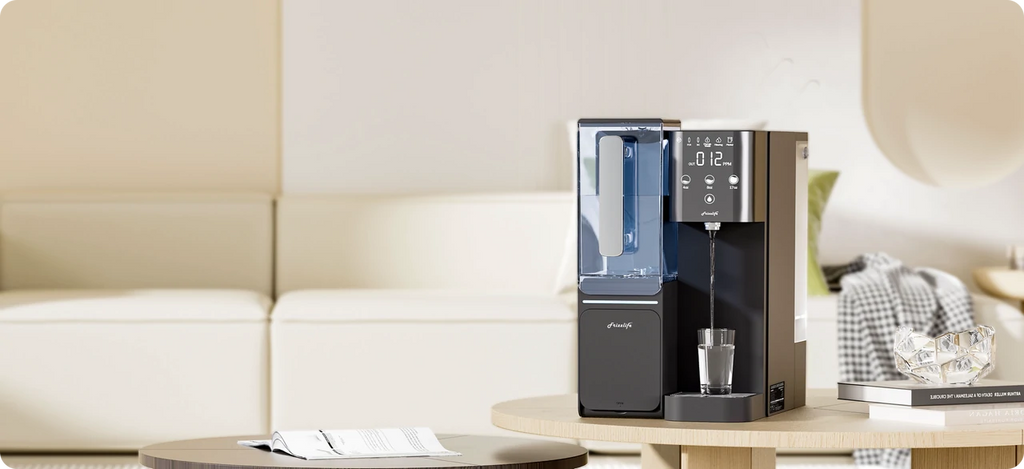
If testing shows your water contains high mineral levels or trace contaminants, a home water filter can help remove them and improve taste. Reverse osmosis (RO) systems are particularly effective, as they remove most dissolved solids, including calcium, magnesium, and potential metals that may cause a sweet or off-putting taste. Activated carbon filters can also improve taste and odor by adsorbing organic compounds and chlorine.
Be sure to choose a filter certified by NSF/ANSI standards and suited to the specific issue detected in your water.
Consult a Doctor
If you've tested your water and ruled out plumbing issues, and you still find that all water tastes sweet (including bottled water from different brands), the issue may be with your own sense of taste. It's a good idea to schedule a visit with your doctor to discuss your symptoms and rule out any underlying health conditions.
Interactive Troubleshooting Tool: Find Your Cause
Use this simple guide to help identify the likely reason your water tastes sweet. Find your symptom on the left to see the probable cause and next step on the right.
| If you are experiencing this... | ...it is likely due to... | ...and you should... |
| Mild, consistent sweetness from all taps | Natural minerals in hard water | Enjoy it, or consider a water softener if hardness causes other issues. |
| Sweetness appeared after new pipes were installed | Leaching from new PEX/PVC pipes | Flush the system by running the tap for several minutes. The taste should fade. |
| Sweet, metallic taste in an older home | Potential lead contamination | STOP drinking the water. Get your water tested for lead immediately. |
| Sweetness only from one faucet | A problem with that specific pipe or fixture | Have a plumber inspect the fixture and the plumbing line connected to it. |
| All water, including bottled, tastes sweet | A personal health or taste perception issue | Schedule an appointment with your doctor to discuss your altered sense of taste. |
| Tap water tastes sweet after a big rainstorm | Seasonal environmental changes | Wait a day or two to see if it resolves. If not, contact your local water utility. |
Final Thoughts
The discovery that your water tastes sweet can be unsettling, but in most situations, the cause is harmless. It’s usually a reflection of the natural journey water takes to get to your tap, picking up minerals along the way. Your own body chemistry and sense of taste also play a significant role.
The key is to be an informed and proactive consumer of your own drinking water. The WHO states that safe drinking water is essential to prevent disease and support overall health, especially in areas where aging infrastructure or natural contamination may occur. By understanding the potential causes, knowing the red flags, and taking simple steps to investigate, you can ensure that the water you and your family drink is both safe and enjoyable. Don't hesitate to test your water or reach out to professionals if you have any concerns about your water quality.
Frequently Asked Questions
1. Is it safe to drink sweet-tasting water?
If the sweetness in the water comes from natural minerals like calcium and magnesium, or if it is because the water is weakly alkaline, then this sweet water is generally safe to drink. Many water sources already have these minerals, they will make the water with a little light sweet flavor, drink very comfortable, no harm to health. However, whether or not sweet water is safe to drink depends on whether or not it has been contaminated. In some cases, a sweet taste in the water can mean that there are harmful substances, such as lead in old pipes, or chemicals leaching out of the pipes. So if you suddenly taste a very distinct sweetness, especially in an older home, or have never had water that tastes and smell this way before, be sure to have your water tested by a professional. Regular testing will identify potential dangers early on, so that the water you drink is always safe and healthy.
2. Do water filters affect the taste of water?
A good water filtration system has a particularly strong impact on the taste and odor of water. Activated carbon filter will most likely get rid of chlorine, organic chemicals, and odd odors in the water so that the natural minerals in the water will come through more clearly and be more pleasant to drink. On the flip side, the reverse osmosis drinking water filtration filters out quite a few minerals and impurities. Some people feel that such water has little flavor and is bland; however, others like the clean and refreshing taste. Which filtration system to choose, mainly depends on personal taste and the actual situation of water quality at home. Want to make the taste of drinking water at home better, install a whole-house filtration system, or consider getting a filtered water cooler, can make the taste of water to improve by a large margin. Filters not only improve the taste of your water, but also make the water safer and the water quality more secure.
3. Can illness or medication alter my sense of taste for water?
When you are sick or taking medication, your perception of the taste of water can change significantly. The close relationship between taste and olfactory function allows conditions such as sinus infections, colds, allergies and neurological disorders to affect the sense of taste, which can cause water to taste sweeter or different than usual. Various medications, including antibiotics, antihistamines and chemotherapy drugs, can have side effects that result in a metallic or sweet taste experience. The duration of these taste changes depends on the underlying cause and may be short-term or long-term. When you experience sudden or persistent changes in the taste of water accompanied by other symptoms, you should consult a healthcare professional.
4. Why does my water taste sweet to me all of a sudden?
The sweet taste in your tap water can result from environmental changes, changes in your city's water treatment process, or changes in your own health. It can result from recent adjustments to the municipal water treatment system, such as a change in the pH of the water or the concentration of disinfectant, which can cause a change in the taste of the water. It can also result from a problem with the plumbing in your home. Examples include minor corrosion, newly installed pipes, or a buildup of residue in the pipes. On an individual level, taking medications, changing your diet, or even minor illnesses such as temporary dehydration or sinus infections can affect how your taste buds perceive water. Water sources can also change with the seasons, such as when there is heavy rain or drought. When the mineral content of the water changes, so does the taste. If you suddenly notice a sweet taste in your tap water and the taste doesn't go away after you turn on the faucet for a few minutes, it's a good idea to get your water tested. Also, pay more attention to your health and check for any problems inside or outside your body.
5. Am I dehydrated if water tastes sweet?
The dehydrated state can cause water to feel sweet to some people. Dehydration leads to saliva becoming more concentrated, which alters the response of your taste receptors when you drink water. Your brain reads the sharp contrast between water and a dry mouth as sweetness. After you are properly hydrated, the sweet taste sensation disappears. The reason why the sweet taste persists even after drinking enough water and feeling well hydrated may be different. You should therefore investigate possible causes, including changes in the mineral content of the water, health-related factors, and plumbing problems. If the sweet taste persists in the water, further tests are needed to determine if there are any underlying medical issues.