


Water filter pitcher reviews are most useful when they answer a larger question: Is a pitcher actually the right filtration format for your household, or would an under-sink filter provide better everyday convenience?
For renters, smaller households, limited budgets, and anyone who wants cold filtered water stored in the refrigerator, a pitcher can be a practical choice. For households that regularly use filtered water for drinking, coffee, meal preparation, and cooking, an under-sink system usually reduces the inconvenience of refilling and waiting. Tankless reverse osmosis systems are another option when their verified filtration capabilities match specific concerns found in your water.
The format alone does not determine filtration performance. A certified pitcher can have more relevant contaminant-reduction claims than an under-sink filter designed only for chlorine taste and odor. Likewise, an appropriately certified under-sink or reverse osmosis system may address concerns that a basic pitcher does not. Compare the exact model, its certification listing, filter capacity, maintenance requirements, and published claims—not just the words “pitcher,” “under sink,” or “RO.”
Before buying any system, review your local water quality report or obtain appropriate water testing. That information helps separate a simple taste problem from a specific contaminant concern requiring verified treatment capabilities.
Pitcher vs Under-Sink System vs Tankless RO: What Water Filter Pitcher Reviews Should Compare
A water pitcher filtration system treats water in batches. Tap water passes through a replaceable cartridge—often using activated carbon, ion-exchange media, or other specialized media—and collects in a lower reservoir. Gravity provides the operating force, so the process requires no plumbing and usually no electricity.
An under-sink filter connects to the cold-water supply beneath the kitchen sink. Depending on the design, it may send treated water through the existing kitchen faucet or a separate drinking-water faucet. Because it is connected to the plumbing, filtered water is available without filling a reservoir first.
A tankless reverse osmosis system is also installed at the sink, but it uses an RO membrane and supporting filtration stages. Tankless refers to the absence of a conventional storage tank; it does not mean the unit requires no cabinet space. RO performance, water efficiency, electrical requirements, flow, and contaminant claims vary by model.
None of these formats is the universal winner. The right choice depends on six questions:
-
What is in your water?
-
Which contaminants do you want to reduce?
-
How much filtered water does your household use?
-
Are you willing and allowed to modify the plumbing?
-
Where do you have available storage space?
-
What will replacement filters and other maintenance cost over time?
Quick Choice Guide: Water Filter Pitcher vs. Under-Sink Systems
Choose a water filter pitcher when you want the lowest level of installation commitment, use a modest amount of filtered water, or prefer to keep it cold in the refrigerator. A pitcher is also easier to move between homes and does not occupy the cabinet under the sink.
Choose a standard under-sink filter when filtered water is part of your daily kitchen routine. If several people drink filtered water, fill reusable bottles, make coffee, wash produce, and cook with it, on-demand delivery may matter more than the portability of a pitcher.
Consider a tankless RO system when your water concerns align with that exact model’s documented reverse osmosis capabilities. Do not choose RO solely because it sounds more advanced. Confirm the contaminants addressed, certification or testing evidence, wastewater requirements, operating conditions, maintenance schedule, and whether the system needs power.
Here is a practical pitcher filter comparison that also shows when it makes sense to move beyond a pitcher:
|
Decision factor |
Water filter pitcher |
Standard under-sink filter |
Tankless RO system
|
|---|---|---|---|
|
Best fit |
Renters, smaller households, light drinking-water use, refrigerator storage |
Households using filtered water frequently for drinking and cooking |
Users with water concerns that match verified RO reduction claims |
|
Water availability |
Limited to the pitcher’s filtered reservoir; requires refilling and waiting |
On demand through an existing or dedicated faucet |
On demand, subject to the model’s production and flow characteristics |
|
Installation |
Fill, prepare the cartridge as directed, and use |
Connects to the cold-water line; complexity varies by design |
Plumbing installation; may also require a faucet, drain connection, and electrical outlet |
|
Space used |
Refrigerator shelf or countertop |
Under-sink cabinet space |
Under-sink cabinet space, although there is no conventional storage tank |
|
Portability |
High |
Low |
Low |
|
Routine maintenance |
Wash pitcher and lid; replace cartridge on schedule |
Replace cartridges and inspect connections as directed |
Replace filters or membrane components and perform model-specific maintenance |
|
Evidence to verify |
Certified contaminant claims, filter capacity, filtration speed, replacement cost |
Certified contaminant claims, rated capacity, flow, faucet configuration, replacement cost |
RO-related certifications or testing, specific contaminant claims, recovery or wastewater information, membrane life, power needs |
|
Likely ownership friction |
Frequent refills, slow filtration, limited capacity, refrigerator space |
Installation, cabinet crowding, filter access, possible leak concerns |
Higher initial commitment, wastewater, power dependence, installation, more involved maintenance |
If the first column matches your circumstances, review Frizzlife’s water filter pitcher collection while checking the evidence and ownership criteria below. If constant refilling is already a problem, compare the available under-sink filtration options instead.
Are water filter pitchers effective for everyday drinking water?
Yes, water filter pitchers can be effective for everyday drinking water when the selected model is designed and independently certified or tested for the buyer’s actual concern. A basic pitcher may be suitable for improving chlorine-related taste and odor. Another model may have verified claims for particular health-related contaminants. Those products should not be treated as interchangeable.
Pitchers are generally point-of-use treatment devices. For many households served by a regulated municipal system, they provide additional treatment for taste or identified concerns rather than replacing public water treatment. A household under a boil-water notice or dealing with known unsafe water should follow instructions from the relevant public-health or water authority rather than assuming a normal pitcher will make the water safe.
What makes the best water filter pitcher for a particular home?

A strong review should evaluate more than taste and appearance. Use the following criteria:
-
Exact contaminant claims: Start with the contaminant, not the filter category. If lead, PFAS, cysts, or another substance is the concern, look for that specific reduction claim.
-
Independent certification: Confirm the model and claim in a current certification listing when certification is advertised.
-
Filtration speed: A pitcher that filters slowly may be acceptable for one person but frustrating for a household filling several bottles every morning.
-
Usable capacity: Look at how much filtered water is available after accounting for the upper fill reservoir, not simply the total vessel size.
-
Filter capacity: Compare the manufacturer’s rated gallons or other capacity measure, along with any time-based replacement instructions.
-
Replacement cost: An inexpensive pitcher is not necessarily inexpensive to own if cartridges require frequent replacement.
-
Cleaning access: The reservoir, lid, spout, and handle area should be practical to clean according to the manufacturer’s instructions.
-
Refrigerator fit: Measure available shelf and door space before buying. A large pitcher that does not fit where you want it may stay on the counter.
-
Pouring ergonomics: Consider filled weight, handle comfort, lid security, and whether unfiltered water can mix with filtered water while pouring.
-
Replacement availability: A filtration device is only useful if the correct cartridge remains available and is replaced on schedule.
Some reviews emphasize total dissolved solids, or TDS, as a headline result. TDS measures the combined concentration of dissolved substances, but it does not identify which substances are present or whether they are harmful. A lower TDS reading is therefore not a substitute for contaminant-specific testing or certification. If your concern is lead or a particular PFAS compound, verify the relevant reduction claim directly.
How to read NSF/ANSI claims correctly
Certification language can be confusing, but the distinction is important:
-
NSF/ANSI 42 addresses aesthetic effects such as free chlorine, taste, odor, and particulates. Certification under Standard 42 does not, by itself, establish reduction of lead, PFAS, microbes, or hardness.
-
NSF/ANSI 53 covers health-related contaminant reduction claims. However, certification to Standard 53 is still claim-specific. It does not mean every contaminant associated with the standard is reduced by every certified filter.
-
NSF/ANSI 401 covers claims for certain emerging contaminants, including selected pharmaceuticals, pesticides, and chemicals. Again, check the exact substances included in the model’s certification.
“Tested to NSF standards” is not automatically the same as “NSF certified.” Testing may have been completed by a laboratory without the product holding certification from NSF. Certification generally involves evaluation against defined requirements and an ongoing certification program. When a manufacturer says a product is certified, consult the certifying organization’s current listing and confirm the exact model number and claims.
PFAS claims deserve the same scrutiny. A general statement that a filter addresses PFAS is not enough to determine which compounds were tested, under what conditions, or for how long. Even when a filter has certification under a standard that can include PFAS-related claims, verify that PFAS reduction is explicitly listed for the product.
People seeking cyst reduction should also look for the relevant model-specific claim. EPA and CDC guidance points to absolute one-micron filtration or filters labeled for cyst removal and certified to NSF/ANSI 53 for greater assurance against Cryptosporidium. A standard taste-and-odor pitcher should not be assumed to provide that protection.
Who is a water filter pitcher best suited for?
A pitcher is usually most practical for:
-
Renters who cannot or do not want to alter plumbing
-
Students and people who move frequently
-
One- or two-person households with moderate drinking-water use
-
Shoppers with a limited initial budget
-
People whose main goal is improving an unpleasant chlorine taste or odor, provided the model has relevant evidence
-
Anyone who strongly prefers cold, refrigerator-stored water
-
Households wanting a secondary source of filtered water away from the kitchen sink
A pitcher may become frustrating when several people use it, when filtered water is needed for cooking, or when the upper reservoir is repeatedly left empty. Slow filtration can compound the problem: users either wait for water or pour before filtration is complete. If this already describes your routine, changing to a larger pitcher may only postpone the underlying capacity problem.
Common pitcher problems and practical checks
A pitcher that suddenly filters slowly is not necessarily defective. Before replacing the entire unit:
-
Confirm that the cartridge was prepared and installed according to its instructions.
-
Check whether the filter has reached its rated capacity or replacement date.
-
Make sure the cartridge is seated correctly.
-
Inspect the reservoir and cartridge inlet for visible sediment or blockage.
-
Clean the pitcher components using the manufacturer’s approved method.
-
Consider whether unusually turbid water or elevated sediment is shortening usable filter life.
Do not attempt to restore a disposable filter by cutting it open, using unapproved chemicals, or forcing water backward through it unless the manufacturer explicitly permits that procedure. Replace it with the correct cartridge.
Cleaning also matters. A filter does not prevent contamination caused by dirty hands, an unwashed reservoir, standing water, or contact between the spout and cups or bottles. Wash the pitcher at the specified frequency, avoid touching the clean side of the cartridge during installation, and do not use a cartridge beyond its instructed service limit.
How does a water filter pitcher compare with an under-sink filter?
The largest difference is not necessarily contaminant removal. It is water delivery.
A pitcher filters a finite batch. An under-sink system treats water as it moves to the faucet. That makes an under-sink filter easier to incorporate into cooking, bottle filling, coffee preparation, and other higher-volume tasks.
Filtration capability remains model-dependent. A certified pitcher may address a specific contaminant that a basic under-sink carbon filter does not. Conversely, a multi-stage under-sink unit may carry broader or different certified claims than a simple pitcher. Never infer performance from size, number of stages, cartridge appearance, or installation method alone.
Under-sink systems also differ internally. Some connect directly to the existing cold-water faucet. Others use a separate filtered-water faucet. A dedicated faucet can separate drinking water from ordinary washing water, but installation may require an available sink opening or countertop drilling. A direct-connect model may avoid that modification, although compatibility and performance still need to be checked for the individual product.
Explore Filtration Options Beyond a Water Pitcher
If frequent refilling and waiting make a pitcher less convenient, an under-sink reverse osmosis system may be worth considering. Explore these Frizzlife options for on-demand filtration, and compare replacement-filter requirements before deciding which setup fits your household.
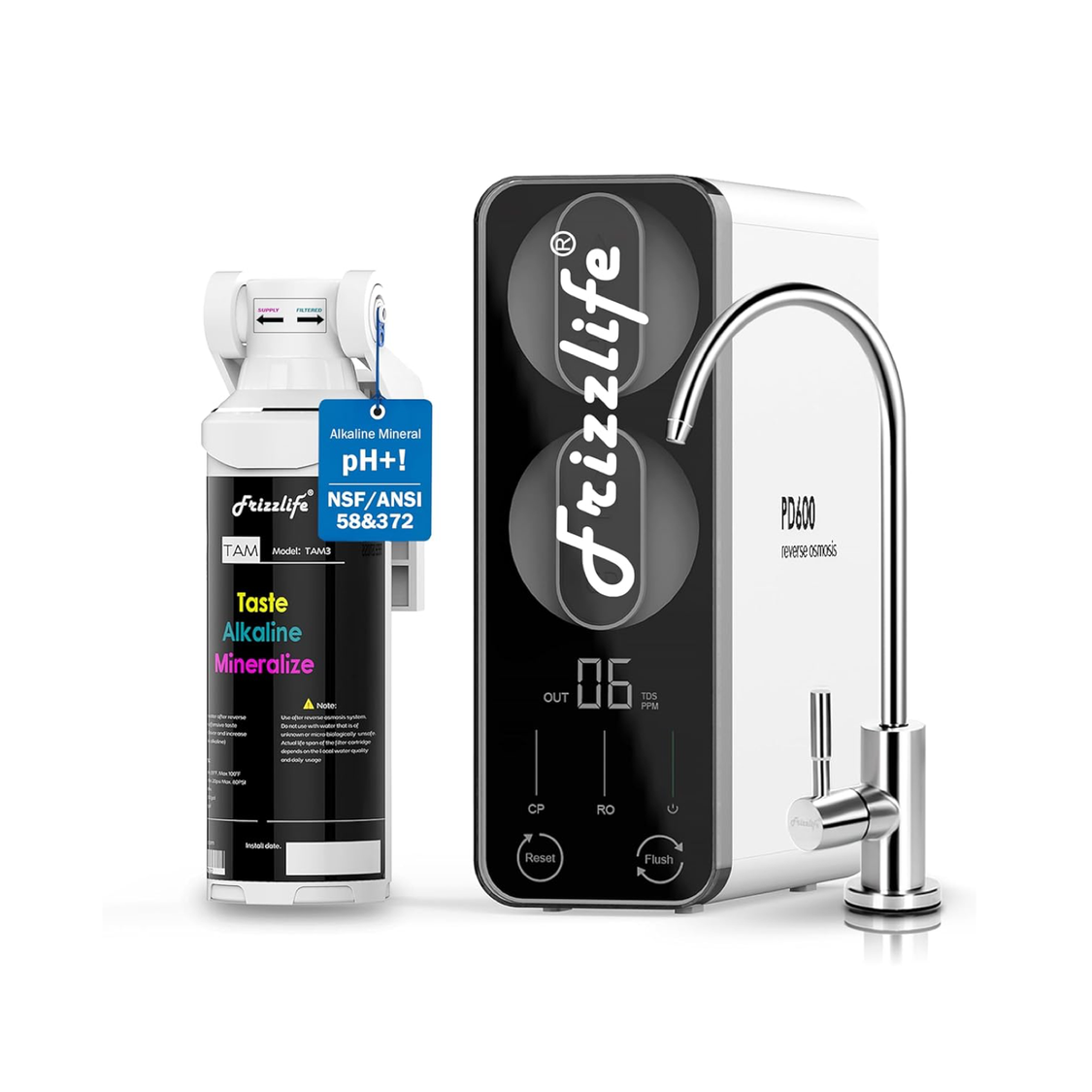
Frizzlife PD600-TAM3
An under-sink reverse osmosis system with alkaline remineralization and on-demand filtered water. A practical option for households that want to reduce pitcher refills during everyday drinking and cooking.
Explore PD600-TAM3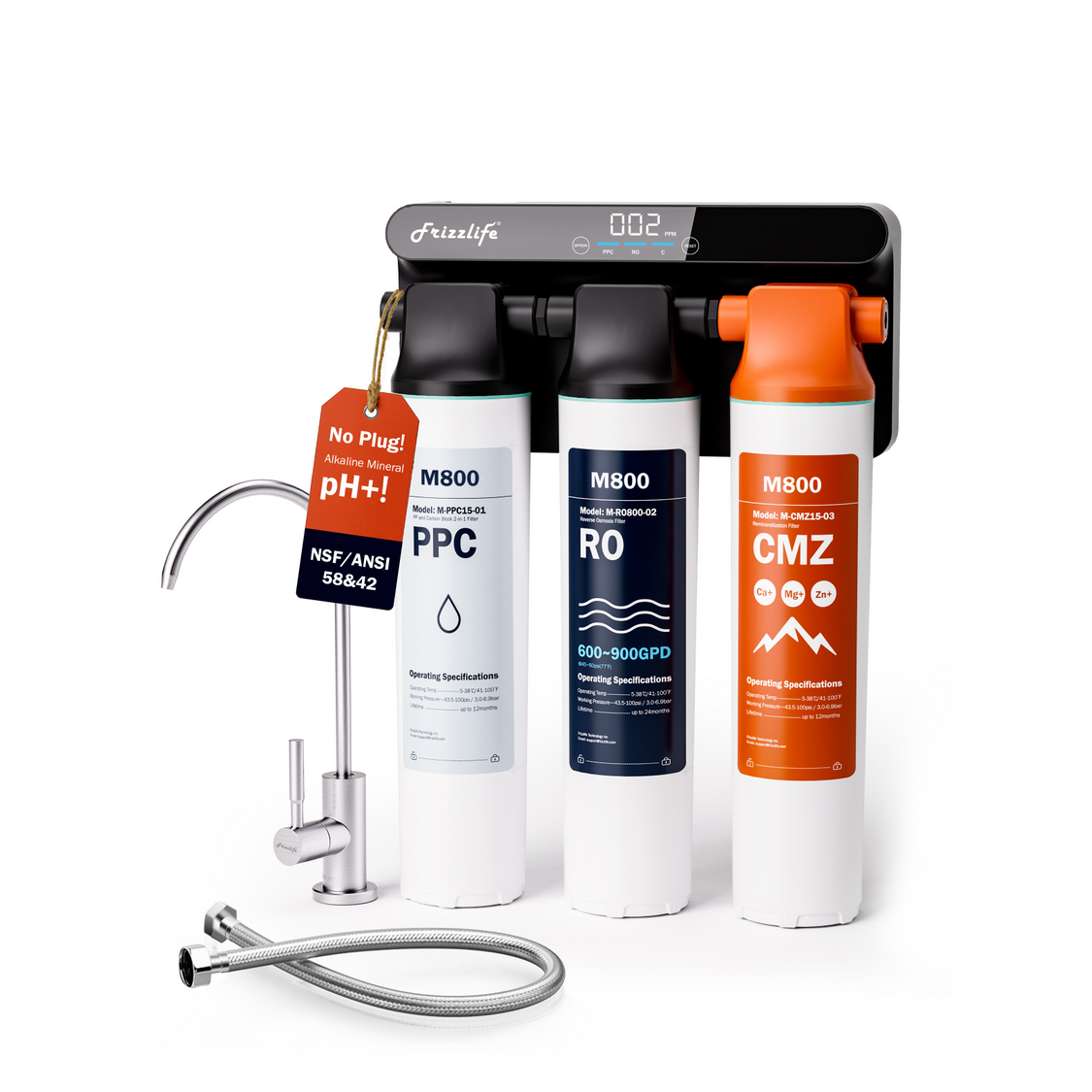
Frizzlife M800
A tankless reverse osmosis system that uses household water pressure rather than an electric pump. Designed for on-demand filtration without a conventional storage tank. Check water pressure and cabinet space before installation.
Explore M800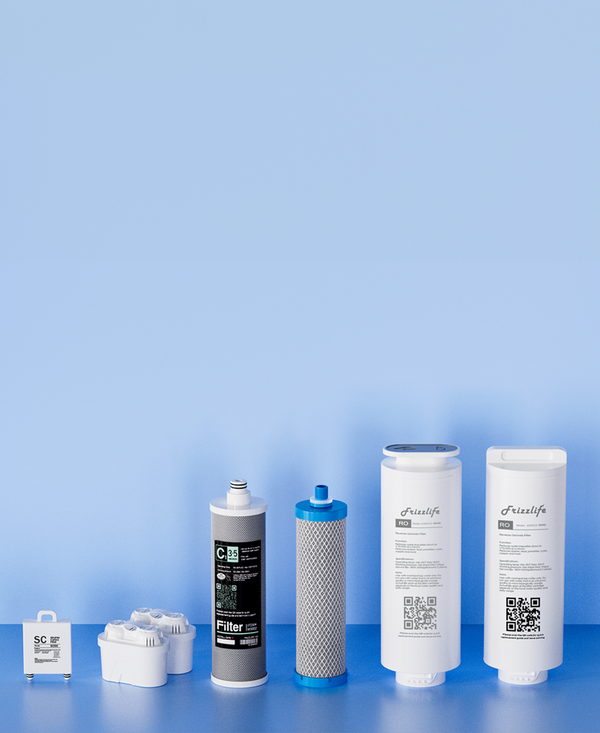
Frizzlife Replacement Filters
Replacement cartridges are an important part of long-term filtration costs. Browse compatible Frizzlife filters and review replacement requirements to help plan maintenance and ongoing ownership expenses.
Find Replacement FiltersFiltration performance and maintenance requirements vary by model. Review current product specifications, documented contaminant-reduction claims, installation conditions, and replacement-filter compatibility before purchasing.
What do you give up by choosing an under-sink RO system over a pitcher?
An under-sink RO system offers on-demand treatment, but it gives up four advantages that make pitchers appealing: portability, refrigerator-ready storage, installation simplicity, and low initial commitment.

A pitcher can move to a new apartment, sit on a dining table, or be placed in the refrigerator. It works independently of the sink plumbing and does not require a drain connection or power outlet. If you stop using it, you can simply store or replace it.
An under-sink RO unit becomes part of the kitchen. Even a tankless design needs cabinet space, plumbing connections, and usually a way to discharge reject water. Some systems require electricity. A separate faucet may use an existing accessory opening, or it may require drilling when the sink and counter configuration allows. These are model- and kitchen-specific considerations, not universal installation requirements.
Renters should obtain permission before altering plumbing, drilling a countertop, or adding a faucet. A reversible direct-connect filter may be acceptable in some rentals, but the lease and landlord’s requirements control. If installation is not permitted, a pitcher remains the lower-risk option.
RO also creates wastewater as part of the membrane separation process. The amount varies by design and operating conditions, so compare current product documentation rather than assuming all systems perform alike. Incoming water pressure, temperature, feed-water quality, and filter condition may affect operation.
Maintenance is more involved than washing a pitcher and changing one cartridge. Depending on the system, it may include replacing prefilters, post-filters, or the RO membrane; checking tubing and fittings; and following sanitization procedures. Tankless systems may also use electronic indicators or require power for pumps and monitoring features.
Do not assume RO is always necessary or automatically safer. If your only concern is chlorine taste in municipal water, a certified non-RO filter may be sufficient and simpler to maintain. If testing identifies contaminants for which RO is an appropriate treatment method, compare systems based on explicit certified or independently tested claims.
You also do not have to treat this as an all-or-nothing decision. A household may use an under-sink system for cooking and routine drinking while keeping a separate carafe of treated water in the refrigerator. In that arrangement, the carafe does not necessarily need another filter; using an additional cartridge only makes sense if it has a distinct, verified purpose.
You may regret choosing a pitcher if:
-
Your household empties it several times each day.
-
You regularly need filtered water for cooking.
-
Family members do not refill it after pouring.
-
Filtration speed leaves you waiting during busy periods.
-
Replacement cartridges become expensive at your consumption level.
-
You selected it for a contaminant it is not certified or documented to reduce.
You may regret choosing an under-sink or RO system if:
-
Your lease prohibits plumbing changes.
-
Cabinet space is already limited.
-
You do not want to monitor fittings or maintain multiple components.
-
A separate faucet would require a modification you cannot make.
-
You bought advanced treatment without first identifying a water-quality need.
-
You did not account for replacement cartridges, membrane components, wastewater, or possible installation expense.
Which Costs Less Over Time: Water Filter Pitcher or Under-Sink Filter?
A water filter pitcher usually costs less upfront and is often the lower-cost choice for light use. An under-sink filter may deliver a lower cost per treated gallon in a high-use household, but neither format is always cheaper. The result depends on the two exact models, actual water use, cartridge or membrane prices, replacement intervals, and installation or service costs.
Compare total ownership cost over the same period rather than purchase price alone. Gather current pricing and specifications, then use the calculations below:
Pitcher first-year cost
Initial pitcher price + (annual cartridge replacements × current cartridge price)
Under-sink first-year cost
System price + installation cost, if any + (first-year replacement cartridges × current cartridge price)
Under-sink cost in later years
Annual replacement cartridges or membrane components + any scheduled service expense
For a more useful comparison, calculate cost per treated gallon:
Total ownership cost during the comparison period ÷ gallons of filtered water actually used
Use the manufacturer’s current rated filter capacity as one input, but do not treat it as a guaranteed service life under every water condition. Sediment, source-water chemistry, consumption, and maintenance can affect real-world replacement frequency. Follow any time-based replacement limit as well as the gallon rating.
For example, do not compare a pitcher and an under-sink filter using purchase price alone. Record the current prices for the two exact models, the price of their correct replacement filters, their published capacities, and how many gallons your household expects to use. Recheck these figures at the time of purchase because product pricing and replacement-filter costs can change.
Pitchers often cost less for light use because the initial investment is small and no installation is required. A person who filters only a few glasses per day may not benefit financially from installing a larger system.
Under-sink filtration may offer stronger long-term value for a higher-volume household, especially when the alternative is replacing pitcher cartridges frequently or buying bottled water. But that outcome depends on the exact products, filter capacities, replacement costs, and installation expense. It should be calculated rather than assumed.
Also account for nonfinancial costs:
-
Refill time: How often will someone need to refill the pitcher?
-
Waiting: Does filtration speed interfere with morning or meal preparation?
-
Storage: Is refrigerator or cabinet space more valuable?
-
Installation effort: Can the system be installed correctly without professional help?
-
Leak monitoring: Are you comfortable inspecting under-sink tubing and connections?
-
Replacement discipline: Which format are you more likely to maintain on schedule?
-
Moving: Will you need to remove and reinstall the system in another home?
If an under-sink format fits your consumption and kitchen setup, compare Frizzlife’s broader selection of sink water filtration systems by filtration method, installation configuration, replacement requirements, and model-specific evidence. The number of stages or the size of the housing should not replace verification of the claims that matter to you.
The most economical filter is ultimately the one that addresses the right concern and is maintained properly. A low-priced pitcher that is constantly empty—or that lacks evidence for the contaminant you care about—is poor value. An expensive RO system installed for a simple taste issue may also be more treatment and maintenance than the household needs.
For most shoppers, the decision is straightforward after water quality, usage, and installation constraints are clear. Choose a pitcher for portability, cold storage, light consumption, and minimal commitment. Choose an under-sink filter for frequent drinking and cooking without refill friction. Consider tankless RO when water testing and verified model capabilities justify membrane treatment. In every category, the best choice is the specific product whose documented claims, capacity, maintenance, and cost match your home.
References
-
U.S. Environmental Protection Agency: Home Drinking Water Filtration Fact Sheet
-
U.S. Environmental Protection Agency: Guidance on Cryptosporidium and Drinking Water Filters