


If your tap, well, softened, or filtered water suddenly tastes salty, start by finding out where and when the taste appears. A salty flavor may come from sodium or chloride in the source water, a water-softener problem, a localized plumbing issue, or a change in your own taste perception.
Do not choose a treatment based on taste alone. Compare hot and cold water, check more than one faucet, ask whether other people notice the same change, and test the water when the taste persists.
This guide focuses specifically on why water tastes salty. It explains how to separate source-water changes from household equipment problems, how to test sodium and chloride correctly, when the taste may require extra caution, and when reverse osmosis may be an appropriate next step.
If testing confirms elevated dissolved salts in the water used for drinking and cooking, compare point-of-use RO systems by installation type, output, maintenance, and product-specific performance.
Compare Reverse Osmosis Systems →Quick Diagnosis: When and Where Does the Salty Taste Appear?
The pattern of the taste can help narrow the likely cause before you spend money on testing, repairs, or treatment equipment.
- Only one faucet tastes salty: Check the faucet, supply line, local plumbing, or nearby treatment device.
- Hot water tastes salty but cold water does not: Inspect the water heater, hot-water plumbing, and softener connection.
- The whole house tastes salty: Check the municipal supply, private well, water softener, or another whole-house treatment system.
- The taste appeared after softener regeneration: Check whether the regeneration and rinse cycles completed correctly.
- Filtered water tastes salty but unfiltered water does not: Inspect the filtration system, bypass valves, membrane condition, installation, and flushing process.
- Neighbors notice the same change: A seasonal or utility-level source-water change may be involved.
- Only one person notices the taste: Try bottled water or water from another location. If several water sources taste salty only to you, dry mouth, medication, or an oral-health issue may be affecting taste perception.
Why Does Water Taste Salty?
The most direct water-related explanation is an increased concentration of sodium, chloride, or other dissolved salts. These substances may occur naturally in source water or enter it through household systems, weather conditions, and human activity.
Sodium and Chloride Are Common Causes
Sodium and chloride are naturally present in many water sources. When their concentrations increase, the change may become noticeable as a salty or brackish taste.
Common sources include:
- Road salt runoff: Melting snow can carry sodium and chloride from roads into streams, reservoirs, and groundwater.
- Water softeners: Sodium-based ion exchange replaces hardness minerals with sodium. Incorrect settings, equipment problems, or an incomplete rinse cycle can make the taste more noticeable.
- Drought and low water levels: Reduced water volume can concentrate salts already present in the source.
- Seawater intrusion: Coastal groundwater may become more saline when freshwater aquifers are over-pumped or affected by changing water conditions.
- Private-well conditions: Local geology, nearby salt storage, coastal influence, or changes around the well may affect taste.
A useful real-world example occurred in New Jersey in winter 2025. Following winter salt and brine use during drought conditions, some residents noticed a temporary salty taste in tap water. Authorities linked the change to increased sodium and chloride entering source water through runoff, combined with lower reservoir and river levels.
Local Conditions Can Change Water Taste
Taste changes do not always begin inside the home. Municipal source-water changes, treatment adjustments, seasonal runoff, drought, and groundwater conditions can affect tap-water taste from one week to the next.
Check recent weather, local utility notices, annual water-quality reports, and whether nearby households notice the same change. If several homes are affected, the source is less likely to be one faucet or one household appliance.
Household Causes: Water Softeners, Plumbing, and Filters
If only your household notices the salty taste, inspect the equipment and plumbing inside the home before assuming the municipal or well-water source has changed.
Water Softener Malfunctions
A problem with a water softener is one of the most common household explanations for softened water tasting unusually salty.
- Clogged valves or injectors: A blockage may prevent the system from drawing or rinsing brine correctly.
- Incorrect settings: Improper hardness, regeneration, or salt-dose settings may affect system performance.
- Interrupted regeneration: A power loss, closed valve, blocked drain line, or interrupted cycle may prevent the final rinse from completing.
- Incorrect bypass position: A partially open bypass or mixing valve may create unexpected water-quality changes.
What to do: Follow the softener manufacturer’s troubleshooting instructions. Check the salt tank, brine line, injector, drain line, bypass position, and regeneration settings. If the taste continues after a complete rinse cycle, have the system inspected before using the softened water for drinking.

Plumbing and Pipe Issues
A salty, metallic, or unusual taste limited to one faucet may come from the fixture, a supply line, or localized plumbing rather than the source water.
- Visible corrosion: Check accessible plumbing for rust, deposits, staining, or discoloration.
- One affected faucet: Compare several fixtures to determine whether the issue is localized.
- Low pressure or irregular flow: These signs may point to a blocked line, valve problem, or plumbing defect.
- Recent plumbing work: A new fixture, valve, supply line, or repair may temporarily change taste.
If the taste remains limited to one part of the home, ask a licensed plumber to inspect the affected fixture and supply line.
Why Does My Filtered or RO Water Taste Salty?
If filtered water tastes salty, do not immediately assume that the cartridge or RO membrane has failed. Start by comparing the filtered water with untreated tap water.
If both samples taste salty, the source water or a whole-house treatment system may be responsible. If only the filtered water tastes salty, check:
- Whether the sample came from the correct filtered-water faucet
- Whether a bypass or mixing valve is open
- Whether the system was recently installed or serviced
- Whether the filters and membrane are installed in the correct positions
- Whether the required flushing process was completed
- Whether feed-water quality has changed
- Whether the system’s performance indicators or TDS readings have changed
A TDS display may show that the amount of dissolved conductive material has changed, but it cannot identify sodium or chloride specifically. Confirm the cause with appropriate water testing before replacing equipment.
Environmental Causes of Salty Water
Seasonal changes, climate conditions, and groundwater movement may temporarily or persistently increase sodium and chloride in a water source.
Road Salt Runoff After Winter Storms
Road salt is a recognized source of freshwater salinization. During snow and ice melt, sodium and chloride may enter streams, reservoirs, and groundwater. The effect may become more noticeable when drought or low water levels reduce dilution.

Drought and Climate Stress
Less rainfall and lower reservoir or river levels can concentrate minerals and salts already present in source water. A taste change during an extended dry period does not automatically mean the water is unsafe, but it is a reason to check utility information or request targeted testing.
Groundwater Intrusion and Seawater Influence
Coastal aquifers may be affected by seawater intrusion when groundwater is withdrawn faster than freshwater can recharge the aquifer. Private wells near coastal areas may therefore experience gradual or sudden increases in salinity.
Reverse osmosis may help treat drinking water at one faucet, but it does not correct salinity throughout an aquifer or repair the underlying well problem.
Could the Salty Taste Be Coming From Your Mouth?
Sometimes the water itself has not changed. Dry mouth, dehydration, medication, bleeding gums, oral-health conditions, or medical treatment may alter taste perception.
Dehydration and Dry Mouth
Reduced saliva can make the mouth feel dry and may change how plain water tastes. Possible triggers include:
- Exercise and sweating
- Heat exposure
- Not drinking enough fluids
- Medications that cause dry mouth
- Temporary illness or nasal congestion

Oral and Systemic Conditions
A persistent salty or metallic taste may also be associated with:
- Bleeding gums or other oral irritation
- Dental or gum infections
- Medications that change taste perception
- Medical treatments that affect taste or saliva production
How Can I Tell Whether It Is the Water or My Mouth?
- Try bottled water or water from another building.
- Ask another person to taste the same tap-water sample.
- Compare cold, hot, filtered, and unfiltered water.
- Check whether the taste follows you across several water sources.
- If only you notice it, consider hydration, medication effects, dental care, or medical guidance.
- If several people notice it across several faucets, focus on the source water, treatment equipment, or plumbing.
When Salty-Tasting Water Needs Extra Caution
Taste alone cannot determine how much sodium is present, whether another substance is affecting the water, or whether the water is safe.
EPA’s 20 mg/L sodium guidance was developed for people restricted to a very low total sodium intake. It should not be treated as a general federal safety limit for every household. WHO recommends that adults consume less than 2,000 mg of sodium per day from all dietary sources, not only drinking water.
For most people, food contributes much more sodium than drinking water. However, laboratory testing becomes especially important when:
- The salty taste persists or becomes stronger
- A utility issues a water-quality notice
- A private well is located near a coast, salted roadway, or salt-storage area
- Someone in the home follows a medically prescribed sodium-restricted diet
- Water will be used to prepare infant formula during a confirmed advisory
People managing hypertension, kidney disease, or another condition requiring sodium restriction should review the measured sodium result with a healthcare professional rather than relying on taste alone.
How to Test Salty-Tasting Water
Use a step-by-step process instead of relying on taste, a general-purpose meter, or one sample from one faucet.
1. Compare Water From Different Locations
Collect separate samples from cold water, hot water, filtered water, and—when practical—water before the softener. Label each sample so the results are easy to compare.
2. Check Local Water Information
Review your utility’s annual water-quality report, service alerts, weather conditions, and recent winter road-treatment activity. Private-well owners should compare current conditions with previous laboratory reports.
3. Use Targeted Testing
Home chloride strips may provide a rough screening result, but they do not replace laboratory analysis. If the taste persists, request sodium and chloride as separate laboratory results.
4. Do Not Use a TDS Meter as a Sodium Test
A handheld TDS meter estimates the concentration of dissolved conductive substances from electrical conductivity. It cannot tell you which ions are present and cannot confirm that sodium or chloride caused the taste.

How to Fix Salty Water Based on the Cause
The right solution depends on what the comparison and testing show.
- Water-softener problem: Inspect the regeneration, rinse, brine, injector, drain, and bypass settings.
- One-faucet problem: Inspect the fixture, supply line, and localized plumbing.
- Municipal source-water change: Contact the utility and follow its official guidance.
- Private-well salinity: Use laboratory results and consult a qualified well or water-treatment professional.
- Filtered-water-only issue: Check installation, flushing, bypass valves, filters, membrane performance, and feed-water conditions.
- Taste noticed only by one person: Consider hydration, medication effects, oral health, or clinical guidance.
DIY Checks for a Water Softener
Follow the equipment manufacturer’s instructions and avoid changing unfamiliar settings without recording the original values.
- Check the salt tank for bridging, clumps, or unusual buildup.
- Confirm that the brine and drain lines are not kinked or blocked.
- Check whether the bypass valve is in the correct position.
- Review the hardness and regeneration settings.
- Run a manual regeneration only when recommended by the manufacturer.
- Confirm that the complete rinse cycle finishes normally.
When to Call a Professional
Contact the water utility, a licensed plumber, a well professional, or a qualified treatment specialist when:
- The taste persists after the softener completes a normal rinse cycle
- Several faucets are affected and the source is unclear
- Water pressure, color, odor, or flow also changes
- A private well may be affected by seawater intrusion or road salt
- An RO system shows an unusual performance change after correct flushing and maintenance
Can Reverse Osmosis Reduce Sodium and Chloride?
Reverse osmosis is a point-of-use treatment method that can reduce sodium, chloride, and other dissolved substances in drinking water. Actual performance depends on the membrane, system condition, feed-water chemistry, pressure, installation, and product-specific testing.
RO should not be presented as the answer to every salty-water complaint. It will not repair a malfunctioning water softener, correct seawater intrusion throughout an aquifer, or fix corroded plumbing.
Test first, correct the source problem when possible, and review the selected system’s specifications and contaminant-reduction information.
Testing Confirmed Dissolved Salts?
Compare RO systems by installation type, output, electricity requirements, remineralization, maintenance, water efficiency, and verified product performance.
Explore Reverse Osmosis Systems →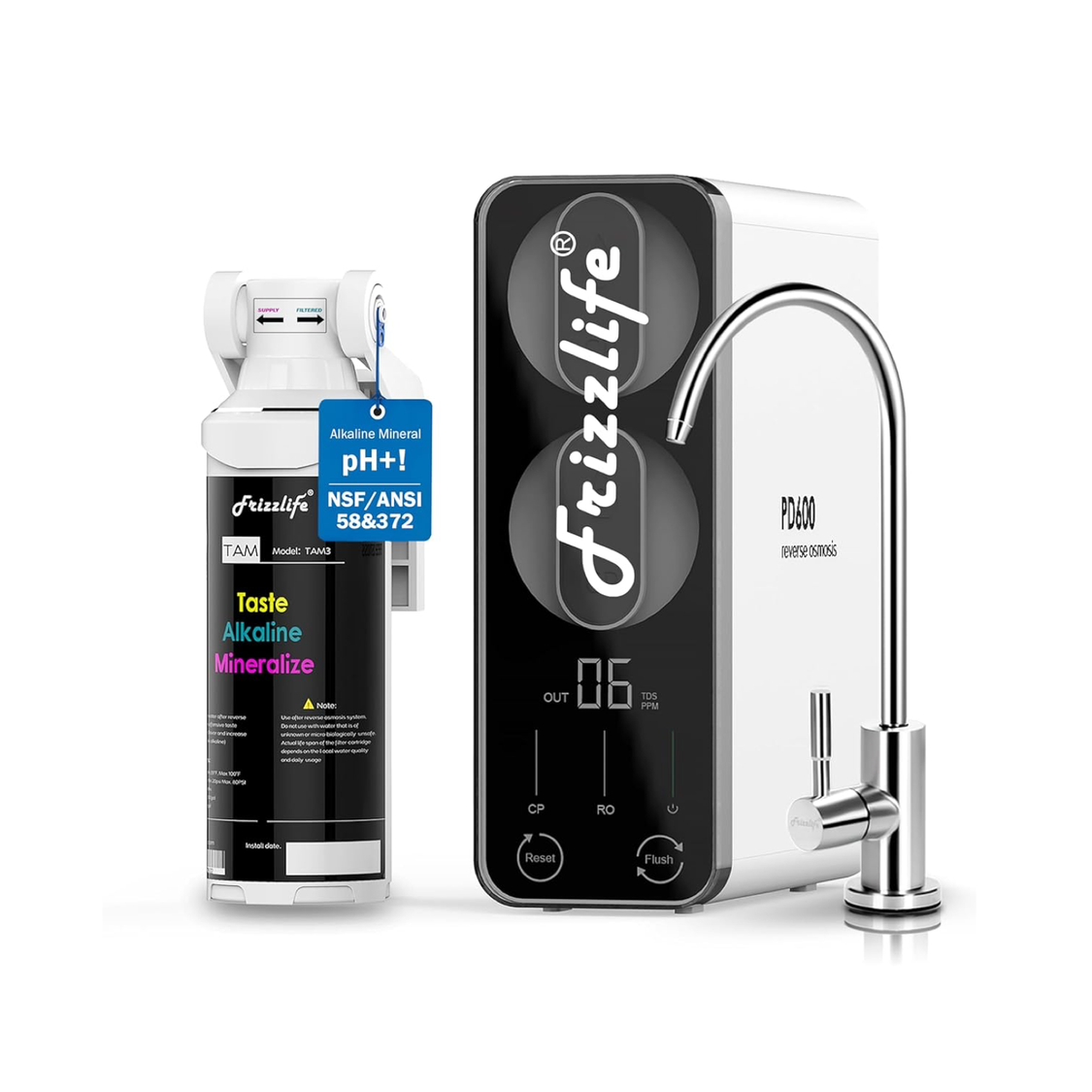
PD600-TAM3 Tankless RO System
A powered 600 GPD under-sink reverse osmosis system with a tankless layout, alkaline remineralization, and real-time TDS monitoring. It is designed for households that want fast filtered-water delivery from a dedicated faucet.
View PD600-TAM3 →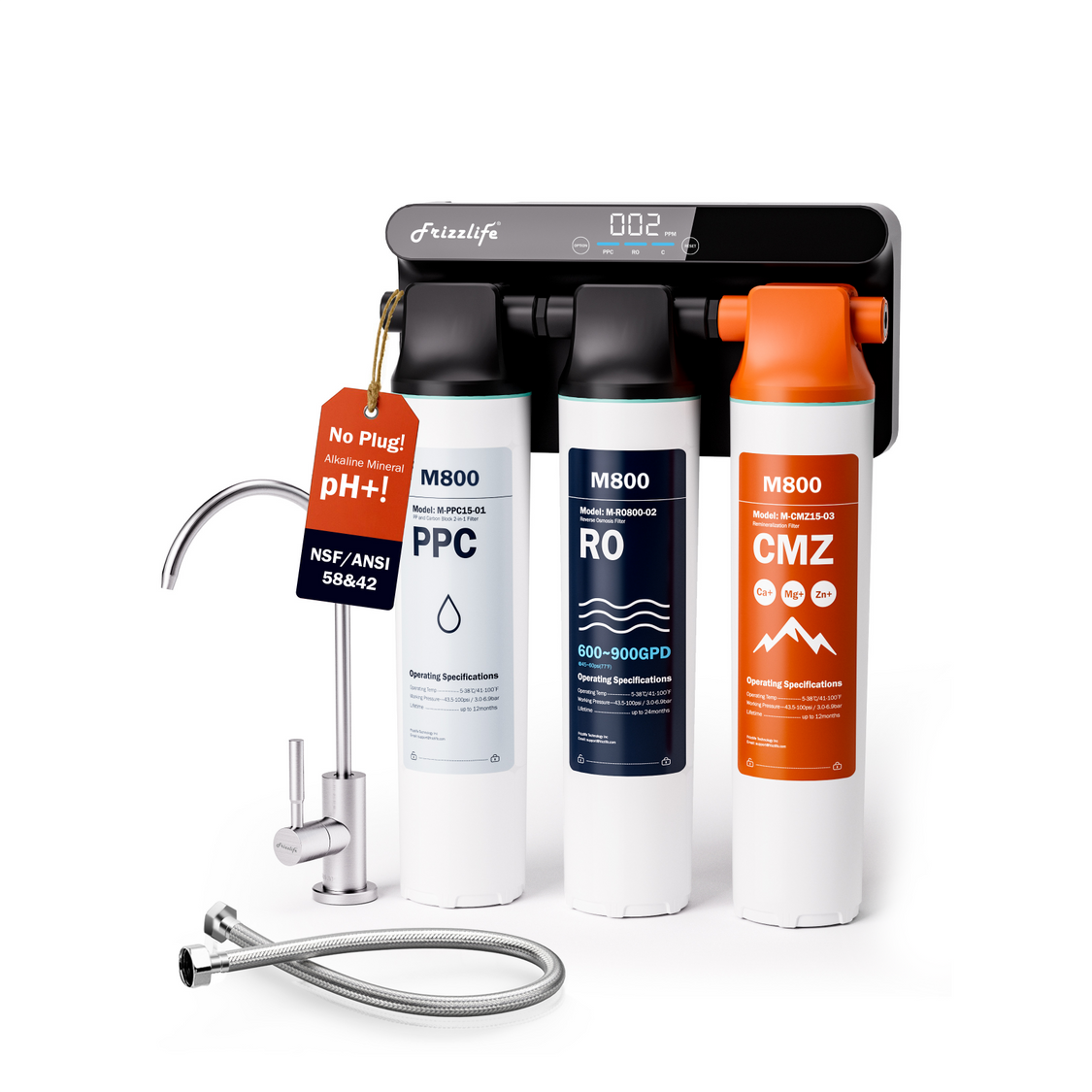
M800 Non-Electric Tankless RO System
A non-electric under-sink reverse osmosis system with up to 900 GPD output, a tankless design, and alkaline remineralization. It operates using household water pressure, so feed-water conditions should be checked before selection.
View M800 →Always review current product specifications and product-specific certification or contaminant-reduction information before choosing a system for a confirmed water-quality concern.
How to Prevent Salty-Tasting Water From Returning
Maintain the Water Softener Correctly
Follow the manufacturer’s maintenance and regeneration instructions. Check the salt tank, brine line, injector, drain line, bypass valve, and rinse cycle when the taste changes after regeneration.
A sodium-based softener exchanges calcium and magnesium for sodium. It should not be described as a device that removes sodium from drinking water.
Monitor Source-Water Changes
Municipal customers can review utility alerts, annual water-quality reports, winter road-salt notices, and drought updates. Private-well owners should keep previous laboratory results so they can compare changes over time.
Maintain Filtration Equipment by Performance
Replace filters and membranes according to product instructions and actual operating conditions. Do not assume that every taste change means a cartridge has expired. Compare feed and treated water, review system indicators, and test when performance is uncertain.
Use the Right Treatment for the Confirmed Problem
A water softener, plumbing repair, source-water correction, and reverse osmosis system solve different problems. Choose equipment only after identifying whether the issue is hardness treatment, sodium or chloride, localized plumbing, source-water salinity, or taste perception.
Conclusion
When water tastes salty, start with the pattern rather than the product.
A taste limited to one faucet may indicate a fixture or plumbing problem. A change after softener regeneration points toward the treatment system. A whole-house change noticed by several people may come from the source water. If bottled water also tastes salty only to one person, taste perception may be involved.
- Compare taps and water sources.
- Ask whether other people notice the taste.
- Check the softener, plumbing, utility notices, or private-well conditions.
- Test sodium and chloride when the taste persists.
- Correct the underlying cause.
- Consider point-of-use reverse osmosis only when testing and product-specific performance support that choice.
FAQs
1. Why does my tap water suddenly taste salty?
A sudden salty taste may come from road-salt runoff, drought-related concentration of dissolved salts, a water-softener problem, private-well conditions, or a localized plumbing issue. Check whether the taste affects one faucet or the whole home and whether nearby households notice the same change.
2. Can a water softener make water taste salty?
Yes. Sodium-based softeners exchange calcium and magnesium for sodium. Water may taste unusually salty if the settings are incorrect, the regeneration cycle is interrupted, the injector or brine system is malfunctioning, or the rinse cycle does not finish properly.
3. Why does my filtered or RO water taste salty?
First compare filtered water with untreated tap water. If both taste salty, the source water or whole-house treatment may be responsible. If only the filtered water tastes salty, check the bypass valves, installation, flushing process, membrane condition, filter placement, and system performance.
4. Can dehydration make water taste salty?
Dry mouth and dehydration can change taste perception. Try water from another source and ask someone else to taste the same sample. If several water sources taste salty only to you, consider hydration, medication effects, oral health, or medical guidance.
5. Is it safe to drink water that tastes salty?
Taste alone cannot determine safety or sodium concentration. If the taste persists, several people notice it, or someone in the household follows a medically prescribed sodium-restricted diet, request appropriate testing and follow professional guidance.
6. Why does only my hot water taste salty?
Hot-water-only taste suggests checking the water heater, hot-water plumbing, and the way the softener connects to the hot-water supply. Compare hot and cold samples from more than one faucet before selecting a treatment.
7. How do I test sodium in drinking water?
A TDS meter cannot identify sodium. For a specific result, request sodium and chloride testing from a qualified laboratory. Your utility’s water-quality report may also list sodium or related parameters.
8. Can reverse osmosis reduce salty taste?
Reverse osmosis can reduce sodium, chloride, and other dissolved substances, so it may improve taste when those substances are the confirmed cause. Results depend on the source water, system condition, membrane, installation, and product-specific performance.
9. How do I remove the salty taste from water?
The correct solution depends on the cause. Repair or adjust a malfunctioning softener, inspect localized plumbing, follow utility guidance for a source-water event, test private-well water, or consider point-of-use RO when testing confirms dissolved salts in drinking and cooking water.
Ready to compare point-of-use treatment options for confirmed dissolved salts in drinking water?
View Reverse Osmosis Water Filter Systems →