Reverse osmosis
RO systems use a semi-permeable membrane and are commonly selected for fluoride-related filtration goals.



Frizzlife

Frizzlife

Frizzlife
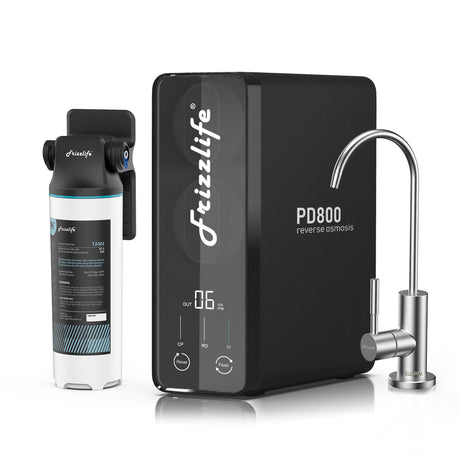
Frizzlife

Frizzlife

Frizzlife

Frizzlife
A fluoride water filter collection is useful for households comparing ways to manage fluoride in drinking water. Frizzlife offers RO-based and advanced filtration options for users who want a more targeted setup than a basic taste-and-odor filter. This page helps shoppers compare under-sink RO, countertop RO, and other filter choices while keeping product-specific fluoride claims tied to actual testing and certification data.
A fluoride water filter is a system selected to help reduce fluoride from tap water. Reverse osmosis is one of the most common home filtration methods used for fluoride reduction because the RO membrane can separate many dissolved substances from drinking water. Standard carbon filters are generally better known for chlorine taste and odor, so shoppers should verify that a specific model is tested for fluoride before relying on it for that purpose.
RO systems use a semi-permeable membrane and are commonly selected for fluoride-related filtration goals.
Some filtration media may be designed for fluoride reduction, but the claim should be verified by model.
Sediment and carbon stages help protect the system and improve taste before or after the main filtration step.
Fluoride reduction depends on proper filter replacement and source-water conditions.
This collection narrows the search for users specifically comparing fluoride reduction options.
Under-sink and countertop RO systems give shoppers different installation paths.
Many systems also improve chlorine taste and odor while addressing broader filtration goals.
The page gives the Frizzlife team and shoppers a framework for checking claims before purchase.
Look for RO or tested fluoride-reduction media rather than relying on generic filter claims.
Use product documentation, test reports, or certifications to confirm any exact reduction claim.
Choose countertop RO for portability or under-sink RO for a more permanent kitchen setup.
Follow the recommended replacement cycle to maintain system performance.
| Use Case | Under-Sink RO | Countertop RO | Basic Carbon Filter |
|---|---|---|---|
| Best for | Permanent kitchen fluoride-focused filtration | Renters or users avoiding under-sink installation | Taste and odor improvement |
| Installation | Under sink with faucet and drain connection | Countertop or plug-and-fill setup depending on model | Simple faucet or pitcher setup |
| Fluoride reduction focus | Common choice when the model is tested for it | Good option when RO is included | Usually not the best primary choice |
| Space needed | Cabinet space | Countertop space | Very low |
| Better choice if | You want a dedicated RO drinking-water system | You cannot modify plumbing | You mainly dislike chlorine taste |
RO is commonly selected for fluoride reduction, but Frizzlife should only publish exact performance claims when model-specific data supports them.
Carbon filtration can improve taste and odor, but it should not be presented as a fluoride solution unless tested for that claim.
Countertop RO can be practical for apartments, dorms, and renters.
A water test helps confirm whether fluoride is a priority in your local supply.
Use these related collections to continue product selection after reviewing this guide.
Reverse osmosis is commonly selected for fluoride reduction, but each product model should be checked for tested performance.
Standard carbon filters are usually chosen for chlorine taste and odor. Do not assume fluoride reduction unless the model is tested for that claim.
It can be a practical option when the system includes RO filtration and the product documentation supports the claim.
Testing helps confirm whether fluoride is a priority and which filter type makes sense.
Yes. Performance depends on filter life, water quality, and usage volume.
The RO stage may support fluoride reduction when tested; the alkaline stage is mainly for taste and remineralization.
No. Many regular filters focus on taste and odor, while fluoride concerns usually require specific filtration technology.
Only publish exact percentages if the specific Frizzlife model has reliable testing or certification supporting that claim.