
Tankless Reverse Osmosis Systems
Save under-sink space and enjoy filtered water on demand. Frizzlife tankless RO systems are ideal for modern kitchens, families, and users who want high flow without a bulky storage tank.



Frizzlife

Frizzlife
Frizzlife

Frizzlife

Frizzlife

Frizzlife

Frizzlife

Frizzlife

Frizzlife
Frizzlife reverse osmosis water filter systems help reduce common contaminants from everyday tap water while improving taste, odor, and drinking water quality. Choose from tankless under sink RO systems, countertop RO systems, remineralization models, and high-flow options built for different home needs.
A reverse osmosis water filter system uses pressure to push water through a semipermeable RO membrane, helping reduce many dissolved contaminants that basic sediment or carbon filters may not capture.
Most RO systems combine sediment filtration, carbon filtration, RO membrane separation, and post-filtration. Some Frizzlife models also include remineralization for smoother taste, while tankless designs filter water on demand without a bulky storage tank.
Start by choosing the system type that fits your kitchen, installation preference, and daily water needs.
Save under-sink space and enjoy filtered water on demand. Frizzlife tankless RO systems are ideal for modern kitchens, families, and users who want high flow without a bulky storage tank.

Selected Frizzlife RO systems include remineralization stage that help add back certain minerals after filtration for a smoother taste.

A countertop RO system is a convenient choice for apartments, renters, offices, or kitchens where drilling and under-sink installation are not preferred.

For larger households or frequent cooking and drinking needs, high-flow RO systems offer faster dispensing and a smoother daily water experience.
Different homes need different RO systems. Use this quick comparison to choose between tankless under sink systems, remineralization models, high-flow systems, and countertop reverse osmosis options.
| Model | System Type | Key Feature | Best For | Recommended Use |
|---|---|---|---|---|
| PD600-TAM3 | Tankless Under Sink RO | 600 GPDRemineralization | Most families | Daily drinking water, cooking, coffee, and tea |
| PX500-A | Tankless Under Sink RO | CompactMineral-Enhanced taste | Value-focused households | Small to medium kitchens |
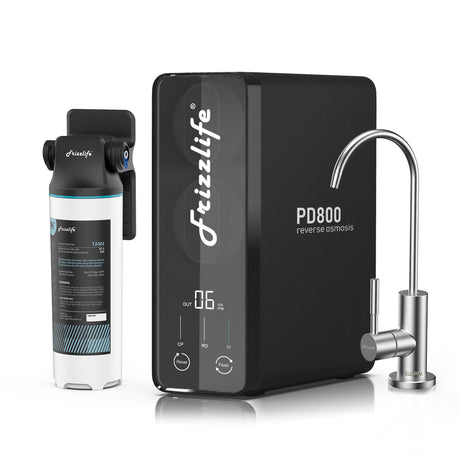
| PD800-TAM4 | High-Flow Tankless RO | 800 GPDAdvanced filtration | Busy households | Faster water flow and frequent use |
| PD1000-TAM4 | High-Flow Tankless RO | 1000 GPDHigh Capacity | Larger families | High daily water demand |
| PD1200 | Premium Tankless RO | High-capacity RO | Large households and heavy use | Fast dispensing and premium kitchen setups |
| WB99-C | Countertop Reverse Osmosis | No Under-sink Installation | Apartments, renters, offices | Flexible placement and easy setup |
A reverse osmosis water filter system is more than a basic water filter. It is designed for households that want cleaner drinking water, better taste, and a more convenient alternative to bottled water.

RO filtration helps reduce many impurities that can affect taste, odor, and clarity in everyday tap water.

Cleaner, better-tasting water can improve coffee, tea, ice, soups, rice, and everyday recipes.

Using a home RO water filter system can reduce the need for single-use plastic water bottles.

Frizzlife tankless RO systems are designed to save valuable under-sink space and help keep your kitchen cabinet more organized.
Choosing the right reverse osmosis water filter system depends on your kitchen space, household size, water taste preference, and installation needs.
Choose a tankless under sink RO system if you want a balance of space-saving design, daily convenience, and strong filtration performance.
Choose a remineralization model if you prefer smoother-tasting water with selected minerals added back after filtration.
Choose a higher-GPD RO system if your household uses filtered water frequently for drinking, cooking, coffee, tea, and ice.
Choose a countertop RO system if you prefer flexible placement or do not want to modify under-sink plumbing.
Frizzlife RO systems are designed for real home use, with options for different kitchen sizes, household water demands, and taste preferences.

Frizzlife tankless RO systems are designed to save under-sink space and fit neatly into modern kitchen cabinets. Without a bulky storage tank, the system helps reduce clutter and filters water on demand for everyday drinking, cooking, coffee, and tea.

Selected Frizzlife RO systems are designed for easier setup with clear installation guides and user-friendly connections. Many models also feature twist-in filter replacement, making routine maintenance simpler without complicated tools or professional service for routine filter changes.

Frizzlife compact RO systems are made for kitchens, offices, apartments, and smaller spaces where cabinet storage matters. The slim design helps keep your setup cleaner while still delivering reliable reverse osmosis filtration for daily drinking water needs.

Frizzlife offers different RO system capacities to match different household needs. Lower-capacity models can suit smaller households, while higher-GPD systems are better for families that use filtered water frequently for drinking, cooking, coffee, tea, and ice.

For users who want more flexibility, Frizzlife countertop and pitcher-style options can provide filtered water without a fixed under-sink setup. These options are especially useful for apartments, offices, renters, or users who prefer a movable drinking water solution.

Selected Frizzlife systems include smart features such as filter life reminders, water quality indicators, and real-time TDS display, depending on the model. These features help users monitor system status and replace filters at the right time.
Traditional RO systems and tankless RO systems both use reverse osmosis filtration, but they differ in how filtered water is stored and delivered.
Traditional reverse osmosis systems store filtered water in a pressurized tank, so water is ready when you open the faucet. This design can work well, but the tank takes up under-sink space.
Tankless reverse osmosis systems filter water on demand. They help save cabinet space, reduce concerns related to long-term water storage, and create a cleaner under-sink setup.
A reverse osmosis system works through a layered filtration process: pre-filtration, membrane separation, post-filtration, and sometimes remineralization.

Before water reaches the RO membrane, it passes through pre-filters that help capture larger particles and reduce chlorine taste and odor. This step protects the membrane and helps the system maintain stable performance over time.

The RO membrane is the core of a reverse osmosis system. Water is pushed through a semipermeable membrane that helps separate many dissolved substances from the incoming water before it reaches your faucet.

After the membrane stage, many RO systems use a post-carbon filter to polish the water before it reaches the faucet. This helps improve the final taste for daily use.

Some RO systems include a remineralization stage after filtration. This stage helps restore selected minerals for a smoother taste.
Water filtration performance should be clear and verifiable. Review model-level details such as contaminant reduction claims, filter life, GPD capacity, remineralization, wastewater ratio, and installation requirements.
Frizzlife provides product-specific information on filtration performance, replacement schedules, and certifications where applicable. Because certification and testing details may vary by model, always check the individual product page for the most current specifications.
When comparing RO systems, look for details such as contaminant reduction claims, filter life, flow rate, GPD capacity, remineralization stage, wastewater ratio, and installation requirements. These details help you choose a system that matches your water quality goals and household needs.
Browse common buying, installation, and water quality questions about reverse osmosis water filter systems.
Start with installation type, household size, daily water demand, and taste preference. Tankless under sink systems suit most homes, countertop RO systems work better for apartments or renters, and remineralization models are a good fit if you prefer smoother-tasting water.
Traditional RO systems store filtered water in a tank, while tankless RO systems filter water on demand. Tankless systems usually save under-sink space and reduce concerns related to long-term water storage.
Many under sink RO systems are designed for DIY installation, but difficulty depends on your plumbing setup and comfort level. Countertop RO systems are usually easier to set up because they do not require the same under-sink installation process.
Some RO systems may be compatible with refrigerator or ice maker connections when installed with the proper accessories, but compatibility varies by model and setup. Check the product manual or contact Frizzlife support before installation.
RO system maintenance usually includes replacing pre-filters, post-filters, and the RO membrane on schedule. You should also check for leaks, monitor water taste and flow, and follow the maintenance instructions for your specific model.
Reverse osmosis is a water filtration process that uses pressure to push water through a semipermeable membrane. The membrane helps reduce many dissolved substances and impurities that are too small for basic sediment or carbon filters to capture.
Depending on the system design and water conditions, an RO system can help reduce dissolved solids, chlorine taste and odor, certain heavy metals, fluoride, nitrates, and other common water impurities. Always check the specific product page for model-level reduction claims.
Many reverse osmosis systems are designed to help reduce fluoride and lead, but performance varies by model, filter condition, and water quality. For exact reduction claims, check the product specifications and testing information for the specific Frizzlife model.
Yes. RO water often tastes cleaner and more neutral because substances that affect taste and odor are reduced. Some users prefer RO systems with remineralization because they create a smoother, more balanced taste.
RO filtration can reduce dissolved minerals, which may make water taste flatter or slightly different from mineral-rich tap water. Remineralization models help add selected minerals back after RO filtration for a more balanced taste.
No. RO water and distilled water are produced by different processes. Reverse osmosis uses membrane filtration, while distillation uses evaporation and condensation.
Remineralization is not required for every user, but it is a good choice if you prefer water with a smoother taste and selected minerals added back after RO filtration.
Explore related Frizzlife collections to compare different installation types, filtration styles, and replacement needs.