On-demand filtration
Water is filtered when needed rather than stored in a large tank.



Frizzlife

Frizzlife

Frizzlife
Frizzlife

Frizzlife

Frizzlife

Frizzlife

Frizzlife
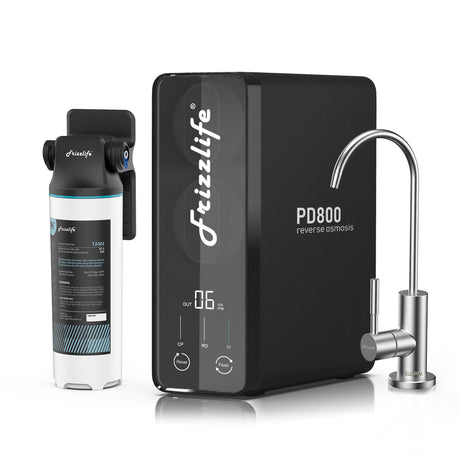
A tankless reverse osmosis system is designed for users who want RO filtration without a bulky storage tank. Frizzlife tankless RO systems can help homeowners compare space-saving design, flow rate, filtration stages, filter life, drain ratio, and smart monitoring features. This collection is one of the strongest commercial SEO pages because it captures users who already understand RO and are comparing modern kitchen-ready systems.
A tankless reverse osmosis system filters water on demand instead of storing filtered water in a pressurized tank. It typically includes sediment filtration, carbon filtration, an RO membrane, and post-filtration. Compared with traditional tank RO, tankless systems often save cabinet space and may provide fresher on-demand water, depending on the model and usage pattern.
Water is filtered when needed rather than stored in a large tank.
Pre-filters, an RO membrane, and post-filters work together to improve drinking water.
The system fits under the sink without a separate storage tank.
Many tankless systems include filter life reminders, TDS display, or leak protection depending on model.
No storage tank means a cleaner under-sink layout.
On-demand filtration reduces reliance on stored water.
Tankless RO is suited for drinking, cooking, coffee, and family use.
Quick-change filters and digital reminders can simplify upkeep.
Higher flow is important for families and frequent cooking use.
More efficient systems waste less water during RO production.
Consider membrane life, pre-filter cost, and replacement ease.
Confirm under-sink space, faucet hole, power needs, and plumbing compatibility.
| Use Case | Tankless RO System | Traditional Tank RO | Countertop RO |
|---|---|---|---|
| Best for | Modern permanent kitchen setup | Budget-friendly RO storage setup | Renters or no-plumbing situations |
| Storage tank | No separate tank | Has storage tank | Usually built-in tank or reservoir |
| Cabinet space | More compact | Takes more room | Uses countertop space |
| Water access | On-demand flow, model-dependent | Stored water from tank | Portable dispensing |
| Better choice if | You want a clean under-sink design | You prefer lower upfront cost | You cannot modify plumbing |
Tankless systems vary, so compare GPD and real-use flow rate.
A better drain ratio can reduce wastewater during filtration.
Digital reminders can prevent missed filter replacements.
Tankless RO may need power, drain connection, and dedicated faucet setup.
Use these related collections to continue product selection after reviewing this guide.
It is an RO system that filters water on demand without using a separate storage tank.
It can be better for users who value space savings, fresh on-demand water, and modern monitoring. Traditional tank RO may cost less upfront.
Tankless RO systems with an RO membrane commonly reduce TDS, but performance depends on the model and source water.
Many tankless systems require power for pump or monitoring features. Check the model requirements.
It is more involved than a faucet filter and may require faucet, drain, and cold-water connections.
Follow each filter stage schedule. Many systems include filter life reminders.
Drain ratio compares filtered water output to wastewater. A more efficient system wastes less water.
Usually it is better for homeowners or renters with permission because it requires under-sink installation.