
Free shipping for orders over $25! *No shipment to outlying areas (including Puerto Rico, Guam, Hawaii and Northern Mariana Islands)

Under Sink RO Systems

(8 products)
View as

Seeking Tankless RO System?

Importance of Tankless RO System

It is crucial to have clean and safe water at our disposal at all times especially in the modern world where we have to rush around a lot for the sake of our health and happiness. If you would like to be sure that you and your family drink only clean water, then it is smart to choose an RO water filter for your sink. Let me explain how this can greatly improve your well-being in detail.

Try Frizzlife Under-Sink RO Water Filters

Making The Right Choose of Tankless RO System

When it comes to ensuring your family has access to clean, safe drinking water, choosing the right reverse osmosis (RO) water filter for your sink is essential. Let’s explore the key factors to consider, and see how Frizzlife can meet your needs.

Water Quality Assessment

Start by assessing your tap water quality. You can obtain a water quality report from your local utility or conduct a simple home test. Understanding the contaminants present—such as lead, chlorine, and fluoride—will help you select a filter that effectively addresses your specific concerns. With Frizzlife, you can rest assured knowing our systems are designed to eliminate over 1,000 harmful contaminants, providing peace of mind for your family.

Water Flow Rate and Pressure

The flow rate of your RO system is crucial, especially for busy households. Frizzlife offers models that deliver at least 100 gallons per day (GPD), with some models reaching up to an impressive 1,000 GPD. This means you can enjoy a steady stream of purified water without long wait times. Plus, our systems are designed to function efficiently under a range of water pressures, ensuring optimal performance no matter your home’s setup.

WFilter Capacity and Lifespan

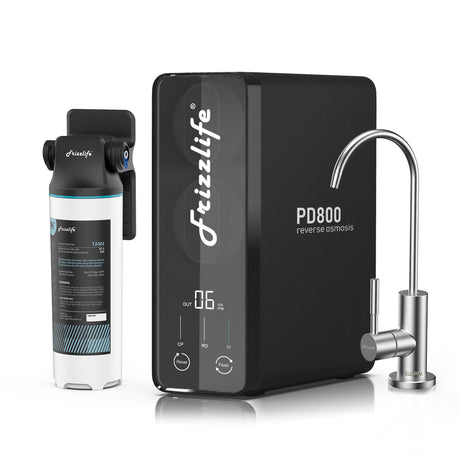
Space under the sink can be limited, which is why Frizzlife has designed its RO water filters as integrated units that take up minimal room. Unlike conventional systems, our tankless design eliminates the bulky pressure tank, freeing up valuable storage space. This compact design also prevents secondary pollution caused by stagnant water in unventilated tanks.

Space and Installation Requirements

Space under the sink can be limited, which is why Frizzlife has designed its RO water filters as integrated units that take up minimal room. Unlike conventional systems, our tankless design eliminates the bulky pressure tank, freeing up valuable storage space. This compact design also prevents secondary pollution caused by stagnant water in unventilated tanks.

Best Undersink Reverse Osmosis System: How to Choose the Right One

Most homeowners looking for the best undersink reverse osmosis system are already ready to upgrade from basic filtration to a more complete drinking water solution. In most cases, a tankless under-sink RO system is the strongest starting point because it saves cabinet space, provides a continuous flow design, and fits modern kitchen layouts more efficiently than traditional tank systems.

Frizzlife tankless reverse osmosis systems are designed for this exact use case — compact under-sink installation, dedicated drinking water output, and a streamlined filtration setup that removes the need for bulky storage tanks. The right choice ultimately depends on your kitchen space, installation preference, and how much convenience you want in daily use.

Who Should Buy an Undersink RO System?

An under-sink reverse osmosis system is designed for households that want a permanent, dedicated drinking water solution installed directly in the kitchen cabinet. It connects to a separate faucet and delivers filtered water on demand, making it a long-term upgrade rather than a portable filter.

Best For

  • Homeowners or long-term renters with under-sink cabinet space
  • Households that want a dedicated drinking water faucet
  • Users who prefer higher filtration performance than pitcher or carbon filters
  • Kitchens where clean design and hidden filtration systems matter

Not the Best Fit If

  • Renters without permission to modify plumbing or install a faucet
  • Users who need a portable or countertop filtration solution
  • Homes looking for whole-house water filtration coverage

What to Look for in an Undersink RO System

Choosing the best undersink reverse osmosis system is less about brand names and more about how the system fits your daily use and kitchen setup.

More stages typically mean more layered filtration, where different filter media target sediment, chlorine, and dissolved solids. The key is understanding what each stage contributes rather than focusing on quantity alone.

Tankless systems store filtered water on demand rather than in a pressure tank. This helps reduce under-sink clutter and supports a more compact installation footprint. Traditional tank systems may require more space due to the storage tank.

Most under-sink RO systems connect to existing plumbing lines under the kitchen sink. Some setups may require basic drilling for a dedicated faucet, depending on the kitchen configuration and product design.

Maintenance varies by model. Some systems use quick-change filter designs to simplify replacement, while others may require more steps. Always check the specific product page for replacement guidance.

Before choosing a system, it is important to confirm sink layout, available cabinet space, and whether a dedicated faucet installation is supported.

Tankless vs. Tank RO: Which Type Fits Your Kitchen?

The main decision most buyers face is whether to choose a tankless system or a traditional tank-based reverse osmosis system.

Feature Tankless RO System Tank RO System
Space usage Compact, under-sink optimized Requires space for storage tank
Water delivery On-demand flow design Uses stored filtered water
Cabinet layout Cleaner, more open installation More crowded under sink
Maintenance Simplified filter system (varies by model) Includes tank maintenance considerations
Best for Modern kitchens, space-saving setups Older systems or specific plumbing setups

Frizzlife primarily recommends tankless reverse osmosis systems for most modern households because they align better with compact kitchen layouts and everyday convenience needs.

Installation and Filter Replacement: What Buyers Should Know

Under-sink RO systems are designed to integrate into existing kitchen plumbing under the sink. Most installations connect directly to cold water lines and include a dedicated faucet for filtered water output. Depending on the model, installation may be suitable for DIY users or may benefit from professional assistance.

Filter replacement is typically handled through modular filter cartridges designed for easier maintenance. Replacement timing varies by model and water quality conditions, so it is important to follow the specifications listed on each product page.

Overall maintenance is minimal once installed, with periodic filter changes being the primary ongoing requirement.

Frequently Asked Questions

Frizzlife's no-tank design saves space under your sink, allowing for more storage. It also prevents secondary contamination that can occur in traditional water tanks, ensuring that your drinking water remains fresh and clean.
Traditional systems waste significantly more water than tankless reverse osmosis (RO) systems do. The main advantage of tankless reverse osmosis (RO) systems is their exceptional water efficiency. The waste to filtered water ratio of these systems reaches 2:1 which means they discard one gallon of waste for every two gallons of filtered water they produce. Traditional RO systems with storage tanks operate at a 1:3 ratio which means they waste three gallons of water to produce one gallon of clean water. The difference in efficiency between these systems results in significant water conservation which makes tankless systems a better choice for sustainable households. The enhanced efficiency of tankless RO systems does not compromise their performance capabilities. Tankless RO systems produce excellent tasting water with reduced water waste during operation.
Not at all! Frizzlife RO water filters are designed for easy installation. Most users can set it up within 30 minutes using the comprehensive instructions provided in the manual and available video tutorials. There's no need for a plumber!
Most tankless reverse osmosis (RO) systems need electricity to operate. The built-in electric pump of tankless models generates the necessary pressure to efficiently push water through the RO membrane because these systems do not use gravity-fed systems. The system's filtration speed and water output improve through this design while minimizing wastewater production. The system requires a power connection to operate correctly.
Yes! Frizzlife's under-sink water filter is versatile. You can use the purified water for cooking, making coffee or tea, and even filling your ice maker. It's perfect for all your water needs.
Frizzlife RO systems come equipped with a smart filter life reminder. The built-in TDS sensor monitors water quality and provides real-time updates. Color-coded indicators alert you when it's time to change the filter—blue indicates good, while red signals a replacement is needed.
Frizzlife's reverse osmosis system is highly effective, removing over 1,000 contaminants, including lead, chlorine, fluoride, heavy metals, arsenic, and many more. This ensures you get ultra-pure water free from harmful substances.
Tankless reverse osmosis (RO) systems are a great option if you value space-saving design, energy efficiency, and consistently fresh-tasting water. Although they are often more expensive than traditional tank-style systems and require more frequent maintenance, many homeowners find the long-term benefits to be well worth it.
Focus on available space, filtration design, installation compatibility, and whether you prefer a tankless or tank-based system. These factors matter more than surface-level feature lists.
Reverse osmosis uses a multi-stage membrane process to reduce a broader range of dissolved solids, while carbon filtration mainly targets chlorine, odor, and taste improvement.
Many systems are designed for basic installation under the sink, but complexity varies by model and kitchen setup.

Compare /3

Loading...
Copy successfully!