


If you’re thinking, “I’m going to Vietnam—what should I do about drinking water?” start with one firm rule: do not drink untreated tap water. Official U.S. travel guidance considers Vietnam’s tap water unsafe for travelers, including in major cities. The CDC also advises caution with ice because it may be made from tap water.
For most short city trips, unopened, factory-sealed bottled water is the simplest option. A portable water filter or travel purifier becomes more useful during longer stays, rural homestays, trekking, backpacking, or any itinerary where the safety of refill water cannot be confirmed.
The important distinction is that a filter and a purifier are not necessarily the same thing. Many compact microfilters address bacteria, parasites, and sediment but do not reliably remove viruses. Some also do little or nothing for dissolved chemicals. Before selecting an international travel water filter, verify what the specific device treats, how that performance was tested, and whether it is appropriate for the water sources you expect to encounter.
I’m Going to Vietnam: What Should I Do About Drinking Water?
Plan to use one of the following for drinking:
-
Water from an unopened, factory-sealed bottle
-
Water from a source you can verify has been adequately treated
-
Water you treat correctly through boiling, disinfection, purification, or an appropriate combination of methods
Apply the same precautions to water used for cooking, making ice, preparing drinks, and brushing your teeth. Do not assume that a modern hotel, city apartment, or restaurant automatically has drinkable tap water.
You can generally shower and wash your hands with tap water, but avoid swallowing it. Travelers with open wounds or specific medical concerns should ask a healthcare professional for individualized advice before departure.
Is tap water safe to drink when traveling in Vietnam?
No. Travelers should not drink Vietnam’s tap water without appropriate treatment.
The CDC states that tap water is unsafe to drink in Vietnam. The U.S. Department of State similarly advises that tap water is not considered safe to drink anywhere in the country, including major cities.
This guidance does not mean that every tap or refill source is contaminated at all times. It means that travelers cannot rely on the tap as a consistently safe drinking-water source. Water quality can also be affected after municipal treatment by building plumbing, tanks, storage practices, and other conditions that are difficult for a visitor to verify.
Do not assume tap water is safe because it looks clear, has no noticeable odor, or is served in a clean container. Microorganisms cannot be identified by sight, taste, or smell.
Use factory-sealed bottled or properly treated water for drinking, cooking, ice, and brushing teeth
The CDC recommends commercially bottled water from unopened, factory-sealed containers when local tap water may be unsafe. Check that the cap ring is intact and that the bottle does not appear to have been opened or refilled.
Use sealed or properly treated water for:
-
Drinking and filling a reusable bottle
-
Brushing and rinsing your teeth
-
Making coffee, tea, or other beverages unless the water receives adequate treatment
-
Preparing infant formula
-
Washing foods that will be eaten raw when they cannot be peeled
-
Making ice
-
Taking medications that require water
Ice deserves particular attention. The CDC’s Vietnam guidance warns that ice may be unsafe because it is often made from tap water. If you cannot confirm that ice was produced from safe water, order the drink without it.
Boiling is the most reliable way to kill germs in water of uncertain microbiological quality, according to CDC guidance. However, boiling requires heat, time for cooling, and clean storage afterward. It also should not be treated as a universal answer to every possible dissolved chemical contaminant.
Bottled water vs treated water: the practical choice for city stays, long trips, and remote travel
Factory-sealed bottled water is often the practical default for short visits to Hanoi, Ho Chi Minh City, Da Nang, and other urban destinations. It requires no equipment, charging, maintenance, or waiting for treatment.
A treatment device may become more practical when:
-
You will be in Vietnam for several weeks or months
-
Your itinerary includes remote or rural areas
-
You expect to stay in homestays with uncertain drinking-water arrangements
-
You will trek or camp away from reliable retail access
-
You want a backup for transportation delays or disrupted bottled-water availability
-
You want to reduce—but may not be able to eliminate—single-use bottle consumption
A filter does not automatically make hotel tap water or surface water safe. Its suitability depends on the device’s treatment scope and the source. When viruses may be present, a typical microfilter should be paired with an effective additional treatment method or replaced by a device specifically supported for virus reduction.
Vietnam water-treatment decision table by itinerary and water source
|
Vietnam itinerary or situation |
Practical primary choice |
Useful backup |
Main limitation to consider |
|---|---|---|---|
|
Short stay in major cities |
Unopened, factory-sealed bottled water or verified treated water |
Proper boiling or another treatment method |
A hotel or apartment tap should not be assumed safe |
|
Long urban stay |
Verified treated water, sealed bottled water, or a suitable treatment system |
Sealed bottled water |
Confirm how refill water is treated and stored |
|
Mixed city and rural itinerary |
Sealed water where available; appropriate purifier or combined treatment when source safety is uncertain |
Disinfectant or boiling |
A basic filter may not address viruses |
|
Rural homestay |
Ask how drinking water is treated; use sealed or properly treated water |
Purifier, boiling, or filter plus disinfection |
“Filtered” does not identify which contaminants are addressed |
|
Trekking or backpacking |
Treatment selected for the source, expected pathogens, and sediment level |
A second treatment method and clean storage |
Surface water can carry microorganisms and may clog compact filters |
|
Emergency or supply disruption |
Boiling when feasible or an appropriate purifier |
Chemical disinfection used exactly as directed |
Treatment time, water clarity, and clean-side handling still matter |
Do You Need a Water Filter for Vietnam Travel?
It is still sensible to consider a backup. A missed connection, long train ride, remote excursion, or uncertain homestay can leave you without a drinking-water source you trust. The right backup may be a purifier, disinfectant, or means of boiling—not necessarily a basic straw filter. When bottled water is enough—and when a backup treatment method makes sense
Bottled water is usually enough when all of the following apply:
-
Your trip is short
-
You will remain in populated areas
-
Unopened bottles are readily available
-
You can inspect bottle seals
-
You do not expect to collect water from taps, wells, streams, or refill stations of uncertain quality
Consider carrying treatment equipment when your itinerary is less predictable. It may also help travelers who want to refill reusable containers, but only when the refill source and treatment process are appropriate for the device.
A treatment backup should be independent enough to remain useful if your primary method fails. For example, carrying a second identical filter does not solve the virus limitation shared by both devices. A better backup might use a different mechanism, such as boiling or chemical disinfection.
Filter, Purifier Bottle, or UV Treatment?
The practical difference appears when you want to fill from a tap, well, stream, storage tank, or other source whose microbiological safety is unknown.
A bottle filter processes water as you drink. A purifier bottle should provide broader microbiological treatment, but the word “purifier” must be supported by model-specific performance information. A UV device inactivates susceptible microorganisms rather than physically removing them, and it works best when the water is clear enough for the light to reach them.
Bottle filter vs travel water purifier bottle vs UV wand
A bottle filter is compact and familiar. Water passes through a cartridge when you sip, squeeze, or press it. Depending on the model, it may reduce sediment, bacteria, and protozoa. The trade-off is drinking resistance, limited volume, and the possibility that viruses are not addressed.
A travel water purifier bottle is intended to provide broader protection than a standard filter. Do not rely on the label alone. Review whether the manufacturer specifically claims virus reduction, whether testing is available, and under what source-water and operating conditions the claim applies.
A UV treatment device exposes water to ultraviolet light. It can be useful for clear water when operated for the full required cycle. It does not physically remove sediment, improve clarity, or provide the same role as a carbon stage. Cloudy water should be prefiltered, and the device depends on functioning batteries or charging.
Direct-source drinking also increases the importance of handling. The mouthpiece, cap, threads, and clean side of the bottle must not be contaminated by untreated water. If the outside of the bottle is submerged during filling, dry or clean it as instructed before drinking.
What each treatment method can and cannot address
|
Method |
What it is designed to do |
Important limitation |
|---|---|---|
|
Mechanical microfiltration |
Physically removes sediment and, with an appropriate pore size, many bacteria and protozoa |
Does not reliably remove viruses; dissolved-contaminant reduction is model-dependent |
|
Activated carbon |
May improve taste and odor and reduce certain substances supported by model-specific testing |
Not a stand-alone method for disinfecting unsafe water |
|
UV treatment |
Inactivates susceptible microorganisms when water is clear and the device is used correctly |
Does not remove sediment or dissolved chemicals; requires power and a complete treatment cycle |
|
Boiling |
Reliably kills germs when performed correctly |
Requires fuel, cooling, and clean storage; does not remove sediment or solve every chemical concern |
|
Chemical disinfection |
Can inactivate susceptible microorganisms when the correct dose and contact time are followed |
Effectiveness varies by organism, temperature, clarity, and product; it does not physically remove sediment |
|
Filter plus disinfection |
Removes particles and filter-susceptible organisms before a second treatment step |
Takes more time and requires both stages to be completed correctly |
|
Nanofiltration or reverse osmosis |
Certain systems can address viruses and a range of other contaminants |
Capability and portability are model-dependent; not every system is practical for lightweight travel |
What type of portable water filter is practical for international travel?
The most practical device is the one that treats your expected water, fits your daily volume, and can be operated correctly throughout the trip.
Evaluate:
-
Microorganism coverage: Does the model address parasites, bacteria, and viruses, or only some of them?
-
Testing language: Is the performance independently certified, independently tested, or only claimed by the manufacturer?
-
Source-water conditions: Can the device handle cloudy or sediment-heavy water?
-
Treatment speed: Can it provide enough water for drinking, meals, and your group size?
-
Physical effort: Does it require squeezing, pumping, sucking, hanging, or waiting?
-
Maintenance: Can it be cleaned or backflushed during travel?
-
Replacement planning: Will the cartridge remain within its stated service limit for the entire itinerary?
-
Clean-water storage: Can treated water be kept in a clearly separated, clean container?
-
Backup: What will you do if the filter clogs, breaks, freezes, loses power, or is misplaced?
For ordinary tourism, a light purifier bottle or a compact device combined with a suitable backup may be convenient. For high-volume backpacking, a pump or gravity system may be more practical.
Why water clarity, prefiltration, treatment time, and correct use matter
Cloudy water contains suspended material that can clog filters and interfere with some disinfection methods. When no better source is available, allow sediment to settle and use a suitable prefilter according to the treatment device’s instructions.
Prefiltration improves operating conditions; it is not the same as purification. Water that looks clear may still contain bacteria, parasites, or viruses.
Treatment time also matters. A chemical disinfectant needs its full specified contact time. A UV device needs a complete cycle. A pump, squeeze, or gravity filter must be assembled in the correct flow direction without contaminating the outlet.
The Trade-Offs of Compact Microfilters
Compact microfilters are attractive because they take up little space and can be used without a complicated setup. Their limitations become more noticeable when water is silty, several people need water, or the user must pull every sip through a small filter.
What do you give up with a miniature filter?
The first trade-off is treatment scope. Many miniature hollow-fiber filters are designed for bacteria and protozoa, not viruses. They also should not be presumed to remove pesticides, salts, fuel, heavy metals, or other dissolved contaminants unless the specific model has appropriate supporting evidence.
The second trade-off is effort. Small filter area and narrow water pathways can create noticeable resistance. As debris accumulates, drinking through the filter or squeezing water into another container can become slower.
The third trade-off is volume. A compact filter may work well for one person taking occasional drinks but become inefficient when treating water for a group or preparing meals.
Finally, small components are easier to contaminate accidentally. Placing a clean-side cap on dirty ground or touching the outlet with untreated hands can undermine otherwise correct treatment.
Slow flow or increasing resistance

A sudden or gradual decline in flow does not automatically mean the source water is safe or that you should bypass the filter. Instead:
-
Check for visible sediment in the source
-
Confirm that the filter is assembled in the correct direction
-
Inspect seals, threads, hoses, and connections
-
Clean or backflush the unit only as the manufacturer directs
-
Check whether the cartridge has reached its service limit
-
Look for cracks, leaks, or other physical damage
-
Confirm that a wet filter has not been exposed to conditions prohibited in its instructions
-
Switch to a backup method if correct operation cannot be restored
Never force unknown water through a damaged cartridge or modify the housing to improve flow.
When combining filtration with another treatment method is safer
CDC guidance indicates that when boiling is not possible, using a filter followed by another treatment method is often the next-best approach for water of uncertain microbiological quality.
The order usually matters. Filtering cloudy water first can remove sediment and many larger microorganisms, allowing the subsequent disinfectant or UV step to work under more suitable conditions. Follow the instructions for both devices; do not shorten the second treatment’s contact time simply because the water was filtered first.
No combination should be assumed to solve an unknown chemical hazard. If a source has an oily sheen, unusual color, strong chemical odor, nearby pollution, or suspected industrial or agricultural contamination, find a different water source.
Remote and Backpacking Water Treatment in Vietnam

Remote travel changes the decision from “Can I fill one bottle?” to “Can I reliably treat enough water every day?”
A typical backpacking setup may need to supply drinking water, cooking water, and water for more than one person. This is where a pump or gravity-fed system can be easier to manage than a small bottle purifier.
When a pump or gravity filtration system beats a travel bottle purifier
A pump gives the user direct control and can move water from a shallow or difficult source into a clean container. It may be useful when hanging a gravity bag is impractical. Its disadvantages include physical effort, more moving parts, and the need to keep intake and outlet components separate.
A gravity system uses elevation rather than repeated pumping. Once set up, it can process water while travelers handle other camp tasks. It is often a convenient format for groups or higher daily volumes, although performance depends on the filter, water clarity, and height difference in the setup.
A purifier bottle is better suited to personal, drink-as-you-go use. It requires less camp setup but can be inefficient for cooking or filling several containers.
Before choosing, estimate:
-
Number of travelers
-
Drinking and cooking volume
-
Frequency of water access
-
Expected source turbidity
-
Available pack space
-
Time available for setup and treatment
-
Whether the system addresses viruses
-
Ability to store treated water separately
Travelers can compare the formats in Frizzlife’s portable outdoor filtration collection and gravity-fed water filter systems. Review model-level documentation before deciding whether a system is suitable for a particular untreated source.
Portable Water Filtration Options for Travel and Outdoor Use
Different travel situations call for different filtration setups. Review each product's documented treatment scope and make sure it matches the water source you expect to use.

Frizzlife EF1200
A compact electric-pump filtration option for hiking, camping, backpacking, and other situations where portable water treatment is useful. Check the model-specific filtration scope before using it with an uncertain water source.
View EF1200
Frizzlife MV99
Better suited to RV, campsite, or longer-stay setups with a compatible water connection than to lightweight backpacking. Review the source-water conditions and documented filtration claims before use.
View MV99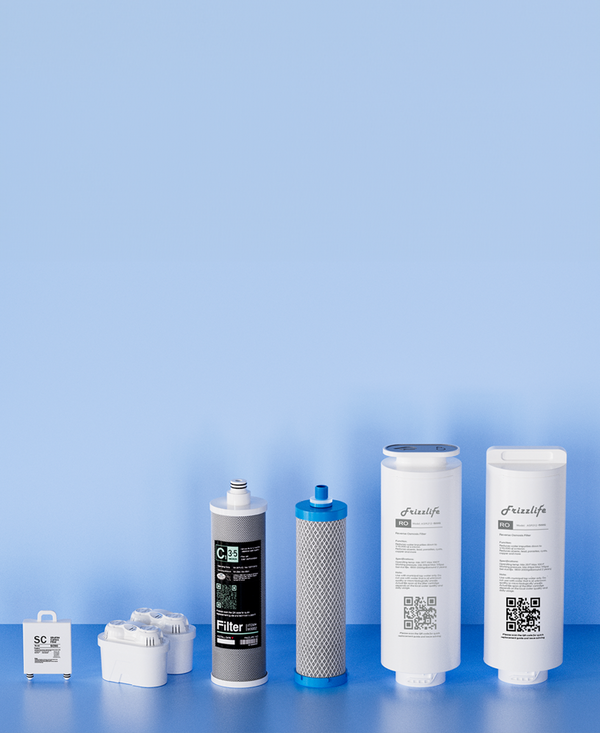
Find Replacement Filters
Preparing for a longer trip? Check compatible replacement filters and cartridges before departure so your filtration setup stays within its recommended service life.
Find Replacement FiltersHandling turbid water without prematurely clogging the system
Choose the clearest available source and collect away from disturbed mud or heavy surface debris. Avoid stirring the bottom with a bottle, hose, or pump intake.
If the water contains visible sediment:
-
Collect it in a dirty-water container.
-
Let larger particles settle.
-
Carefully transfer the clearer upper water without remixing the sediment.
-
Prefilter if the device instructions permit it.
-
Process the water through the main treatment system.
-
Complete any additional disinfection step required for virus protection.
-
Store the finished water in a clean, covered container.
Clean and maintain the equipment at the intervals and by the methods stated in its instructions. Improvised cleaning agents or excessive pressure can damage some filter media.
When Virus Protection Is Non-Negotiable
Choose a device specifically supported for virus reduction—not merely one appearing on a list of popular backpacking filters—when the source may be contaminated by human waste or when virus protection is otherwise non-negotiable.
Most portable microfilters do not reliably remove enteric viruses such as norovirus. A small pore size that addresses bacteria and parasites is not, by itself, evidence of virus protection.
How to verify whether a device addresses viruses
Look for model-specific documentation that clearly identifies:
-
Viruses among the treated microorganism classes
-
The test method or protocol used
-
Whether results come from independent certification, independent testing, or manufacturer testing
-
Required water conditions
-
Treatment capacity or service-limit conditions
-
Operating and maintenance requirements
-
Situations in which the claim does not apply
CDC guidance notes that manufacturers using an EPA purifier designation are expected to demonstrate specified reductions for bacteria, viruses, and protozoan parasites. However, the EPA does not independently test those products. Travelers should therefore read the actual supporting documentation rather than treating the word “purifier” as a guarantee.
“Filter” vs “purifier”
In everyday marketing, these words are sometimes used loosely. For travel planning, the distinction is practical:
-
A filter physically removes contaminants within its supported size and design range.
-
A purifier is expected to provide broader microbiological protection, including virus reduction when that claim is properly supported.
-
A carbon bottle may improve aesthetic qualities without providing complete microbiological treatment.
-
A UV device treats susceptible microorganisms but does not physically filter the water.
-
A multi-stage system is only as suitable as the documented function of its individual stages and the way they work together.
Do not infer performance from product shape, price, number of stages, or the use of terms such as “advanced” and “premium.”
Why general NSF certification is not automatically enough
NSF/ANSI standards cover different water-treatment functions. Standards such as NSF/ANSI 42, 53, and 401 may support particular contaminant or performance claims, but some filtration standards apply to water supplies that are already microbiologically safe.
A certification for taste, chlorine, cyst reduction, or a specific chemical does not automatically establish that a device can purify microbiologically unsafe travel water. Check:
-
The exact standard
-
The exact reduction claim
-
The specific certified model
-
The test conditions
-
Whether the certification covers viruses
Certification is valuable evidence, but only for the scope it actually evaluates.
A Safe-Water Routine for Your Vietnam Trip
A good travel plan does not depend on a single device working perfectly. It uses a dependable primary source, an appropriate treatment method when needed, clean handling, and a realistic backup.
Before departure
Read the complete instructions for your device rather than learning it at a remote water source. Verify:
-
Whether it addresses bacteria, parasites, and viruses
-
Whether it has limitations for cloudy or chemically suspect water
-
How it should be cleaned
-
How to identify damage or end of service
-
Whether replacement parts are needed during the trip
-
Whether batteries or charging are required
-
Which backup method you will carry
-
How clean and untreated components will be separated
Practice assembling and operating the system with water from a safe source before packing it.
On arrival
Inspect the seal on bottled water. Do not use a bottle if the tamper ring is broken, the cap appears loose, or the container looks as though it has been refilled.
At a hotel, hostel, apartment, or homestay, ask where the drinking water comes from and how it is treated. “Filtered water” is not a complete answer. If the process cannot be confirmed, use factory-sealed bottled water or treat the water with an appropriate method.
Apply the same caution to shared dispensers and refill stations. A clean-looking machine does not reveal the cartridge condition, sanitation schedule, or microbiological treatment method.
During use
Prevent dirty water from contacting the clean side of the system:
-
Mark dirty- and clean-water containers
-
Keep inlet and outlet hoses separate
-
Do not place clean caps on contaminated surfaces
-
Avoid touching the mouthpiece with untreated hands
-
Clean spills from the bottle exterior before drinking
-
Follow disinfectant dose and contact-time instructions exactly
-
Complete every UV treatment cycle
-
Store treated water in a clean, closed container
If clean-side contamination occurs, follow the manufacturer’s sanitation instructions before using the device again.
If the filter clogs, loses flow, becomes damaged, or reaches its service limit
Stop relying on it until you identify the cause. Use sealed bottled water, boil water correctly, or switch to another appropriate treatment method.
Do not keep using a damaged filter because the water still appears clear. Clear water is not proof of microbiological safety, and cracks or failed seals can allow untreated water to bypass the filter media.
Never exceed a model’s stated service limit or assume that cleaning restores unlimited capacity.
Vietnam drinking-water packing checklist
-
Reusable drinking bottle
-
Plan for buying factory-sealed water
-
Treatment device matched to anticipated sources
-
Backup treatment method using a different mechanism
-
Dirty-water collection container, if needed
-
Clearly marked clean-water container
-
Prefilter supplies when supported by the device
-
Cleaning or backflushing components
-
Replacement parts required by the manufacturer
-
Batteries or charging cable for electronic treatment
-
Written or downloaded operating instructions
-
Hand sanitizer for situations without safe handwashing water
Final Decision
If you’re going to Vietnam for a short urban trip, unopened, factory-sealed bottled water is generally the most straightforward choice. Use it—or properly treated water—for drinking, brushing your teeth, cooking, and making ice.
For long stays, rural travel, or backpacking, carry an international travel water filter or purifier selected for the actual source and microorganism risk. A standard compact microfilter may address bacteria and parasites but should not be assumed to remove viruses or dissolved chemicals. When virus protection matters, choose a device with clear, model-specific evidence for virus reduction or combine filtration with an appropriate additional treatment method.
Above all, never treat “filtered,” “portable,” “NSF certified,” or “purifier” as a universal safety guarantee. Verify the exact claim, use the equipment correctly, protect the clean side from contamination, and keep a backup.
References
https://www.cdc.gov/yellow-book/hcp/asia/vietnam.html
https://travel.state.gov/en/international-travel/travel-advisories/vietnam.html
https://www.cdc.gov/drinking-water/media/pdfs/backcountry_water_treatment-508.pdf
https://www.cdc.gov/drinking-water/prevention/water-treatment-hiking-camping-traveling.html
https://www.nsf.org/knowledge-library/nsf-ansi-42-53-and-401-filtration-systems-standards
https://www.nsf.org/consumer-resources/articles/standards-water-treatment-systems