


Drinking water can modestly support weight management, but water does not independently burn body fat. The clearest benefits come from replacing calorie-containing beverages with water, drinking water before meals in certain structured weight-loss programs, and maintaining hydration so healthy routines are easier to follow.
To explain the relationship between drinking reverse osmosis water and weight loss support, it helps to separate the water from the filtration method. Reverse osmosis (RO) water can support the same hydration and beverage-replacement habits as other safe drinking water. However, standard RO water has no proven, unique fat-burning effect.
Its practical value is behavioral: if filtered water tastes more appealing or gives you greater confidence in your household water, you may be more likely to choose it instead of soda, sweetened coffee, juice, or other caloric drinks. That can reduce energy intake over time.
Does Water Help You Lose Weight? The Evidence-Based Answer
Water may help with weight management under specific conditions:
-
Replacing caloric drinks: Water has no calories. Substituting it for sugar-sweetened beverages can lower daily energy intake.
-
Drinking before meals: Some clinical trials suggest that approximately 500 mL, or about two cups, before meals may modestly improve weight loss in certain adults following a calorie-restricted program.
-
Supporting consistent hydration: Adequate fluid intake supports normal physical and cognitive function, which may make it easier to exercise, prepare meals, and follow a structured eating plan.
-
Creating a repeatable routine: Choosing water as the default beverage can reinforce other weight-management behaviors.
The overall research remains mixed. Studies have reported beneficial, neutral, and occasionally unfavorable weight outcomes. Differences in participants, diets, baseline beverage habits, study duration, and adherence help explain why drinking water for weight loss does not produce the same result for everyone.
The strongest conclusion is not “more water automatically causes weight loss.” It is that water can be a useful, low-calorie tool within a broader plan involving food choices, total calorie intake, physical activity, sleep, and sustainable habits.
Water weight is not the same as fat loss. Body weight can change from day to day as the body stores or releases fluid. Drinking a large glass of water can temporarily increase scale weight because the water has physical mass. Changes in sodium intake, carbohydrate intake, sweating, menstrual cycles, and digestion can also shift fluid balance.
Losing body fat requires a sustained energy deficit over time. A short-term drop caused by fluid loss is not necessarily fat loss, and drinking water does not “flush out” body fat.
Does drinking water before meals help weight loss?
Water before meals—sometimes called water preloading—is one of the better-studied strategies for using water intake to support weight management.

In one randomized study, adults with overweight or obesity who were middle-aged or older followed a hypocaloric diet for approximately 12 weeks. Participants who drank 500 mL of water before each of three daily meals lost about 2 kilograms more than participants who followed the diet without water preloading.
A separate randomized trial in adults with obesity reported approximately 1.3 kilograms of additional weight loss with pre-meal water, although the adjusted result was borderline in statistical significance. The researchers characterized the findings as preliminary rather than definitive.
Taken together, these studies suggest that pre-meal water may contribute roughly 1–2 kilograms of additional loss over about three months in certain dieting adults. That range is study-specific, not a promise or universal expectation.
Several limitations matter:
-
The participants were generally adults with overweight or obesity.
-
The interventions were used alongside a behavioral or calorie-restricted weight-loss program.
-
The studies were relatively small and short.
-
Results may not apply to younger adults, normal-weight individuals, non-dieters, or people with medical fluid restrictions.
-
Not every study has found that drinking extra water improves weight outcomes.
The likely explanation is straightforward: water occupies space in the stomach and may increase short-term fullness for some people. If that leads to smaller portions or fewer calories at the meal, weight loss may improve. Water itself has not burned the fat; it has supported a behavior that reduces energy intake.
How to apply the evidence without overdoing it
If you want to test pre-meal water as part of a structured weight-management plan, consider these practical steps:
-
Start with one meal. Try drinking water before the meal at which portion control is most difficult rather than immediately adding water before every meal.
-
Use the study amount as context, not a requirement. Approximately 500 mL was used in key trials, but individual comfort and fluid needs differ.
-
Drink it gradually. Rapidly forcing down a large volume may cause discomfort, nausea, or bloating.
-
Observe the actual result. Notice whether the habit helps you arrive at the meal less hungry and choose a comfortable portion.
-
Keep the rest of the plan intact. Pre-meal water cannot compensate for consistently consuming more calories than your body uses.
-
Stop if it makes eating uncomfortable. People with reflux, early fullness, digestive symptoms, or medically restricted fluid intake may need a different approach.
Timing is not inherently magical. Drinking water before a meal matters only if it improves appetite control, beverage choices, or adherence to an overall eating plan.
Replacing sugary drinks usually offers a more direct benefit
The most predictable relationship between water intake and weight management is beverage substitution. If a person regularly drinks caloric beverages and replaces some of them with plain water, daily calorie intake can fall without requiring a change in food portions.
The potential difference depends on the starting habit. Someone who replaces several sugar-sweetened beverages may reduce substantially more calories than someone who already drinks only water, unsweetened tea, or other low-calorie beverages.
This is why asking “Does water cause weight loss?” can be less useful than asking “What is the water replacing?”
For example:
-
Replacing a sweetened drink with water removes the drink’s calories.
-
Drinking water in addition to the sweetened drink does not create the same calorie reduction.
-
Adding water without changing food or beverage intake may have little effect on body fat.
-
Flavoring water with substantial amounts of sugar, syrup, or caloric mix-ins changes the equation.
Evidence comparing water with non-nutritive sweetened beverages is less consistent. Some trials have found slightly better weight outcomes with water, while another longer behavioral trial found slightly more weight loss with non-nutritive sweetened drinks. In that study, the difference was statistically significant but not considered clinically meaningful.
The practical conclusion is that water is an excellent default beverage, but claims that it always produces more weight loss than every zero-calorie alternative are not supported consistently. Beverage preference and adherence still matter.
Does hydration increase metabolism or burn fat?
Research has examined whether water temperature, osmolality, or consumption can temporarily increase energy expenditure or fat oxidation. Some experiments suggest small effects, but findings are inconsistent and the magnitude is not enough to make water a meaningful stand-alone fat-loss treatment.
Cold water, low-mineral water, or large amounts of water should not be treated as a metabolic shortcut. Even if the body uses a small amount of energy to process a drink or adjust its temperature, the effect is minor compared with total food intake and physical activity.
Water also cannot target abdominal fat. No form of plain water has been shown to “melt belly fat” or selectively reduce fat from one part of the body.
Hydration may provide indirect support that is easier to overlook. Being adequately hydrated can help a person participate in normal activity and maintain a consistent routine. Conversely, poor hydration can make a weight-management plan feel harder to follow. These effects support healthy behavior; they do not replace the need for an appropriate calorie balance.
Can reverse osmosis water help you lose weight?
Reverse osmosis water can support weight-loss habits, but standard RO water has no established advantage over other safe, calorie-free water for losing body fat.
An RO system uses a membrane-based filtration process to separate water from many dissolved substances. This changes water composition and may change its taste. It does not transform water into a weight-loss treatment.
The relationship between reverse osmosis water and weight loss is primarily practical:
-
RO water is calorie-free when consumed plain.
-
It can replace calorie-containing beverages.
-
Preferred taste may make consistent water intake easier.
-
Convenient access at home may reduce reliance on other drinks.
-
It can be used for evidence-based habits such as pre-meal water.
If someone dislikes the taste or odor of their tap water, that person may be less likely to drink it regularly. Choosing filtered water can reduce this behavioral barrier. The possible weight-management value comes from making water the easier, more appealing choice—not from RO filtration directly accelerating fat metabolism.
For households exploring this option, Frizzlife offers a range of reverse osmosis filtration systems. The decision to install one should be based on water-quality preferences, taste, household setup, and convenience rather than an expectation of automatic weight loss.
Explore RO Options for Everyday Drinking Water
If filtered water makes plain water easier to choose at home, compare RO systems based on installation, household setup, convenience, and maintenance needs—not on expectations of greater weight loss.
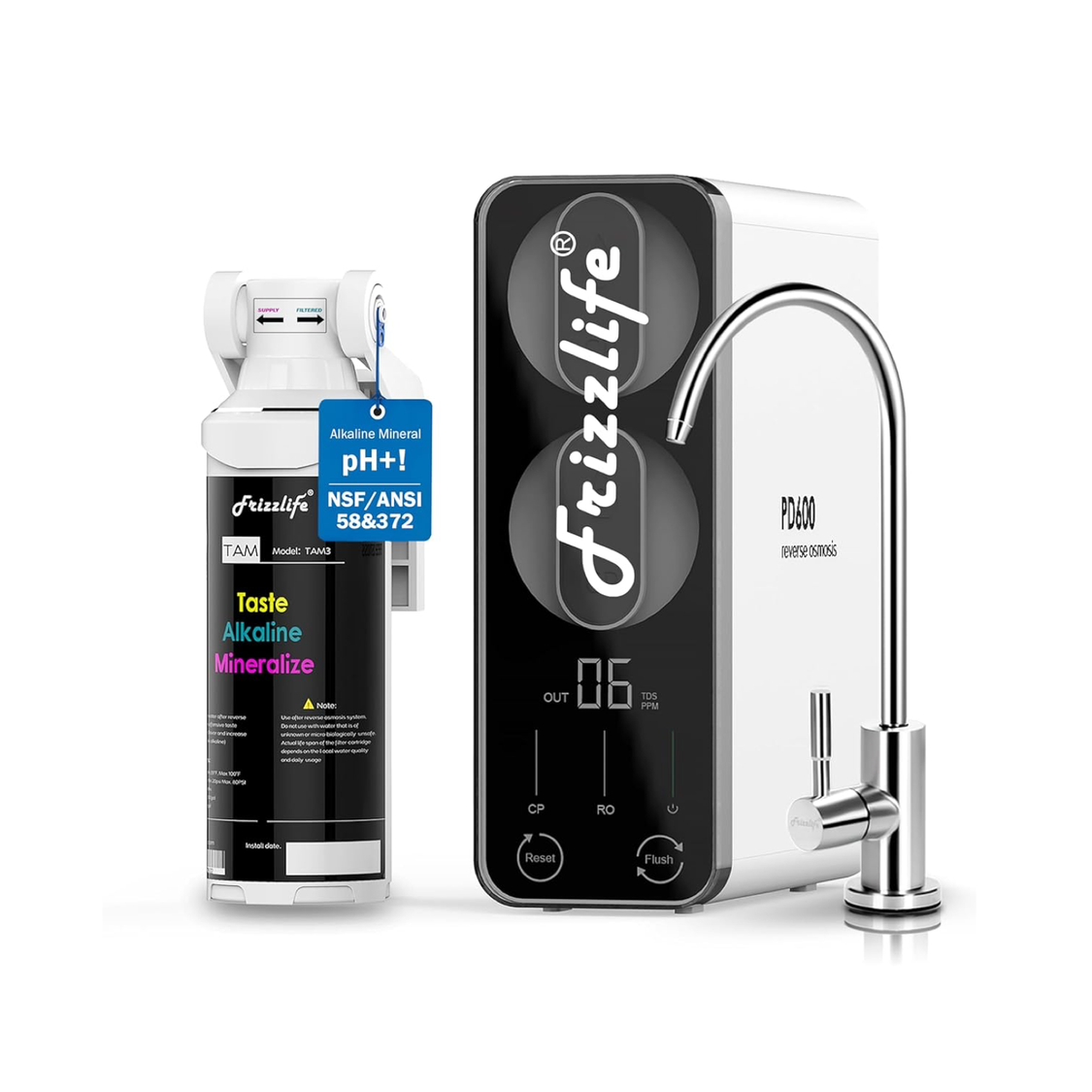
Frizzlife PD600-TAM3
An under-sink reverse osmosis option for households looking for convenient access to filtered drinking water as part of their everyday kitchen routine.
View PD600-TAM3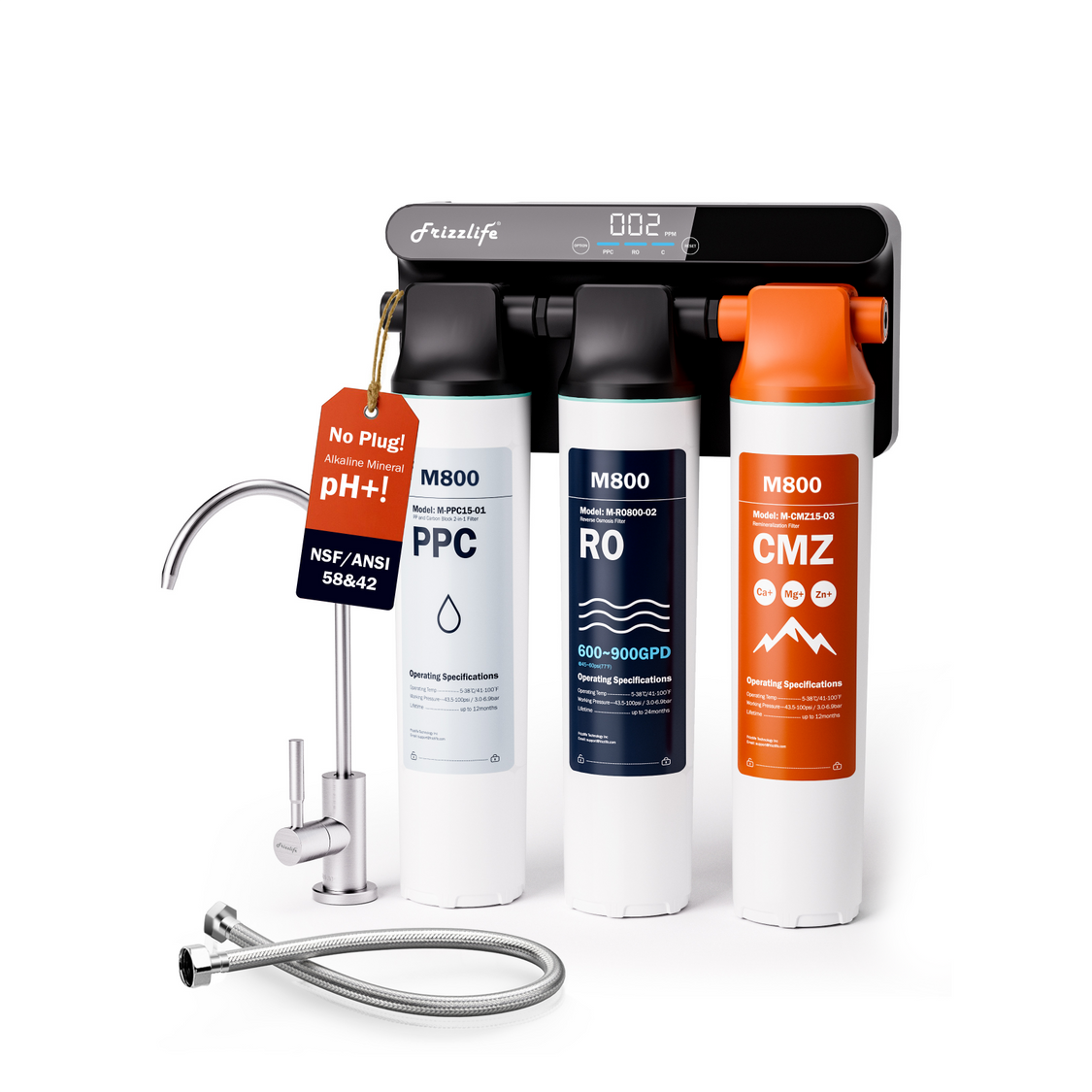
Frizzlife M800
Another home RO option for users who want filtered water available in the kitchen and prefer a dedicated under-sink filtration setup.
View M800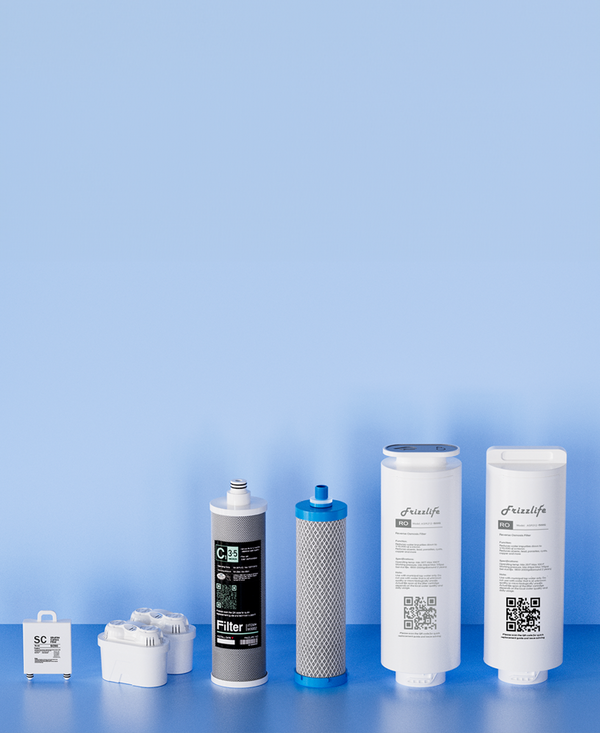
Replacement Filters
Already use a Frizzlife filtration system? Find compatible replacement filters and keep routine filter maintenance easier to manage.
Find Replacement FiltersReverse osmosis filtration should be selected based on water-quality preferences, installation needs, convenience, and household use. Standard RO water is not a clinically proven weight-loss treatment.
What does the RO-specific weight-loss study show?
A small study examined a specialized type of reverse osmosis infrared filtered water in women with obesity. Over 12 weeks, participants also followed a hypocaloric diet and physical-activity program. The group using the specialized water lost approximately 7.9 kilograms, compared with about 5.5 kilograms in the control group.
This finding should not be generalized to standard household RO systems for several reasons:
-
It involved specialized RO infrared filtered water, not ordinary RO water alone.
-
The participants were a specific population.
-
Both diet and physical activity were part of the intervention.
-
The study does not isolate reverse osmosis filtration as the cause of the difference.
-
It is one limited study rather than a broad, replicated body of evidence.
The result is better viewed as preliminary and technology-specific. It does not establish that RO water burns fat, boosts metabolism, or produces greater weight loss than regular potable water.
Research on hydrogen-rich and other modified waters is similarly specific to those technologies. Findings from specialty-water studies cannot be transferred to standard RO water or to a particular home filtration system.
Does filtered water help weight loss more than tap water?
Not inherently. If tap water is potable, acceptable in taste, and easy to access, it can support the same calorie-free hydration strategies. Filtered water becomes useful when filtration makes someone more willing to choose plain water consistently.
For weight management, the priorities are generally:
-
The water is appropriate for drinking.
-
You consume an amount suited to your individual needs.
-
It replaces caloric beverages when possible.
-
The habit is sustainable.
-
It supports rather than displaces a balanced diet.
The filtration type is secondary to those behaviors. RO, other filtered water, and potable tap water do not contain different amounts of weight-loss power.
If tap-water taste makes plain water less appealing, households can compare under-sink reverse osmosis systems and tankless reverse osmosis systems based on space and convenience—not an expectation of greater weight loss.
|
Choice or strategy |
How it may support weight management |
Strength of evidence |
When it may be useful |
Important limitation
|
|---|---|---|---|---|
|
Replace sugary drinks with plain water |
Reduces calories from beverages |
Relatively direct and practical |
You regularly consume soda, sweetened tea, juice drinks, or other caloric beverages |
The benefit depends on what water replaces |
|
Drink water before meals |
May increase short-term fullness and support portion control |
Modest and population-dependent |
You are following a structured eating plan and tolerate pre-meal water comfortably |
Trials were small and focused mainly on adults with overweight or obesity |
|
Maintain routine hydration |
May support normal activity and adherence to healthy routines |
Indirect; weight results are mixed |
Inconsistent drinking contributes to fatigue, thirst, or difficulty maintaining routines |
Hydration alone does not create a calorie deficit |
|
Choose RO water for taste or water-quality preferences |
May make plain water a more appealing default beverage |
Behavioral rationale; no proven unique fat-loss effect |
Tap-water taste or other household preferences discourage water intake |
Standard RO water is not proven to outperform other potable water for fat loss |
|
Drink additional water without changing other habits |
Adds fluid but may not reduce calorie intake |
Weak and inconsistent for weight loss |
Needed to meet individual hydration needs |
More water alone is not a reliable weight-loss strategy |
Does the lower mineral content of RO water affect weight loss?
There is no established evidence that the lower dissolved-mineral content typically associated with RO water either accelerates or prevents fat loss. Body-fat change is primarily driven by long-term energy balance, not by the mineral level of plain water.
Water should not be expected to provide the full range of nutrients found in a balanced diet. People generally obtain essential minerals through food and beverages consumed as part of their overall eating pattern. Individual nutritional or electrolyte needs can differ, particularly during prolonged exercise, heavy sweating, illness, or medically prescribed diets.
Adding mineral or electrolyte products also does not automatically make water better for weight loss. Some flavored hydration products contain calories or added sugar, so the label and serving size matter if beverage substitution is part of your strategy.
A practical way to use RO water for weight-loss support
RO water can fit into a realistic weight-management routine without treating it as a special diet product:
-
Keep plain water easy to reach where you prepare meals.
-
Use it as the default drink with food.
-
If pre-meal water helps with portion control, test the strategy gradually.
-
Prepare unsweetened hot or cold drinks with filtered water if plain water feels repetitive.
-
Carry water when away from home so convenience does not steer you toward caloric drinks.
-
Track sugary beverages separately from total water intake.
-
Evaluate progress over weeks, not according to next-day scale changes.
-
Pair hydration habits with nutritious food choices, appropriate portions, movement, and adequate sleep.
If plain water is unappealing, flavor can be added without turning it into a high-calorie drink. A small amount of lemon, lime, cucumber, or herbs may improve variety. What matters is whether the additions substantially change calorie or sugar intake.
A simple troubleshooting approach can help:
-
If water before meals causes bloating: Try a smaller amount or drink it earlier and more slowly.
-
If you forget to drink water: Tie the habit to an existing cue, such as starting meal preparation.
-
If frequent urination becomes disruptive: Avoid forcing large volumes and spread intake through the day.
-
If you still drink the same caloric beverages: Focus on substitution rather than adding water on top.
-
If the scale rises after increasing water: Remember that short-term fluid weight is not fat gain.
-
If filtered water does not improve adherence: The barrier may be routine, access, or beverage preference rather than filtration.
Can You Drink Too Much Water While Trying to Lose Weight?
Yes. More water is not always better, and forcing excessive amounts will not speed up fat loss.

Drinking a very large volume rapidly can overwhelm the body’s ability to maintain normal fluid and electrolyte balance. In serious cases, excessive water intake can dangerously dilute blood sodium. This is one reason weight-loss challenges that prescribe extreme or rapidly consumed water volumes should be avoided.
There is no single ideal amount of water for every person. Fluid needs vary with:
-
Body size
-
Physical activity
-
Climate and temperature
-
Sweating
-
Diet composition
-
Pregnancy or breastfeeding
-
Medications
-
Illness
-
Kidney, heart, liver, or endocrine conditions
Food also contributes to total water intake, particularly fruits, vegetables, soups, and other high-moisture foods. Coffee, tea, milk, and other beverages contribute fluid as well, although their calories and ingredients may affect a weight-management plan.
Do not assume that a research protocol of 500 mL before each meal is appropriate for everyone. That amount was studied in selected populations under defined conditions; it was not established as a universal daily prescription.
People with kidney disease, heart conditions, fluid-retention problems, endocrine disorders, or prescribed fluid limits should ask a qualified healthcare professional how much and when to drink. The same applies to anyone taking medication that affects sodium levels, urination, blood pressure, or fluid balance.
Seek medical attention for concerning symptoms after unusually heavy water intake, especially confusion, severe headache, vomiting, marked weakness, or worsening swelling. These symptoms should not be dismissed as part of a “detox” or weight-loss process.
The most useful approach is purposeful rather than excessive: drink according to your individual needs, use plain water to replace unwanted beverage calories, and consider pre-meal water only when it is comfortable and compatible with your health.
Reverse osmosis water can make that approach easier when taste or household water preferences are barriers. It does not independently burn fat, and no standard RO system should be viewed as a clinically proven weight-loss tool. For most people, what the water replaces—and whether the routine can be sustained—matters more than the filtration method.
References
-
Drinking Water Is Associated With Weight Loss in Overweight Dieting Women
-
Water Intake, Hydration, and Weight Management: The Glass Is Half Full
-
Long-Term Weight Outcomes Following Water or Diet-Beverage Substitution
-
Water Versus Non-Nutritive Sweetened Beverages in a Behavioral Weight-Management Program
-
Reverse Osmosis Infrared Filtered Water Consumption and Weight Loss