


The typical RO price in India ranges from approximately ₹5,000–₹8,000 for an entry-level domestic purifier, ₹9,000–₹14,000 for a mid-range system, and ₹15,000–₹25,000 for premium models that may include alkaline or remineralization stages, larger storage, or smart features. These are time-sensitive market estimates, not fixed retail prices.
Price alone, however, does not tell you which system is right for your home. A standard reverse osmosis purifier and an RO system with remineralization use the same basic membrane process. The key difference is what happens afterward: a remineralization stage passes purified water through mineral media to add back modest amounts of dissolved minerals, improve taste, and move pH closer to neutral or slightly alkaline.
That extra stage can make the water more pleasant to drink, but it also adds another cartridge to maintain. This guide explains the price, water-quality, taste, TDS, health, and ownership differences so you can decide whether remineralization is worth paying for.
Cost and Ownership Differences
When comparing RO purifier prices, look beyond the advertised equipment price. Installation, replacement filters, service, electricity, water use, and source-water conditions all affect the total cost of ownership.
A low-cost standard RO may be economical when straightforward purification is the priority. A remineralization reverse osmosis system generally costs more because it includes an additional mineral or alkaline post-filter. The price difference may be modest for a simple inline cartridge or more substantial when remineralization is bundled with UV, UF, monitoring, storage, or smart-control features.
What Are the Typical Price Ranges for RO Water Purifiers in India?
The following price bands provide a practical starting point for comparing domestic RO systems. Actual prices vary by seller, region, system capacity, filtration configuration, and installation requirements.
|
Approximate price band |
Common system positioning |
What to evaluate before buying |
Likely fit
|
|---|---|---|---|
|
₹5,000–₹8,000 |
Entry-level standard RO |
Membrane quality, prefiltration, tank size, service availability, and whether installation is included |
Budget-focused households that primarily need TDS reduction |
|
₹9,000–₹14,000 |
Mid-range RO, sometimes with UV, UF, mineral adjustment, or improved storage |
Whether the “mineral” stage truly adds minerals or merely blends water; replacement-filter costs; source-water suitability |
Households seeking more features without entering the premium category |
|
₹15,000–₹25,000 |
Premium alkaline, remineralization, smart, or higher-feature domestic RO |
Post-RO TDS and pH claims, cartridge availability, monitoring features, installation terms, and annual maintenance |
Buyers prioritizing taste, convenience, design, monitoring, or built-in remineralization |
These ranges are broad market estimates. A higher price does not automatically mean better contaminant reduction or safer water. It may instead reflect electronics, tank design, appearance, additional treatment stages, or service packages.
Similarly, a large number of filtration stages is not necessarily a sign of superior performance. Each stage should have a clear purpose. For example:
-
A sediment filter protects downstream components from particles.
-
Activated carbon helps address chlorine and certain taste or odor issues.
-
The RO membrane reduces dissolved substances.
-
A post-carbon stage polishes taste.
-
A mineral or alkaline cartridge changes the finished water after RO.
-
UV or UF stages serve different treatment functions and should not be confused with remineralization.
When comparing the standard RO vs remineralization RO price difference, identify which features are actually responsible for the higher cost.
Does RO Price in India Include Installation and Maintenance, or Only Equipment?
An advertised RO price may cover only the purifier. Installation, plumbing changes, mounting hardware, a prefilter, delivery, or a service plan may be separate. Before purchasing, ask for a written breakdown of what the price includes.
Confirm the following:
-
Standard installation charges
-
Charges for additional tubing, valves, drilling, or electrical work
-
Whether an external sediment prefilter is included
-
Warranty coverage for the pump, membrane, tank, electronics, and faucet
-
Whether the first service visit is included
-
Replacement-cartridge prices
-
Annual maintenance contract terms, if offered
-
Travel or call-out charges for service
-
Whether old filters are included in an exchange program
-
Whether installation affects warranty eligibility
Ongoing costs also depend on feed-water quality and household consumption. Dirty or sediment-heavy water can load prefilters faster. Hard or high-TDS water can place greater stress on the membrane. A larger household will generally process more water than a single-user home.
As a broad market reference, domestic RO membranes in India may cost around ₹900–₹2,500, while complete domestic replacement-filter kits may fall near ₹1,500–₹4,500. These are approximate figures rather than guaranteed prices. The correct filter, replacement schedule, and cost must be checked for the specific system.
The lowest purchase price can therefore become less attractive if replacement parts are expensive, difficult to obtain, or tied to frequent service visits.
What Extra Maintenance Is Required for an RO System With Remineralization Compared With a Standard RO?
A standard RO normally requires attention to its sediment and carbon filters, membrane, post-filter, tank or water pathway, and any pumps or electronic controls. A reverse osmosis system with a mineral filter includes one more consumable component: the remineralization cartridge.

That cartridge does not last indefinitely. Its useful life depends on:
-
The type and quantity of mineral media
-
Daily water consumption
-
Flow rate and contact time
-
Incoming and post-RO water chemistry
-
Cartridge design
-
Storage conditions
-
Manufacturer instructions
Avoid assuming that every mineral filter follows the same replacement schedule. Some cartridges may continue passing water even after their mineral contribution has declined, so flow alone does not prove that remineralization is still effective.
A basic TDS meter can help identify broad changes in dissolved solids, but it cannot tell you which minerals are present or whether the water is microbiologically safe. A pH meter or fresh test strips can show whether pH has shifted. If mineral composition matters, laboratory testing is more informative than a household TDS reading.
Practical signs that the remineralization stage may need evaluation include:
-
Water returning to a noticeably flat taste
-
Post-filter TDS falling toward the pre-remineralization RO reading
-
pH no longer changing after the mineral stage
-
Reduced flow, where the cartridge is the confirmed cause
-
The cartridge reaching its model-specific replacement limit
The additional maintenance is usually straightforward, but buyers should price the cartridge before selecting a system. A proprietary or hard-to-find mineral filter can create more long-term inconvenience than a widely available replacement format.
Can I Retrofit Remineralization to My Existing RO in India?
In many configurations, an inline remineralization cartridge can be installed after the RO membrane and before the drinking-water faucet. However, retrofit compatibility must be confirmed rather than assumed.
Check:
-
Tubing size and connections. The cartridge fittings must match the existing water line or use approved adapters.
-
Installation position. The mineral stage normally treats finished RO water. Installing it before the membrane would allow the membrane to remove much of what the cartridge adds.
-
Tank configuration. In a tank-based system, the cartridge can sometimes be placed before or after the tank, but placement affects contact time and taste. Follow the system and cartridge instructions.
-
Flow direction. Inline cartridges usually have a specified inlet and outlet.
-
Pressure and flow compatibility. The added stage should not cause unacceptable restriction.
-
Materials and media documentation. Look for transparent information about what the cartridge contains and whether its water-contact materials have relevant third-party certification.
-
Warranty terms. Modifying an existing purifier may affect coverage.
-
Sanitary installation. New tubing and cartridges should be handled and flushed according to the instructions.
Homeowners considering an upgrade can review Frizzlife remineralization filter options, then verify compatibility with their existing system before installation.
A retrofit can be more economical than replacing a functioning RO purifier. An integrated remineralization system may be preferable when you want a cleaner installation, manufacturer-defined stage sequencing, or fewer compatibility questions.
How Do Domestic RO Purifiers Differ From Commercial RO Plants in India, and Does Remineralization Matter for Both?
A domestic RO purifier is designed for household drinking and cooking water. A commercial or industrial RO plant is typically specified by output in liters per hour, or LPH, and may include larger pumps, pretreatment equipment, pressure vessels, controls, storage, and distribution infrastructure.
Indicative Indian market ranges for RO plants are much higher than household purifier prices:
-
25–100 LPH: approximately ₹25,000–₹75,000
-
250–500 LPH: approximately ₹75,000–₹2 lakh
-
500 LPH fully automated systems: approximately ₹1.5–₹4 lakh
-
1,000–2,000 LPH: approximately ₹2–₹5 lakh
-
Large industrial installations: potentially ₹25 lakh to ₹1 crore or more
These figures are time-sensitive equipment estimates. Installation, civil work, storage tanks, pretreatment, piping, electrical work, commissioning, and operating expenses may be additional. Commercial plant design is highly dependent on feed-water analysis and required output quality.
Remineralization matters when the RO plant produces water for drinking, food service, or another application that calls for a particular taste or mineral profile. It may be unnecessary—and potentially counterproductive—for process water, boiler feed, laboratory use, or manufacturing applications requiring very low dissolved solids.
For a commercial system, remineralization should be engineered around the intended use. A small domestic mineral cartridge should not be assumed suitable for high-flow commercial treatment.
Purity, Health Claims, and TDS Differences
“Pure water” and “zero-TDS water” are not interchangeable concepts. TDS measures the approximate concentration of dissolved substances that conduct electricity. It does not identify those substances, and it does not detect every contaminant.
A low TDS reading can confirm that an RO membrane is reducing dissolved ions, but it cannot by itself prove that the water is safe. Conversely, an increase in TDS after remineralization does not mean the filter has made the water dirtier. It may reflect calcium, magnesium, bicarbonate, or other intended mineral content added after purification.
How Does Remineralization Affect TDS and pH of RO Water?
A standard RO membrane removes a large portion of dissolved ions, including calcium and magnesium. In ordinary domestic applications, finished RO water may sometimes measure approximately 5–25 mg/L TDS, although actual output depends heavily on feed-water TDS, membrane condition, pressure, recovery, temperature, and system design.
Because RO water has little mineral buffering, its measured pH can be neutral or slightly acidic and may change after exposure to air. This does not mean every standard RO produces water at the same pH.
A remineralization stage passes the purified water through media such as calcite or magnesium-containing material. As controlled amounts dissolve:
-
TDS rises
-
Calcium or magnesium may be added
-
Acidity may be moderated
-
pH may move toward neutral or slightly alkaline
-
The water’s mouthfeel may become fuller

Some post-RO cartridges may raise TDS into an approximate 60–120 mg/L range. Other systems produce lower or higher readings. The result depends on the media, water temperature, flow rate, contact time, starting pH, and cartridge condition.
An alkaline RO system is generally an RO purifier with a post-treatment stage intended to raise pH. “Alkaline,” “mineral,” and “remineralization” are sometimes used interchangeably in marketing, but they are not always technically identical. Read the media description and finished-water specifications rather than relying only on the product label.
Does Remineralization Change the Taste of Reverse Osmosis Water?
Yes, remineralization often changes the taste of reverse osmosis water.
Standard RO water contains relatively few dissolved minerals and may taste neutral or “flat” to people accustomed to mineral-containing tap or bottled water. A mineral cartridge can add mild mineral character and improve mouthfeel. Calcium, magnesium, and bicarbonate can influence how water tastes, even at relatively modest concentrations.
Taste improvement is subjective. Some people prefer very low-TDS water, while others find remineralized water smoother or fresher. The source water and post-carbon filter also affect flavor, so an unpleasant taste is not automatically a remineralization issue.
If RO water suddenly tastes different, check for:
-
An overdue sediment, carbon, or post-carbon filter
-
A depleted mineral cartridge
-
Insufficient flushing after cartridge replacement
-
Extended stagnation in the storage tank or tubing
-
Improperly installed tubing
-
Changes in the feed-water supply
-
Sanitation or maintenance problems
Remineralization can address the characteristic flatness of low-mineral RO water. It should not be used to mask unusual odors, contamination, or a poorly maintained system.
Is RO Water Without Minerals Safe to Drink in the Long Term?
For most healthy adults consuming a varied diet, low-mineral RO water is generally not considered inherently unsafe solely because it contains little calcium or magnesium. Food is normally the primary source of essential minerals.
Remineralization should therefore be viewed mainly as a water-quality preference rather than a universal medical requirement. It can improve taste, provide a modest mineral contribution, and make the water less chemically aggressive in some plumbing conditions. It does not replace balanced nutrition.
Very low-mineral water may interact differently with plumbing because it has limited buffering capacity. Whether that creates a practical concern depends on water chemistry, pipe materials, residence time, and system design. It should not be presented as a universal hazard.
People with specific health conditions, highly restricted diets, infant-feeding questions, or clinician-directed mineral requirements should seek individualized medical advice. Neither standard RO nor alkaline water should be promoted as preventing or treating disease.
Claims that alkaline water “detoxes” the body, changes blood pH, or provides broad therapeutic benefits should also be treated cautiously. A mineral cartridge can change the pH of water, but that does not establish a medical benefit.
What TDS Level Is Considered Good for Drinking Water, and Where Does RO Water Sit on That Scale?
There is no single TDS number that guarantees healthy or safe drinking water. TDS is most useful as an operational and aesthetic indicator.
Technical discussions often cite 150–300 mg/L as a range many people find pleasant for taste, but this is not a mandatory health target. The U.S. Environmental Protection Agency’s secondary guideline of 500 mg/L TDS addresses aesthetic issues such as taste, deposits, and scaling rather than direct toxicity.
Standard domestic RO output may fall well below those taste-oriented ranges. Remineralization can move it upward, but many household cartridges still produce water below 150 mg/L.
Interpret TDS in context:
-
A high feed-water TDS reading shows a substantial amount of dissolved material but does not identify it.
-
A lower post-RO reading indicates that the membrane is reducing dissolved ions.
-
A moderate increase after a mineral filter can be expected when the cartridge is adding mineral ions.
-
A sudden rise in pre-remineralization RO TDS may indicate membrane deterioration, a bypass issue, pressure changes, or a measurement problem.
-
A stable TDS reading does not establish microbiological safety or identify specific contaminants.
When troubleshooting, measure water at three points if the system allows it: feed water, immediately after RO, and after remineralization. This helps separate membrane performance from the mineral cartridge’s effect.
Are There Recognized Standards or Certifications for Remineralization Media Used in RO Systems?
Recognized standards can help buyers evaluate materials and treatment chemicals, but certification must be verified for the specific product rather than inferred from a generic statement.
Two standards that may be relevant in a remineralization context are:
-
NSF/ANSI/CAN 60, which addresses chemicals added to drinking water
-
NSF/ANSI/CAN 61, which addresses potential health effects from materials and components in contact with drinking water
The applicable standard depends on how the media or component is manufactured, sold, and used. A cartridge may also be evaluated under other standards based on its function and claims.
Look for a certification listing from the certifying organization. Wording such as “made with certified materials,” “tested to,” and “certified to” does not mean the same thing. Certification for one component should not be interpreted as certification for the complete RO system.
Useful product documentation should identify:
-
The mineral media used
-
The relevant certification and listing, if any
-
The system or cartridge model covered
-
Operating limitations
-
Expected post-treatment characteristics
-
Flushing and replacement instructions
If a seller promises an exact pH or mineral concentration, check the conditions under which that result was measured. Finished-water chemistry varies with feed water, flow, temperature, and cartridge age.
RO System With Remineralization vs Standard RO: Which One Is Right for You?
The better choice depends on why you need RO, how your source water behaves, whether your household likes low-mineral water, and how much maintenance you are willing to accept.
The purification requirement comes first. Remineralization is a post-treatment preference and should not compensate for inadequate pretreatment, an unsuitable membrane, or poor maintenance.
What Is the Difference Between a Standard RO System and an RO System With Remineralization?
A standard RO system commonly follows this sequence:
-
Sediment prefiltration
-
Carbon prefiltration
-
RO membrane treatment
-
Optional storage
-
Post-carbon filtration
-
Delivery through a dedicated faucet
A remineralization system uses the same core process but adds a mineral stage after the membrane:
-
Sediment prefiltration
-
Carbon prefiltration
-
RO membrane treatment
-
Mineral or alkaline post-treatment
-
Final delivery
The membrane performs the main dissolved-solids reduction in both configurations. The mineral stage does not improve membrane filtration. It modifies the purified water afterward.
The practical differences are:
-
Standard RO: lower finished-water TDS, fewer consumable stages, usually lower initial cost, and a more neutral or flat taste.
-
Remineralization RO: somewhat higher TDS, potential calcium or magnesium addition, pH closer to neutral or mildly alkaline, fuller taste, and one additional cartridge to maintain.
A reverse osmosis system with remineralization also should not be confused with a purifier that blends untreated or partially treated water into the RO output. Both approaches can raise TDS, but blending and true mineral-media remineralization are different processes. Ask how the system adjusts TDS before buying.
Do I Need a Remineralization Stage After Reverse Osmosis?
Not necessarily. For most households, remineralization is an optional post-treatment choice rather than a requirement for RO purification.
First determine whether RO itself is appropriate for the source water. If municipal water has relatively low TDS and the main concern is chlorine taste or sediment, another treatment method may be sufficient. Source-water testing is more useful than assuming that a purifier with more stages is automatically better.
If RO is appropriate, consider remineralization when you prefer more mineral character, less “flat” taste, or finished water closer to neutral or slightly alkaline pH. Standard RO remains suitable when you prefer very low-TDS water, lower maintenance, or fewer replacement cartridges. Remineralization adds limited, model-dependent amounts of minerals; it does not recreate natural mineral water or replace a balanced diet.
Choose Standard RO
Choose a standard RO system when your main priority is reliable dissolved-solids reduction with fewer post-treatment components.
It may be the practical choice if:
-
Your priority is the lowest practical post-RO TDS rather than added mineral character or a higher finished-water pH
-
You want a lower initial purchase price
-
You prefer fewer replacement cartridges
-
You already enjoy the taste of low-TDS water
-
The water is also used for an application requiring minimal minerals
-
You plan to add a compatible mineral stage later if needed
For borewell or groundwater, do not make the decision using TDS alone. High hardness, iron, sediment, or other local conditions may require specific pretreatment. A purifier should be selected using an appropriate water analysis and the equipment manufacturer’s operating limits.
A standard system can also be a sensible starting point for a budget-conscious buyer. You can evaluate the taste and measured output before deciding whether a post-RO mineral cartridge is worthwhile.
Readers comparing system configurations can browse Frizzlife standard reverse osmosis systems while checking each model’s documented installation, filtration, and replacement requirements.
When a Remineralization or Alkaline RO System Is Worth the Extra Cost
A remineralization or alkaline system is worth considering when the improvement in taste and finished-water chemistry justifies the added purchase and maintenance cost.
The strongest practical reasons are:
-
Your household consistently dislikes standard RO taste
-
The membrane produces extremely low-TDS water
-
You want modest calcium or magnesium addition
-
You prefer neutral to slightly alkaline drinking water
-
You want an integrated system rather than a retrofit cartridge
-
Replacement mineral filters are clearly priced and readily available
-
The manufacturer explains the media, output variability, and maintenance requirements
Do not pay more solely because a purifier displays a high alkaline pH. More alkaline is not automatically better, and pH alone says little about contaminant reduction or mineral balance.
Instead, compare the complete ownership proposition:
-
Is the mineral cartridge separate from the post-carbon filter?
-
Can it be replaced without changing unrelated filters?
-
Is the expected TDS or pH range presented as conditional rather than guaranteed?
-
Are replacement filters available at a reasonable cost?
-
Does the purifier suit the measured feed-water conditions?
-
Are water-contact materials documented?
-
Is installation support available where the system will be used?
For buyers who prefer built-in post-RO mineral adjustment, Frizzlife offers a selection of alkaline RO systems to compare by configuration. Confirm the specifications, replacement requirements, and local installation considerations for the individual system before purchasing.
Explore RO Systems with Remineralization
If remineralized RO water fits your needs, comparing system design, filtration capacity, and replacement-filter requirements can help you make a more informed decision. Explore these Frizzlife options and filter resources before choosing your setup.
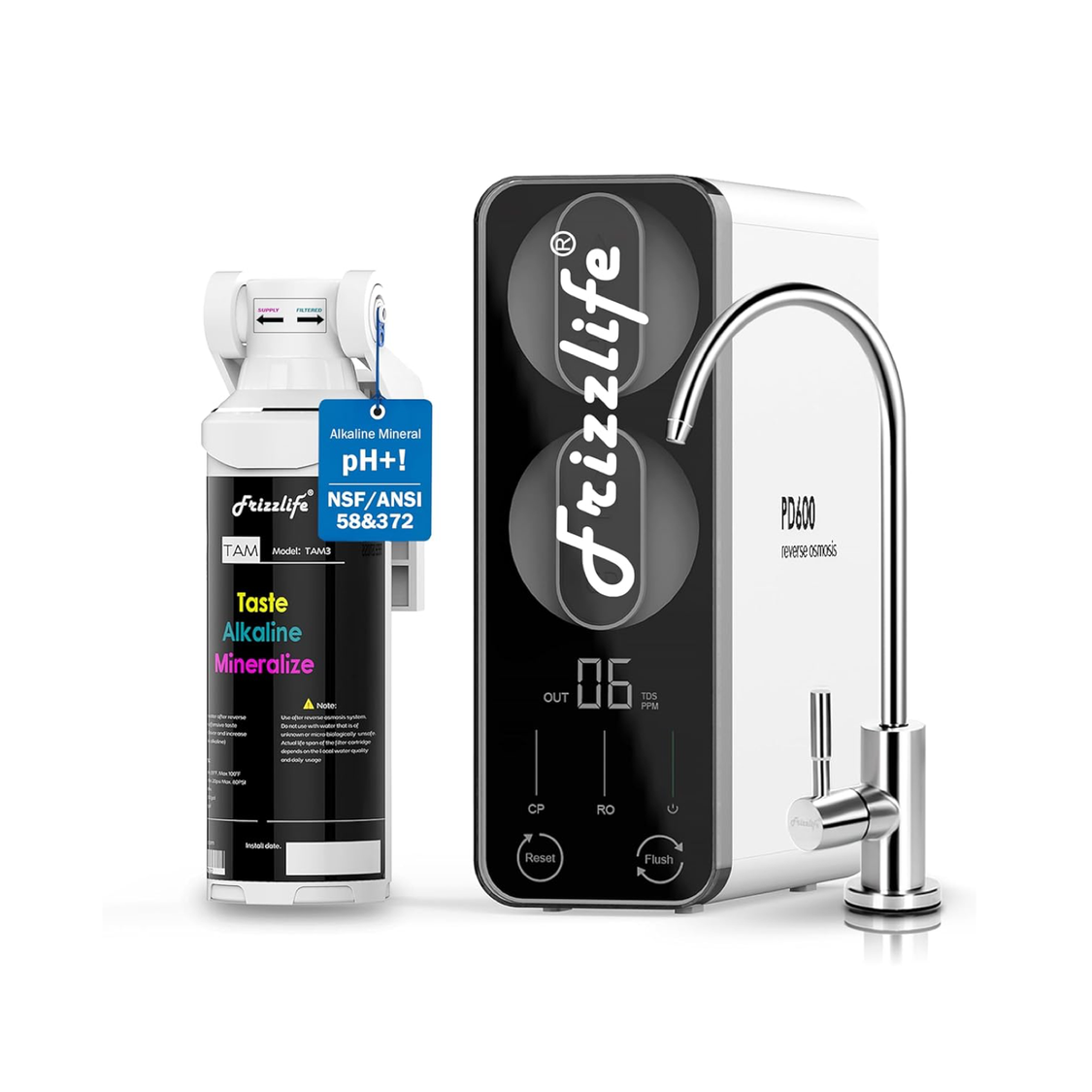 Alkaline RO System
Frizzlife PD600-TAM3
A 600 GPD tankless reverse osmosis system with an alkaline remineralization stage. Designed for under-sink filtration, convenient daily water access, and improved drinking-water taste.
Explore PD600-TAM3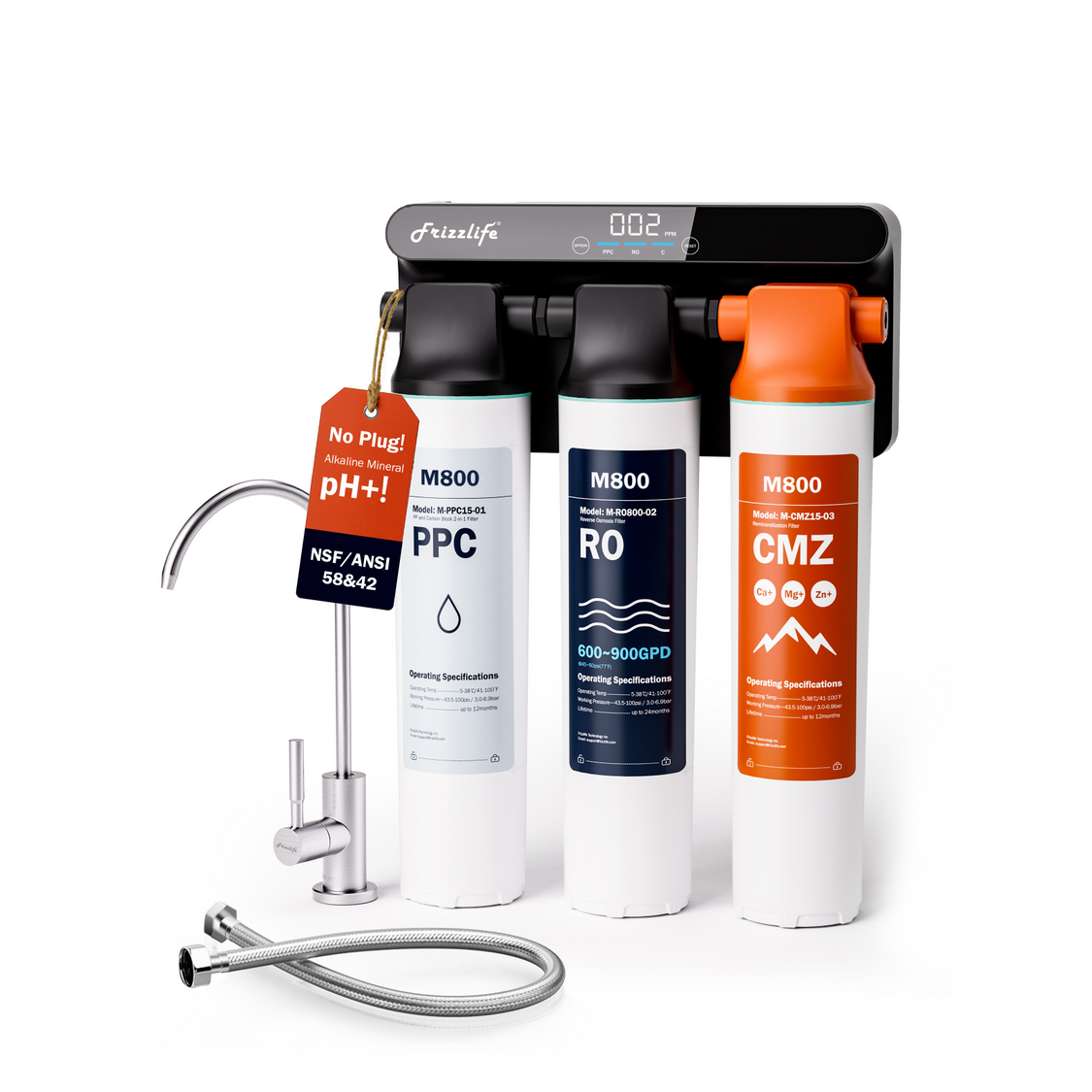 High-Capacity RO
Frizzlife M800
A high-capacity tankless RO series offering up to 900 GPD output. Selected configurations include alkaline remineralization for improved taste. Check the specific model before purchasing.
Explore M800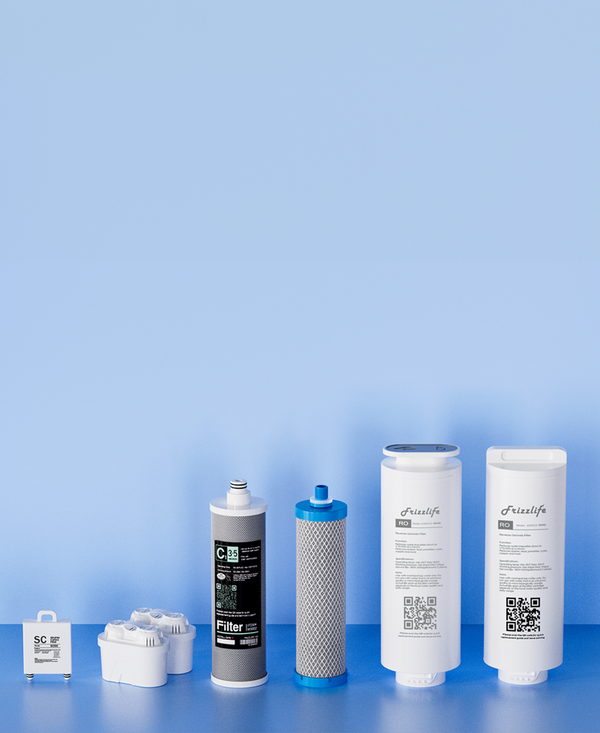 Filter Maintenance
Replacement Filters
Compare compatible RO membranes, prefilters, and remineralization cartridges. Reviewing replacement requirements helps estimate long-term ownership costs before choosing an RO system.
Find Replacement FiltersThese examples are provided for system comparison and maintenance planning. Product availability, local installation support, and total costs in India should be confirmed separately. Always verify source-water suitability and cartridge compatibility before purchasing.
Checklist for Evaluating Product Specs
Use this checklist before choosing either a standard RO or a remineralization RO:
-
Test the source water. TDS is useful, but a fuller analysis may be needed for borewell water or known local contaminants.
-
Confirm that RO is appropriate. Do not select it only because the system has more stages.
-
Identify every filtration stage. Look for sediment, carbon, membrane, post-carbon, and mineral stages by function.
-
Check how TDS is adjusted. Determine whether the system uses mineral media or water blending.
-
Review feed-water limits. Use model-specific documentation for pressure, temperature, TDS, and other operating conditions.
-
Examine finished-water claims. Treat pH, TDS, and mineral output as condition-dependent unless a precise test protocol is provided.
-
Verify certifications. Search official listings and confirm that the exact model or component is covered.
-
Calculate ongoing costs. Include prefilters, the membrane, post-filters, the mineral cartridge, service, and installation.
-
Confirm replacement availability. A low equipment price is less useful if compatible cartridges are difficult to source.
-
Consider household demand. Storage capacity and production rate should suit normal peak use.
-
Ask about wastewater. RO produces a concentrate stream; actual efficiency varies by system and operating conditions.
-
Plan for sanitation. Tanks, tubing, faucets, and filter housings require hygienic maintenance.
-
Avoid unsupported health promises. Choose remineralization for documented water-quality characteristics, not disease-prevention claims.
-
Keep baseline readings. Recording feed, post-RO, and post-mineral TDS can make future troubleshooting easier.
The right RO price in India is not simply the lowest number on a product listing. It is the cost of a system that suits the source water, delivers an acceptable taste, has transparent replacement requirements, and can be maintained over time.
A standard RO is usually the simpler and less expensive option. An RO system with remineralization costs more but may offer noticeably better taste and a moderate increase in TDS and pH. For most households, remineralization is a preference rather than a health necessity. Choose it when those water-quality changes are valuable enough to justify the additional cartridge and ownership cost.