

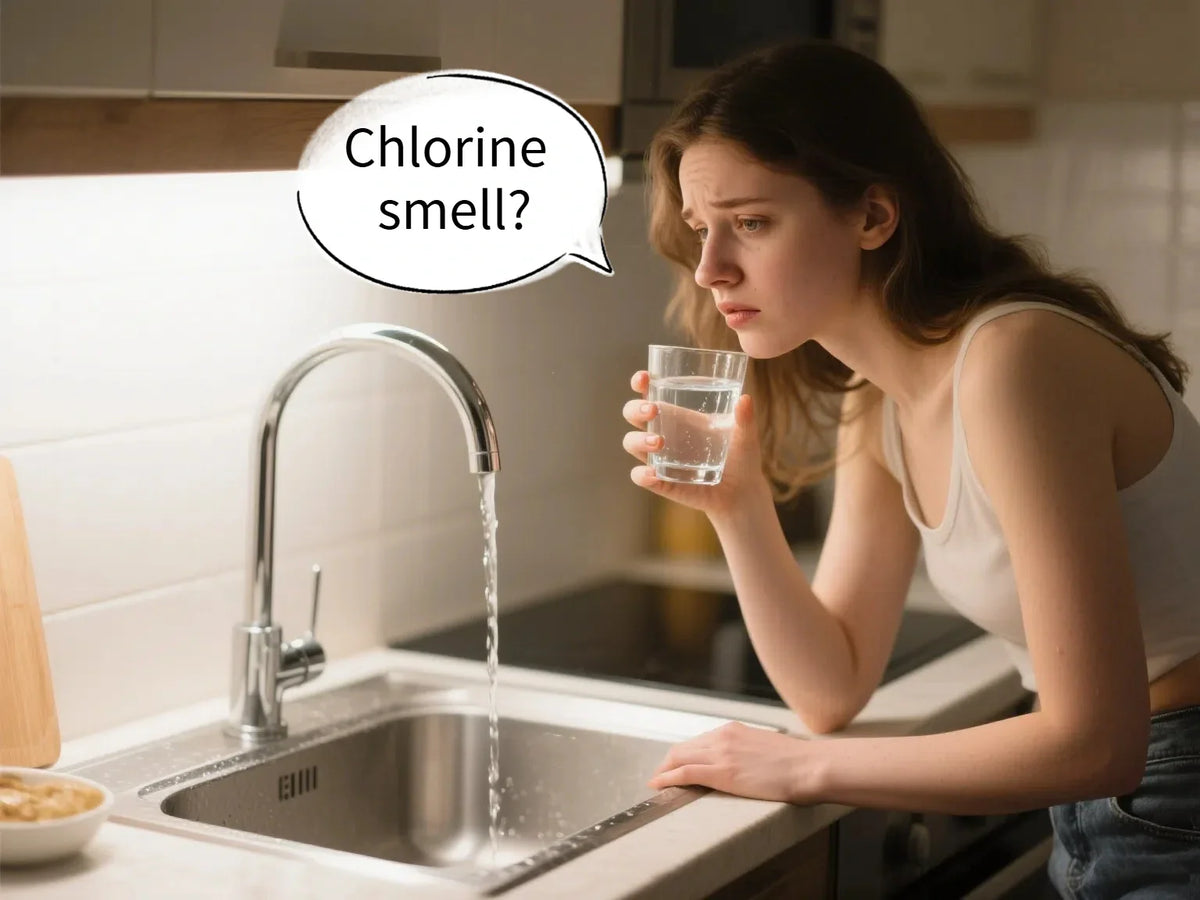
Do you notice an unpleasant chlorine odor each time you turn on your tap? Do you notice a chlorine smell in water each time you turn on your tap? Many households report that their water tastes like chlorine or has a smell of bleach, sometimes described as bleach or chlorine odor. This is normal and caused by disinfectants used to keep water safe. While the bleach smell is common, it raises questions: Is it safe to drink? Does chlorine water affect health? How do I remove the chlorine smell from my water?
This complete guide explains the causes, health context, science behind the odor, and simple solutions to remove chlorine smell in your water.
Why Does My Water Smell Like Chlorine?
If you’ve ever turned on your tap and noticed a strong bleach-like smell, you’re not alone. The most common reason your water smells like chlorine or bleach is municipal water disinfection. Public water systems add chlorine or chloramine to kill harmful bacteria, viruses, and other microorganisms, ensuring that the water coming into your home is safe to drink. This is a standard safety procedure, not a sign that something is wrong with your plumbing or your tap water.
Chlorine Levels in Tap Water
The level of chlorine present in the water is carefully controlled. In most U.S. households, the amount of chlorine in your water usually range from 0.2 to 3.0 mg/L, which is well below the legal maximum of 4.0 mg/L set by the U.S. EPA under the Safe Drinking Water Act. Even though high levels of chlorine can occur temporarily during maintenance, these amounts are still considered safe.
However, the smell can be surprisingly noticeable, even when chlorine is present at safe levels. That’s because the human nose is extremely sensitive to chlorine. Some people can detect it at concentrations as low as 0.2 mg/L.

What Does Bleach Taste Like?
Does chlorine have smell? Many people notice a strong, slightly bitter or chemical taste when their tap water smells like bleach. This taste is not harmful—it comes from the chlorine used to disinfect water. The flavor is often described as a faint chlorine or bleach taste, similar to a lightly chlorinated swimming pool.
Why the Smell Appears Suddenly
There are a few common scenarios when you might suddenly notice your tap water smells like chlorine:
- Seasonal or maintenance changes: Utilities sometimes switch from chloramine to free chlorine during spring or early summer maintenance. This temporary switch helps keep the water supply disinfected.
- System flushing: When the city cleans out water distribution pipes, chlorine odor can become stronger for a short period.
- Standing water: Water that has been sitting in your pipes overnight can accumulate chlorine smell, especially in the morning or after long periods of non-use.
Quick Reassurance
Tap water may sometimes smell stronger of chlorine, especially in the morning, but this does not indicate danger. Municipal water systems use chlorine to disinfect water and keep it free from harmful pathogens. If you want to reduce the smell, running your faucet for a minute or using a point-of-use filter can help.
Is Chlorine in Water Safe to Drink?
If you’re wondering whether tap water safe or not with smells like bleach, you’re asking a very common and important question. The short answer is yes—tap water with a chlorine smell is generally safe to drink when it meets regulatory standards.
Regulatory Standards for Chlorine
Water quality is ensured because municipal authorities regularly test water from the water source for safety. Even when the water in your home smells like chlorine, these tests confirm that the water quality meets strict health standards:
- EPA (U.S.): Maximum allowable chlorine concentration is 4.0 mg/L.
- WHO (World Health Organization): Similar global guidelines set safe chlorine levels for public water supplies.
- Typical U.S. household water: Usually contains 0.2–3.0 mg/L of chlorine, well within safe limits.
These regulations ensure that the disinfectant works effectively to kill harmful bacteria and viruses without posing a risk to your health.
Why Chlorine Smell Doesn’t Equal Danger
It’s important to understand that the bleach-like smell present in the water supply does not mean it’s contaminated. The odor simply indicates the presence of chlorine used for disinfection. Some key points:
- Sensitivity varies: Some people can smell chlorine at very low concentrations, much lower than the safe drinking water limits.
- Strong odor ≠ unsafe water: Even if the smell is noticeable or bothersome, it doesn’t mean your water is unsafe.
- Temporary intensity: Chlorine smell can be stronger after maintenance or overnight water stagnation but remains safe to drink.
Who May Notice Chlorine Odor More
Certain groups of people may be more sensitive to the smell of chlorine:
- Children, who have a stronger sense of smell.
- People with weakened immune systems, who may be more cautious about taste and odor changes.
- Those not used to chlorinated water, such as people recently moving from regions with soft or filtered water.
Common Myths vs. Facts
There are a few misconceptions about chlorine in water that often cause unnecessary concern:
Myth: A chlorine smell means harmful chemicals are in the water.
Fact: The smell usually indicates normal municipal disinfection.
Myth: Drinking chlorinated water damages kidneys or skin.
Fact: Regulated chlorine levels in tap water are not linked to kidney or skin damage.
Understanding these facts can help reduce worry and let you enjoy safe, disinfected tap water.

Diagnosing Chlorine Odor at Home
If you’ve noticed that your tap water smells like chlorine or bleach, it’s natural to wonder what’s causing it and whether your water is safe. Fortunately, there are some simple steps you can take at home to diagnose chlorine smell in your tap water and figure out if it’s coming from your plumbing or the municipal water supply.
Check if the Odor Comes from All Faucets
Start by testing water from multiple taps in your home:
- All taps have the smell: This usually indicates that the chlorine odor originates from the public water system. Municipal water is disinfected with chlorine or chloramine, and the smell can become noticeable, especially after maintenance or seasonal switching.
- Only one faucet smells: If the odor is limited to a single tap, the issue is likely local plumbing, such as a faucet aerator, water heater, or pipe buildup.
Check for City Notices
Many water utilities send alerts when they are performing maintenance or temporarily switching disinfectants.
- If your city recently announced system flushing or a chlorine-to-chloramine switch, a noticeable chlorine smell is expected and usually temporary.
- These changes are part of standard water treatment practices to ensure your tap water is clean and safe to drink.
Consider Timing of the Smell
Chlorine odor can vary depending on when you test the water:
- Morning or first draw: Water that has been sitting in pipes overnight may have a stronger chlorine smell.
- Quick fix: Simply run the faucet for 1–2 minutes to flush out stagnant water and reduce the bleach-like odor.
When to Contact Your Utility Company
If the chlorine smell is unusually strong, persists throughout the day, or you suspect over-chlorination, it’s a good idea to contact your local water utility. They can check chlorine levels, verify system maintenance, and confirm that your water remains safe to drink.
How to Remove Chlorine from Your Water (Solutions)
The good news is that there are multiple effective ways to remove chlorine in the water, whether you’re dealing with tap water that smells like bleach or simply want better-tasting drinking water. From professional filtration systems to simple DIY methods, you have options to suit every household and budget.
Using Water Filters to Remove Chlorine
Invest in a water filtration system is one of the most reliable ways to reduce or completely eliminate chlorine from your water. Here’s a closer look at the most common filter types:
- Activated Carbon Filters: These are widely used for removing chlorine and improving taste. Activated carbon absorbs chlorine and other chemicals, making the water smell and taste much fresher. They are effective for about 3–6 months before the filter needs replacing and are generally low to moderately priced, making them a popular choice for point-of-use systems like countertop or under-sink filters.
- Reverse Osmosis Systems: RO systems provide an advanced solution, removing 95–99% of chlorine along with other contaminants such as lead, nitrates, and certain dissolved solids. Membranes typically last 1–3 years depending on usage. While the initial cost is higher, these systems ensure clean water for drinking and cooking and improve your water quality.

- KDF or Dechlorinator Filters: KDF filters use a special metal alloy to remove chlorine, heavy metals, and bacteria. They are often paired with activated carbon to maximize chlorine removal. These filters can last for years and are moderately priced. They are particularly useful for households with older plumbing or high chlorine levels.
- Whole-House Filtration Systems: For comprehensive water treatment, whole-house filters remove chlorine and other impurities from all water entering your home. This option is more expensive, but it ensures that every faucet, shower, and appliance gets clean, chlorine-free water.
- Point-of-Use Filters: Small cartridges for individual faucets or pitchers offer a convenient solution for drinking water only. They are cost-effective and easy to replace, ideal if your main concern is the chlorine taste in drinking and cooking water.
DIY Methods to Reduce Chlorine Smell
If you prefer simple home fixes, there are several ways to reduce chlorine odor without installing a filtration system:
- Let Water Sit in an Open Container: Chlorine naturally evaporates when water is left exposed to air. Simply pour water into a bowl or jug and leave it at room temperature for a few hours. This method works well if you need water for drinking or cooking later in the day.
- Refrigerate in a Pitcher: Storing water in the fridge in a covered pitcher can speed up the reduction of chlorine smell while keeping the water fresh.
- Citrus or Vitamin C Neutralization: Adding lemon slices or a small amount of vitamin C (ascorbic acid) to water can neutralize chlorine effectively. This is a natural and safe way to improve both taste and odor.

- Flush the Faucet: Running water for 1–2 minutes, especially in the morning, helps remove chlorine that has accumulated in pipes overnight. This is a quick and easy way to reduce the strong “bleach” smell from the first draw of the day.
When to Consider a Filtration System
If DIY tricks do not fully remove the chlorine smell or you want consistently clean water for your household, investing in a home water filtration system designed to remove chlorine is the best solution. Filters like activated carbon, reverse osmosis, or whole-house systems provide long-term benefits, improving both the taste and safety of your tap water.
Filter Comparison Summary
| Filter Type | Chlorine Removal Effectiveness | Lifespan | Cost Range | Notes |
| Activated Carbon | ~95% | 3–6 months | Low–Moderate | Great for odor and taste |
| Reverse Osmosis | 95–99% | 1–3 years membranes | High | Removes many contaminants |
| KDF/Dechlorinator | High (chlorine + metals) | Years (pre-filters) | Moderate | Often paired with carbon |
| Whole-House | Strong | Depends on system | High | Treats all home water |
| Point-of-Use | Strong | Small cartridges | Low | For drinking only |
Why Chlorine Smell Can Suddenly Get Stronger
You may ask: Why does my tap water smell like bleach suddenly?
Common reasons:
- Seasonal switches: Utilities temporarily switch from chloramine to free chlorine.
- System flushing: Cleaning out distribution pipes.
- Higher temperatures: Warm water amplifies chlorine odor.
Case Examples:
- Washington, D.C. – Annual chlorine switch triggers strong “pool smell.”
- Sugar Land, TX – 30-day free chlorine test leads to complaints of bleach odor.
- Public response: Utilities assure the water is safe to drink despite the smell.
Science Behind the Chlorine Smell
Why do some people smell chlorine while others don’t?
Detection Thresholds:
- U.S. & France: 0.2–1.1 mg/L (very sensitive)
- Panama: ~0.87–1.64 mg/L
- Bangladesh: ~0.73–1.26 mg/L
Chloramine vs. Chlorine:
- Chlorine: Strong bleach-like odor, more noticeable.
- Chloramine: Milder, sometimes “chemical” or “ammonia-like.”
Table: Smell Thresholds vs. Safe Levels
| Population | Smell Threshold (mg/L) | Safe Drinking Level (mg/L) |
| U.S./France | 0.2–1.1 | ≤4.0 |
| Panama | 0.87–1.64 | ≤4.0 |
| Bangladesh | 0.73–1.26 | ≤4.0 |
Public Response and Social Insights
When tap water suddenly smells like bleach, community discussions spike on Reddit and YouTube.
- Users post about “pool water coming from tap.”
- Filtering demonstrations confirm carbon filters reduce chlorine odor.
- Many confirm letting water sit removes the bleach taste.
Key takeaway: Transparency and quick communication from utilities reduce worry about chlorine safety.
Conclusion / Takeaways
- Chlorine smell in water is common and results from safe municipal disinfection.
- The odor intensifies after treatment changes, system flushing, or in warm weather.
- Water is safe to drink under EPA and WHO guidelines, even if it smells bleach-like.
- Easy odor fixes: Let water sit, refrigerate, add lemon, flush faucets, or use a water filter.
- Contact your local water utility if chlorine odor is unusually strong or persistent.
By understanding both the science and the solutions, you can enjoy clean water without the unwanted chlorine smell.
FAQs About Chlorine Smell in Water
1. Is chlorine smell in water harmful?
No, it’s generally safe to drink tap water that smells like chlorine, as long as it falls within regulated levels. The bleach-like odor is simply a sign that the water has been disinfected to kill bacteria and other microorganisms. While the smell can be unpleasant, it doesn’t mean the water is unsafe or contaminated. Sensitive individuals, such as children or those not used to chlorinated water, may notice the odor more strongly, but the water itself remains safe.
2. Does boiling remove chlorine smell?
Yes. Boiling your water for several minutes can effectively remove chlorine. Chlorine is a volatile chemical, which means it evaporates when exposed to heat. So, if your tap water smells like bleach, simply boiling it or letting it sit in a covered pot for a few minutes can help reduce the odor while keeping the water safe to drink.
3. Is it safe to shower or cook with chlorinated water?
Absolutely. The chlorine levels used in tap water are safe for both cooking and bathing. Showering in chlorinated water will not harm your skin or hair, and using it for cooking or washing fruits and vegetables is also safe. The smell might be noticeable at first, especially in the morning when water has been sitting in your pipes overnight, but there’s no health risk involved.
4. What filter removes chlorine best?
Activated carbon filters are the most effective and affordable solution for removing chlorine from drinking water. These filters work by adsorbing chlorine and other chemicals, improving both the taste and odor of your water. Whether it’s a countertop filter, under-sink system, or a water pitcher, carbon filtration is a reliable way to eliminate chlorine smell in water.
5. Why does my water only smell in the morning?
The chlorine odor often appears stronger in the morning because water sitting in your pipes overnight allows chlorine to concentrate. Running the faucet for 1–2 minutes flushes out the stagnant water, letting fresher, less chlorinated water flow through. This simple step can significantly reduce the bleach-like smell, making your morning water more pleasant to drink.